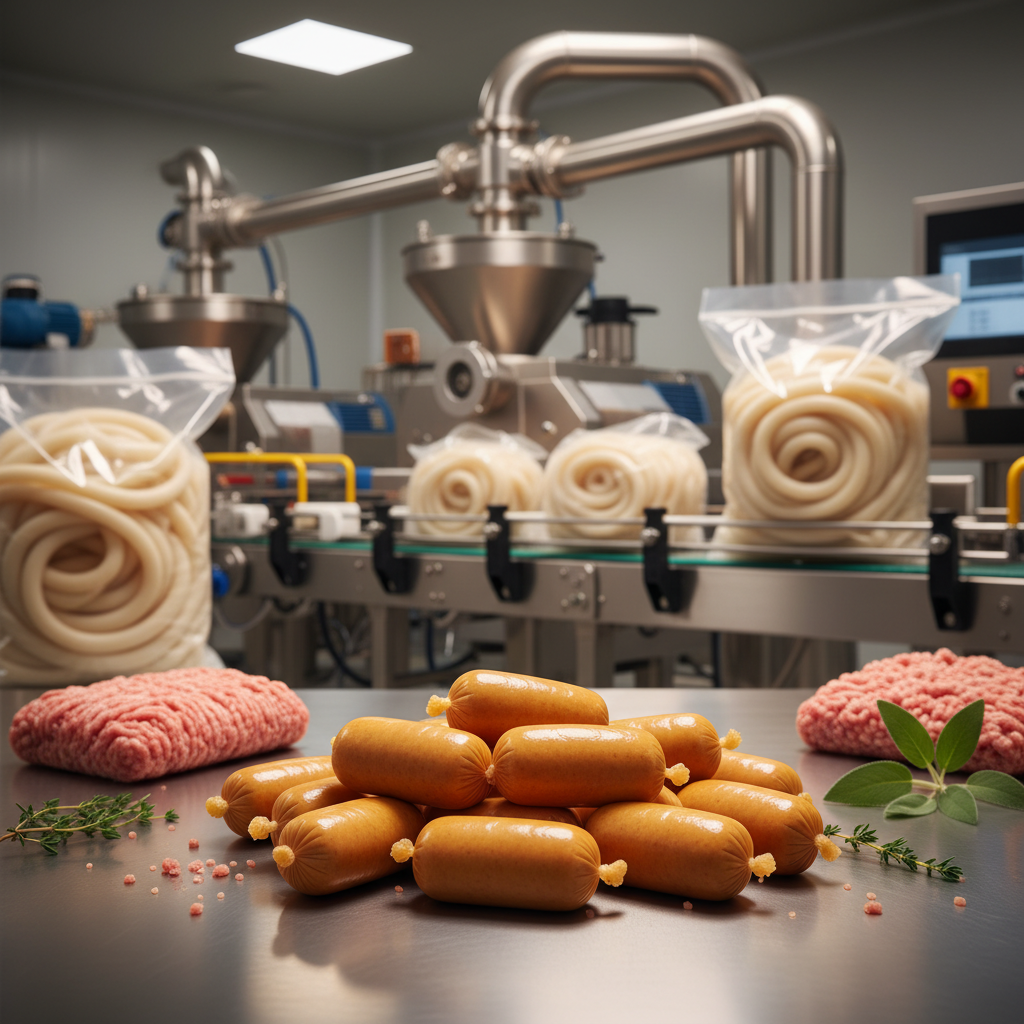
When sourcing natural casings for professional charcuterie, the choice of hog casing manufacturers often determines the final texture and quality of the product. For producers of bratwurst, Italian sausage, or chorizo, the "snap" provided by real animal intestines is an irreplaceable sensory experience that synthetic alternatives cannot replicate. The challenge for many buyers lies in finding a supplier that balances traditional processing methods with the rigorous sanitary standards required for international export.
The technicality of casing selection extends beyond simple availability. The permeability of the casing directly impacts how smoke and moisture penetrate the meat during the curing process, which is essential for flavor development. Furthermore, the structural integrity of the casing during high-speed stuffing operations prevents product loss and maintains uniform sizing. Understanding the distinction between dried tubed hog casing and salted options is critical for optimizing production efficiency and shelf-life management.
This guide examines the operational criteria for selecting high-grade casings and the technical specifications that define professional-grade output. By analyzing the intersection of material durability and permeability, we provide a framework for buyers to evaluate hog casing manufacturers based on objective quality markers. We will explore how specific diameters and processing styles align with various sausage types to ensure a consistent, traditional mouthfeel across diverse product lines.


Natural hog casings are derived from real animal intestines, offering a biological structure that provides a distinct, slightly chewy texture and a satisfying burst upon consumption. Unlike collagen or synthetic casings, these natural membranes allow for a traditional mouthfeel that is highly prized in the production of high-end fresh and smoked sausages. They serve as a breathable barrier, enabling the essential exchange of gases and moisture during the cooking or smoking phase.
From a manufacturing perspective, these casings are processed into various forms, including salted and dried tubed options. Salted casings remain flexible and are often preferred for immediate use in fresh sausage production, while dried tubed casings offer a more convenient storage solution with reduced weight for long-distance international shipping. Both methods aim to preserve the collagen matrix of the intestine while ensuring the product remains sterile and safe for food consumption.
The performance of a natural casing is primarily measured by its permeability and tensile strength. Permeability allows smoke to penetrate the meat, which is vital for developing the characteristic flavor and color of smoked sausages. A casing with poor permeability can lead to uneven cooking or a lack of depth in flavor, whereas a high-quality membrane ensures a consistent cure throughout the product.
High tensile strength is the most critical factor during the mechanical stuffing process. Robust casings resist bursting under pressure, allowing manufacturers to maintain higher production speeds without increasing waste from broken hanks.
Durability also extends to the handling phase. Natural hog casings are generally more robust than sheep casings, making them suitable for larger diameter products and more aggressive filling methods. The stability of the casing wall ensures that the sausage maintains its cylindrical shape during the heating process, preventing the "ballooning" effect often seen in inferior products.
Precision in diameter selection is essential to ensure the finished sausage meets consumer expectations and packaging requirements. Hog casings are typically categorized into small, medium, and large diameters, with each serving a specific culinary purpose. For instance, breakfast sausages and hot dogs require smaller diameters to maintain a specific ratio of casing to meat, ensuring the characteristic "snap."
Medium diameters are the industry standard for bratwurst and Italian sausages, providing a balanced structure that can withstand moderate stuffing pressures. Large diameters, often 38mm and above, are reserved for summer sausages and salami, where the increased volume requires a stronger membrane to support the weight of the meat during long-term drying processes.
In commercial meat processing, hog casings are deployed in environments ranging from artisan butcher shops to large-scale industrial factories. The primary application is in the creation of fresh sausages where an authentic texture is a key selling point. In these scenarios, the casings are often used in salted form to ensure maximum flexibility during the stuffing of high-fat meat emulsions.
For smoked products, the casing's ability to interact with the smoking environment is paramount. The natural collagen fibers allow smoke particles to adhere and penetrate, creating a traditional mahogany skin. This application is particularly common in European-style cured meats, where the casing is not just a container but an active component of the flavoring process.
The global trade of natural casings is increasingly focused on the implementation of rigorous hazard analysis and critical control points (HACCP). As international regulations tighten, manufacturers are investing in advanced cold storage and sanitary processing lines to ensure that biological risks are mitigated without compromising the natural properties of the collagen.
Logistical efficiency is also evolving. The transition toward high-capacity dried tubed casings allows for a significant reduction in shipping costs and a decrease in the reliance on heavy salt loads for preservation. This trend supports a more sustainable supply chain by reducing the environmental impact of transportation and waste.
We are likely to see a greater emphasis on traceability, where buyers can verify the origin and processing history of the casings. This transparency is becoming a prerequisite for high-end food brands that market their products as "traditional" or "artisan," as it provides a verifiable link back to the natural source of the casing.
One of the most common challenges in using hog casings is the risk of breakage during stuffing. This is often caused by inadequate soaking or a mismatch between the stuffer nozzle diameter and the casing size. Proper hydration is essential; if the casing is too dry, it loses elasticity; if over-soaked, it may become too fragile to hold the meat density.
Storage temperature is another critical variable. Salted casings must be kept in temperature-controlled cold storage to prevent the degradation of the collagen fibers. Fluctuations in temperature can lead to "slippage" or uneven salt distribution, which affects the casing's performance once it reaches the production line.
To mitigate these risks, professional producers implement strict quality control checks on every cask. By ensuring consistent diameter and thickness across all hanks, manufacturers can calibrate their machinery more accurately, reducing downtime and improving the overall yield of the production run.
| Casing Type | Texture/Snap | Best Application | Durability |
|---|---|---|---|
| Hog Casing | Strong/Traditional | Bratwurst/Chorizo | High |
| Sheep Casing | Delicate/Fine | Frankfurters | Low |
| Collagen Casing | Uniform/Consistent | Mass Market | Medium |
| Fibrous Casing | Tough/Thick | Bologna/Salami | Very High |
| Dried Hog | Authentic | Exported/Stored | High |
| Salted Hog | Authentic | Fresh Production | High |
Hog casings are thicker and more durable, providing a distinct "snap" and a more robust structure suitable for larger sausages like bratwurst. Sheep casings are much thinner and more fragile, making them ideal for delicate, small-diameter sausages such as frankfurters or breakfast links where a milder texture is desired.
Selection depends on the desired final product size. 28-32mm is typically used for hot dogs and breakfast sausages, 32-35mm for bratwurst and Italian sausages, and 38-42mm or larger for summer sausages and salami. Matching the casing diameter to the product ensures uniform appearance and correct mouthfeel.
Permeability allows smoke and moisture to move through the casing during the cooking and curing process. This interaction is essential for the meat to absorb smoky flavors and achieve the correct internal temperature and color. Without proper permeability, the sausage may not cure evenly, affecting both taste and safety.
Dried tubed casings are significantly lighter and more stable for long-distance shipping, reducing freight costs and logistical complexity. While salted casings are ready for immediate use in fresh production, dried tubed versions provide a more efficient storage solution for large-scale importers and distributors.
Breakage is usually prevented by ensuring the casings are properly hydrated and that the stuffing nozzle is correctly sized. Over-stuffing or using a nozzle that is too small can create excessive tension. Regular inspection of the collagen quality and maintaining consistent stuffing pressure are also key to reducing waste.
They are best for fresh, smoked, and cured sausages where an authentic, natural texture is required. However, for extremely large-diameter industrial meats like bologna, fibrous or synthetic casings are more appropriate. For very thin, delicate links, sheep casings are the preferred choice.
The selection of natural hog casings is a critical decision that impacts the structural integrity, flavor profile, and consumer perception of a sausage product. By prioritizing factors such as tensile strength, permeability, and diameter precision, manufacturers can ensure a consistent, high-quality output that meets traditional standards. The balance between traditional animal-derived materials and modern sanitary certifications remains the benchmark for excellence in the global charcuterie market.
For producers seeking a reliable partner in natural casings, focusing on suppliers with proven export experience and HACCP certification is essential. Whether you require salted or dried tubed options, ensuring a stable supply of professional-grade membranes is the first step toward production success. For more information on specifications and sourcing, you may explore the options available at www.rtcasing.com.