You know, the whole casing game... it's changed a lot. Used to be, everyone just wanted the cheapest hog casing they could get their hands on. But lately, there's been a real push for quality. Folks are realizing you can’t skimp on this stuff if you want a consistent product. It’s not just about price anymore, it’s about yield, about texture, about making sure that sausage snaps just right. To be honest, I’ve seen too many sausages fall apart on the grill because someone tried to save a few bucks.
We’re a salted hog casing supplier, and been in the business for a long time. I mean, a long time. You pick up a few things. Like, everyone thinks thicker casings are automatically better? Not always. Sometimes, too thick and you lose that delicate bite. And the salt content… oh boy, that's a whole other story. Too little and the casing tears, too much and you get a weird, salty taste that ruins the whole thing.
It's all about finding the balance. People don’t realize the amount of skill that goes into properly preparing these things. It’s not just dumping salt on a hog intestine and calling it a day. There’s a knack to it, a feel, a… well, you gotta spend time around hogs to understand, I guess.
The Current Landscape of Salted Hog Casing Supply
Have you noticed how global everything is now? We used to mostly deal with local sausage makers, but now we’re shipping casings all over. Demand’s gone up, especially in places where they’re starting to appreciate traditional methods. There's a lot of competition coming out of Asia, and frankly, some of it is… questionable. You see casings that are overly processed, too thin, or just plain inconsistent. It makes it hard for the good salted hog casing suppliers like us to stand out, but we hold our standards.
The biggest shift I've seen is the demand for traceability. Customers want to know where the casings came from, how they were processed, and what kind of quality control is in place. They should want to know. It’s not just about food safety, it’s about trust.
Design Pitfalls and Hidden Challenges
One thing that always gets people in trouble is trying to over-engineer the casing. They want fancy coatings, special treatments, all sorts of stuff. And look, some of that can be useful, but most of the time it just complicates things. A good, naturally prepared casing is all you really need. I encountered this at a big processing plant in Wisconsin last time. They were trying a new “self-sealing” casing and it was a disaster. Clogs, uneven cooking... a mess. Strangely enough, they went back to the basic stuff the next week.
Another pitfall is ignoring the impact of humidity. Casing can dry out quickly, especially during shipping, and then it becomes brittle and prone to tearing. We spend a lot of time perfecting our packaging to address that, but it's something customers often overlook.
And don’t even get me started on the color. Some folks get hung up on a perfectly uniform color, but natural variation is a good thing! It shows the casing hasn’t been overly bleached or treated.
The Feel of the Material: Beyond Specifications
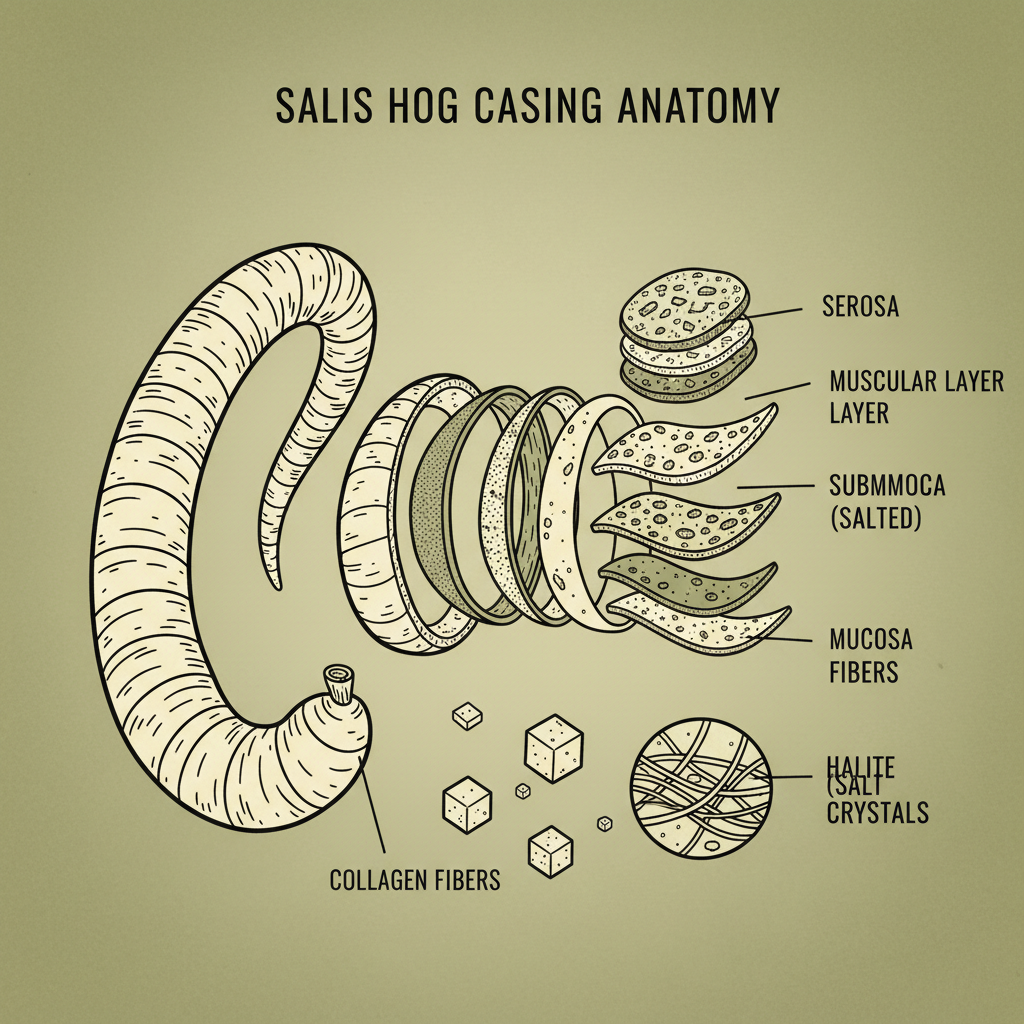
You can look at all the specs you want – diameter, salt content, tensile strength – but they don’t tell you the whole story. You have to feel the casing. A good casing should be supple, slightly moist, and have a subtle… well, a hoggy smell. I know that sounds weird, but it's true. It's a sign of freshness.
The texture is important too. It shouldn't be sticky or slimy, but it shouldn't be rough or papery either. It’s a bit like Goldilocks. Not too hard, not too soft… just right. And the weight? A good casing has a certain heft to it. It feels substantial.
I’ve seen some casings that look perfect on paper but fall apart the moment you try to stuff them. That's when you know something's off. Anyway, I think experience is the only real way to learn this.
Real-World Testing: From Factory Floor to Grill
Lab tests are fine, I guess, but they don’t simulate real-world conditions. We test our casings on actual production lines, stuffing them with different types of meat, at different speeds, and under different temperatures. We even let the guys at the local butcher shop test them on their grills. It’s the best way to get honest feedback.
We also do a “snap test.” Sounds silly, but it’s important. You bite into a cooked sausage and listen for that satisfying snap. If it doesn't snap, it's no good. And we check for shrinkage. A good casing should hold its shape during cooking and shouldn't shrink excessively.
Salted Hog Casing Performance Metrics
How Customers Actually Use Salted Hog Casings
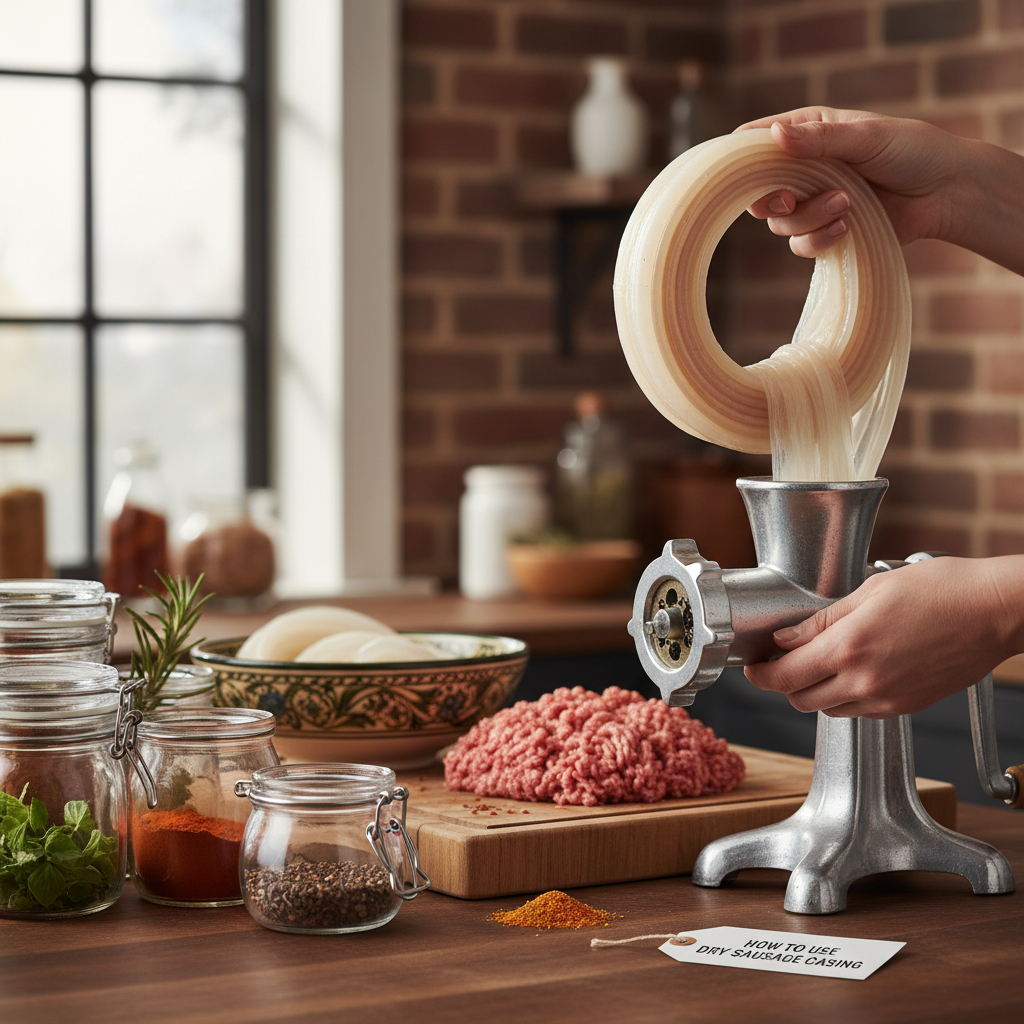
You’d be surprised how many people don’t properly rinse the casings before using them. They just stuff them straight out of the package. That’s a recipe for disaster. You gotta get rid of the excess salt, or you’ll end up with a super salty sausage.
And then there’s the soaking. Some people soak them for hours, which makes them too weak and prone to tearing. A quick soak, just enough to rehydrate them, is all you need.
Advantages, Disadvantages, and the Pursuit of Perfection
The biggest advantage of hog casings is the snap. Nothing beats it. They also provide a natural barrier that helps preserve the flavor of the meat. But they’re not perfect. They can be inconsistent in size and thickness, and they require a bit of skill to work with. Later... Forget it, I won’t mention the pricing stuff.
We’re always working to improve our process. We’re experimenting with different salting techniques, different grading methods, trying to eliminate any inconsistencies. It's a never-ending quest for perfection.
Honestly though, you can’t beat a good old-fashioned hog casing. There's a reason they've been used for centuries.
Customization and the Shenzhen Smart Home Boss
We do offer some customization, mostly around salt content and casing diameter. But the weirdest request I ever got was from a small boss in Shenzhen who makes smart home devices. Last month, he insisted on changing the interface to . Said he wanted his sausages to be “future-proof.” I just stared at him. He’d seen some article about USB-C being the standard and thought it applied to sausages. He was not happy when I told him it wasn't possible.
Generally, though, customization is about getting the casing to fit the specific needs of the customer’s production process. Some want tighter casings for hot dogs, some want looser casings for kielbasa. It’s all about finding the right fit.
We’re even working on a new line of casings that are specifically designed for dry-cured sausages. That's a tough one, because they need to be strong enough to withstand the drying process, but also permeable enough to allow the sausage to breathe.
Summary of Salted Hog Casing Quality Control Metrics
| Casing Batch |
Salt Content (Avg. %) |
Tensile Strength (MPa) |
Snap Test Rating (1-5) |
| Batch 2024-03-01 |
2.5% |
15 MPa |
4.5 |
| Batch 2024-03-08 |
2.7% |
16 MPa |
4.2 |
| Batch 2024-03-15 |
2.4% |
14 MPa |
4.8 |
| Batch 2024-03-22 |
2.6% |
15.5 MPa |
4.7 |
| Batch 2024-03-29 |
2.55% |
16.2 MPa |
4.6 |
| Batch 2024-04-05 |
2.8% |
14.8 MPa |
4.3 |
FAQS
Ideal salt content really depends on the type of sausage you're making, but generally between 2.4% and 2.8% is a good range. Too little and the casing weakens, making it prone to tearing during stuffing. Too much, and you'll get an overly salty flavor. It’s a balancing act, and consistent quality control is key. We aim for consistency in every batch, ensuring minimal variation in salt levels.
Proper storage is crucial. Unused casings should be kept refrigerated, ideally between 32-38°F (0-3°C). Make sure they’re well-sealed to prevent them from drying out. Don’t freeze them, as freezing can damage the structure of the casing and make them brittle. And don't leave them out at room temperature for extended periods, or they’ll spoil. Proper storage is the easiest thing you can do for consistent results.
While hog casings are incredibly versatile, they aren’t ideal for every sausage. They work beautifully for traditional sausages like bratwurst, Italian sausage, and chorizo, providing that classic snap. However, for very finely ground sausages or those with high fat content, collagen or cellulose casings might be a better choice. It's about matching the casing to the sausage's characteristics for optimal results.
Tearing can be caused by a few things. First, the casings might be too dry. Make sure to soak them properly before stuffing. Second, your stuffer might be set too high. Start with a lower pressure and gradually increase it. Third, the casings might be damaged – check for any cuts or imperfections before using them. And finally, the meat mixture could be too coarse or contain sharp bone fragments, we always recommend quality meat grinds!
Good quality casings will be supple, slightly moist, and have a consistent color. They shouldn’t have any strong odors or blemishes. A good test is to gently stretch a piece of the casing – it should stretch without tearing easily. If you're working with a salted hog casing supplier you trust, they’ll have strict quality control measures in place, and you should feel confident in their product.
That’s a valid question. We source our casings from reputable suppliers who adhere to humane animal handling practices. We understand that some people have ethical concerns about using animal products, and we respect that. It’s something we take seriously and strive for responsible sourcing throughout our supply chain. We also provide alternative casing options for those who prefer them.
Conclusion
Ultimately, the quality of a sausage relies on many things, from the meat to the seasonings, but the casing plays a vital role. A good casing provides structure, snap, and flavor, and a bad casing can ruin the entire product. We’ve seen it all – the over-engineered casings, the under-salted casings, the casings that just plain fall apart.
So, whether you’re a small butcher shop or a large-scale sausage manufacturer, don’t underestimate the importance of a quality salted hog casing supplier. And remember, ultimately, whether this thing works or not, the worker will know the moment he tightens the screw.