Oct . 20, 2026 14:57
Salted Sheep Casings Procurement Checklist: Caliber & Sourcing

Evaluating potential suppliers for natural raw materials demands rigorous oversight across every operational checkpoint. Structured verification protocols protect procurement managers from sizing anomalies and non-compliant shipments before capital is committed.
This operational checklist establishes a systematic evaluation framework to mitigate procurement risks across every stage of the import lifecycle.
Verifying Caliber Compliance for Fine-Diameter Sausage Production
Caliber Sizing Protocols for Narrow-Gauge Casings
Automated high-speed stuffing lines demand strict dimensional control to prevent line stoppages and fill-weight variance during commercial production. Material that falls outside designated limits disrupts continuous feeding mechanisms on commercial equipment. Purchasing teams verify that raw strands measure between 16mm and 28mm to maintain smooth throughput.
Strands measuring outside this specified bracket are eliminated during initial screening to avoid mechanical jams on fine-diameter processing machinery. Operators use sizing gauges to inspect incoming material batches before releasing them to factory floors. Sizing tolerances depend on production speeds, equipment calibration, and the specific mechanical limits of the stuffing nozzles.
Application Alignment and Documentation Verification
Narrow-gauge configurations suit specific culinary applications including chipolata, merguez, and breakfast links where uniform strand diameter dictates final product appearance. Technical evaluators review incoming shipments against established processing requirements for these specialized sausage types. Processing yields vary depending on strand strength and moisture retention during stuffing operations.
Compliance documentation regarding USDA and EU standards is available conditionally upon request for import file preparation. Regulatory paperwork must accompany incoming shipments to satisfy destination market entry criteria without relying on unverified biological standards or extraneous regulatory references. Importers review associated laboratory reports and veterinary documents to confirm alignment with regional animal-origin food safety policies.
Establishing Pre-Shipment Inspection Milestones
Rigorous pre-shipment quality gates mitigate sorting inaccuracies inherent to organic animal-origin goods before commercial transit begins. Factory acceptance protocols require direct calibration measurements across multiple sampling points to verify dimensional uniformity.
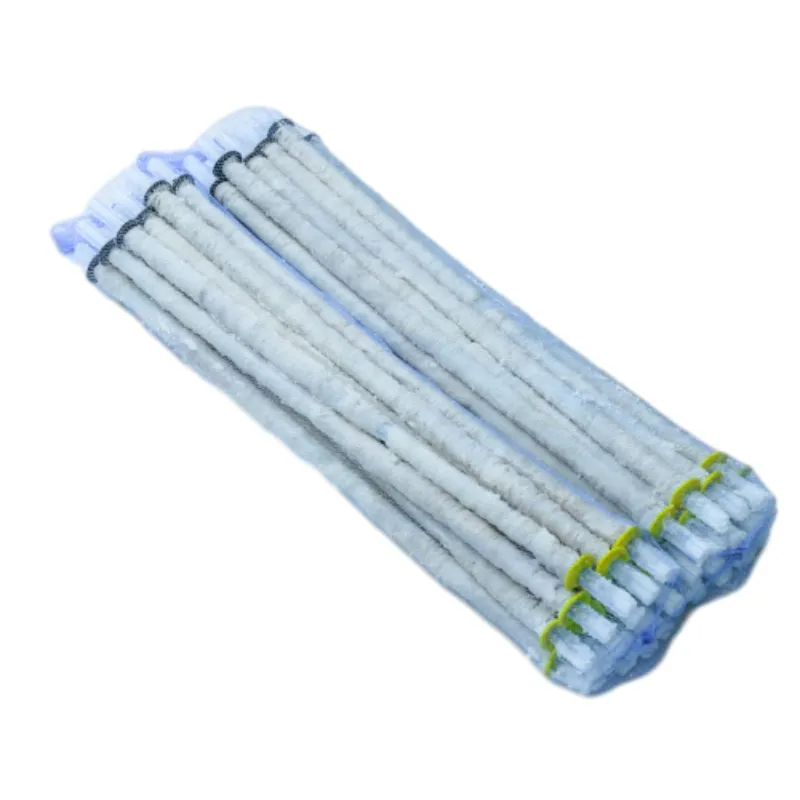
Packaging integrity directly influences preservation outcomes during long-distance transit. Salted sheep casings packed inside barrels or on hard tubes must be evaluated for brine leakage, seal degradation, and proper moisture retention. Any compromise in outer containers exposes delicate organic tissues to ambient contamination risks before export clearance.

Operational Verification Checkpoints
- Inspect batch sorting accuracy against established caliber thresholds.
- Verify liquid levels in brined packaging units to prevent tissue dehydration.
- Examine external protective layers for structural damage prior to final container loading.
- Review factory records detailing raw material handling procedures and sorting tolerances to ensure compliance with quality agreements.
Biological variability in animal tissues requires predetermined tolerance levels established during preliminary contract negotiations. Importers must define acceptable parameters for raw material consistency within the 16–28mm bracket.
Sorting methods require alignment with market expectations and specific application requirements for chipolata, merguez, or breakfast links.
Tolerance Threshold Parameters
- Record physical dimensions across representative sampling lots prior to dispatch.
- Establish clear protocols for handling organic variations without disrupting production schedules.
- Document acceptable tolerance levels for caliber consistency within the 16–28mm range.
Calculating Unit Economics and Logistics Factors
Gross purchase mass diverges significantly from drained weight after soaking phases, making drained mass the necessary baseline for raw material cost calculations.
Refrigerated container temperature settings must be maintained strictly during ocean transit to prevent structural degradation, while lead times shift according to destination port logistics and vessel schedules.
Unit economic performance is determined by the interaction of moisture retention, transport distance, and minimum order quantity thresholds.

| Parameter | Operational Factor | Financial Impact |
|---|---|---|
| size | 16–28mm caliber distribution | Directly influences stuffing efficiency and scrap rates on automated lines |
| lead_time | Varies by destination port and shipping schedule | Affects inventory holding costs and warehouse safety stock levels |
| moq | Minimum order quantity thresholds | Determines upfront capital commitment per purchase order cycle |
Net weight versus drained weight ratios reveal the actual raw material cost per finished kilogram of meat product, and these financial variables depend entirely on moisture content and vessel transit duration.
Securing Veterinary Health Certificates and Import Documentation
Veterinary Health Certification Prerequisites
Official animal-origin food safety audits require verified veterinary health certificates before cargo leaves the export facility. Destination customs authorities routinely intercept perishable consignments lacking authenticated sanitary clearance paperwork.
Regional quarantine policies dictate specific import permit parameters depending on bilateral trade agreements and destination port requirements. Cargo clearance timelines vary based on seasonal inspection volumes and freight routing specifics.
Supply Chain Traceability and Border Clearance
Traceability protocols link processed casing inventory batches directly to initial slaughterhouse records to satisfy regulatory mandates. Digital audit trails covering temperature-controlled storage logs prevent clearance delays during port inspection procedures.
- Archiving official origin declarations for every distributed production run
- Reconciling bill of lading weights with veterinary inspection manifests
- Maintaining complete documentation trails for animal-origin food safety verifications
When documentation gaps occur during routine border checks, warehousing fees accumulate rapidly while authorities hold the cargo in bonded storage.
Managing Natural Organic Variations in Sourcing
Assessing Natural Biological Variance in Raw Material Sourcing
Biological variability in animal-origin raw materials requires systematic evaluation during initial supplier screening, particularly when managing organic variations across seasonal production cycles. Supply chain managers must account for inherent thickness differences driven by animal diet and age, avoiding assumptions of uniform factory output.
Tolerance levels for caliber consistency within the 16–28mm range are established through pre-agreed specifications rather than rigid assumptions. Sorting protocols align directly with the production needs of fine-diameter sausages like chipolata, merguez, or breakfast links, ensuring that oversized or undersized pieces are filtered out early.
Operational Protocols for Handling Organic Fluctuations
Production schedules depend on clear sorting thresholds that accommodate natural fluctuations without triggering assembly line stoppages. Establishing predetermined tolerance boundaries ensures that high-speed filling machinery maintains continuous throughput during processing batches.
Sorting accuracy is verified against predetermined sorting protocols to minimize waste and prevent irregular casings from reaching the stuffing floor. When evaluating batch consistency, buyers correlate incoming sorting reports with historical yield data.

Documenting Quality Parameters for Batch Acceptance
Acceptance thresholds depend heavily on the specific order volume, seasonal availability, and destination port requirements agreed upon in the contract. Importers document these parameters within internal quality control guidelines to maintain consistent grading across recurring shipments.
Quality agreements incorporate buyer expectations regarding biological variance, providing a clear reference point for dispute resolution if batch grading deviates from agreed standards. Factory audit teams cross-reference sorting methods against prevailing market practices to ensure reliable quality output.
Executing the Supplier Evaluation and Selection Process
Synthesizing Procurement Findings into a Supplier Scorecard
Combining sizing data, inspection milestones, and financial metrics into a definitive evaluation matrix ensures that vendor capabilities match operational targets before contracts are finalized. Operational decision-makers weigh natural caliber variations, drained weight ratios, and sorting accuracy against total landed costs. Structured scorecards eliminate subjective impressions, providing purchasing teams with objective criteria to rank competing vendor submissions.
Confirming that compliance documentation aligns with USDA and EU standards conditionally depends on the specific destination market requirements and export volume. Evaluation teams verify that paperwork matches physical sample batches before signing agreements. Unresolved gaps in animal-origin safety paperwork trigger immediate disqualification during this final review stage, protecting importers from port-side delays.
Evaluating Production Readiness and Final Terms
Verifying that vendors meet fine-diameter sausage manufacturing requirements reliably depends on their sorting consistency across seasonal production batches. Procurement managers review historical yield data and packaging integrity metrics to confirm operational stability. The procurement checklist review must be fully resolved before entering formal contract negotiations and issuing purchase orders.
| Evaluation Metric | Specification Parameter | Acceptance Criteria |
|---|---|---|
| Caliber Range | 16–28mm | Strict sorting within approved limits |
| Application Suitability | Fine-diameter sausages | Compatible with chipolata, merguez, and breakfast links |
| Compliance Documentation | USDA and EU standards | Conditional availability upon request |
| Minimum Order Quantity | Dependent on order volume | Verified against production capacity |

Frequently Asked Questions
Procurement teams must ensure that incoming strands measure within the 16–28mm range. This specific dimensional bracket prevents mechanical jams and fill-weight variance during commercial stuffing runs. When evaluating factory batches, operators verify that the material suits applications such as breakfast links, merguez, and chipolata production. Exact sizing tolerances depend on equipment calibration and nozzle configurations.
Quality assurance teams must implement structured verification protocols focusing on sorting accuracy and caliber consistency across production batches. Inspecting packaging integrity protects natural organic variations from environmental damage during transit. Establishing these milestones prevents non-compliant shipments from reaching factory floors. Pre-shipment verification schedules depend on batch size and shipping timelines.
Calculations must account for industry-standard brining requirements during cost evaluations. Analyzing net weight versus drained weight ratios reveals true material yield and prevents unexpected cost overruns. Cold-chain shipping logistics and packaging standards also drive total landed costs. These financial metrics fluctuate depending on order volume and destination port logistics.
Natural casings exhibit biological variance that requires structured sorting methods to maintain processing efficiency. Establishing acceptable tolerance levels within the 16–28mm range ensures smooth throughput on high-speed stuffing equipment. Protocols for handling organic deviations depend on supplier sorting capabilities and raw material availability.
Landed costs depend heavily on cold-chain shipping logistics, packaging configurations, and brining preservation norms. Evaluating net weight ratios against initial purchase prices reveals the true economic value of each batch. Supply chain directors analyze these variables alongside market context and research notes to maintain budget predictability.
Conclusion
Implementing Supplier Verification Protocols
Procurement teams deploy structured verification workflows to evaluate prospective manufacturing partners before issuing commercial orders.
Operational bottlenecks decrease significantly when importers establish clear documentation milestones prior to finalizing purchase contracts.
Executing Actionable Supplier Audits
Quality assurance managers review facility sorting records against established caliber boundaries to confirm batch consistency.
Import compliance depends strictly on destination market requirements and the scope of documentation provided by the manufacturer.
Execution timelines vary based on shipping destinations, minimum order thresholds, and logistical complexity. Importers verify that factory sorting protocols align with target market expectations before dispatching initial trial orders.