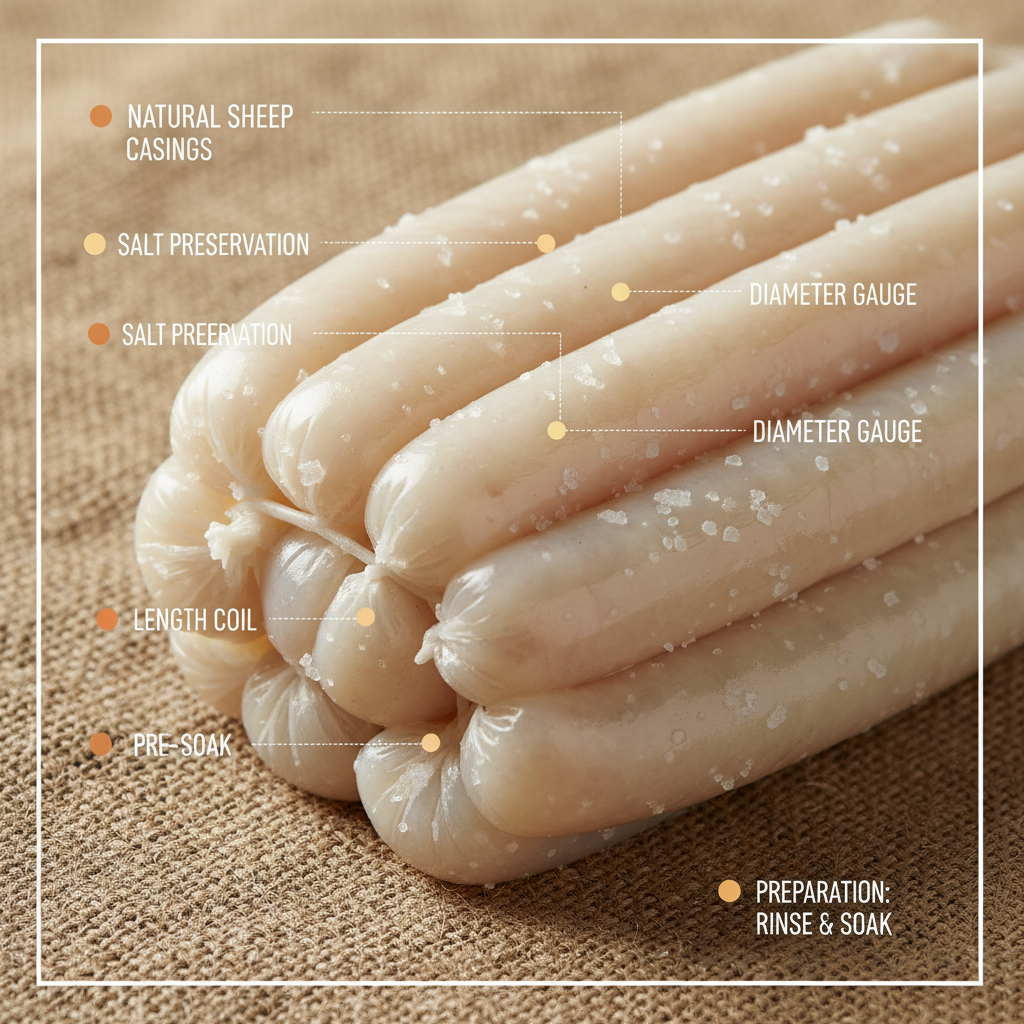
Honestly, the whole sheep casing manufacturer world has been flipped on its head these past couple years. Everyone’s chasing ‘high yield,’ ‘consistent diameter,’ ‘minimal smell’… fancy words, right? But it all boils down to getting a good sausage, and a happy butcher. Seems simple, but trust me, it’s not. I’ve spent enough time in abattoirs to know.
What people don’t seem to grasp is how much variation there is, even within a batch of sheep casings. You can order from the same sheep casing manufacturer every time, and still get slight differences in texture, strength, even color. It’s the animal, the feed, the season… it all plays a part. And when you’re running a high-speed production line, those small differences can bring the whole thing to a screeching halt.
You wouldn’t believe the debates I’ve had with engineers about sizing. They want everything to be perfectly uniform, down to the micron. I tell ‘em, “Look, a millimeter here or there isn't going to ruin the sausage!” They just don't get it. They’ve never felt a casing stretch and snap in their hands.
The Current Landscape of sheep casing manufacturer
To be honest, what’s trending now is all about traceability. Everyone wants to know exactly where their casings come from, from the specific farm to the slaughterhouse. It's partly driven by regulations, partly by consumer demand for ‘natural’ products. And, strangely, there's a growing market for pre-cut, pre-soaked casings. Saves the butcher time, apparently.
The biggest players, naturally, are in New Zealand and Australia. The sheep breeds there – especially the Romney and Merino – produce casings with just the right thickness and elasticity. But there’s also a lot of innovation coming out of China, with companies improving processing techniques and quality control. Don’t underestimate ‘em.
Common Design Pitfalls in sheep casing manufacturer
Have you noticed how many manufacturers are trying to create a “one-size-fits-all” casing? It never works. Different sausages – chorizo, kielbasa, frankfurters – they all require a different casing diameter and strength. Trying to force a casing that's too thin onto a large sausage? Forget about it. It'll split. Too thick? You lose that snap.
Another big mistake is neglecting the pre-treatment. Casings need to be properly soaked, desalted, and sometimes even bloomed. If you skip that step, you end up with casings that are brittle and prone to tearing. It's a pain, I know, but it’s critical.
And don’t even get me started on the packaging. I encountered this at a factory in Poland last time. They were shipping casings in flimsy plastic bags, and they arrived moldy and unusable. A simple vacuum seal makes all the difference.
Materials and Handling of sheep casing manufacturer
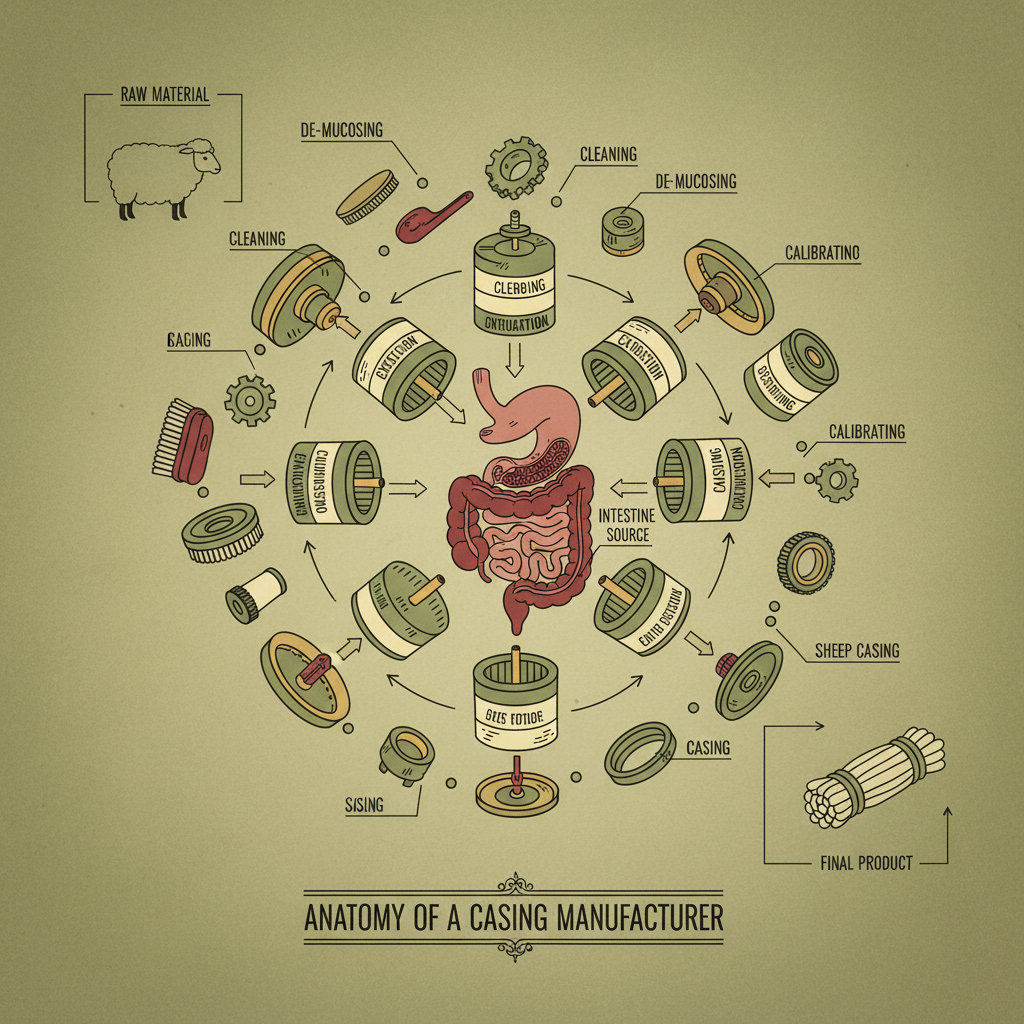
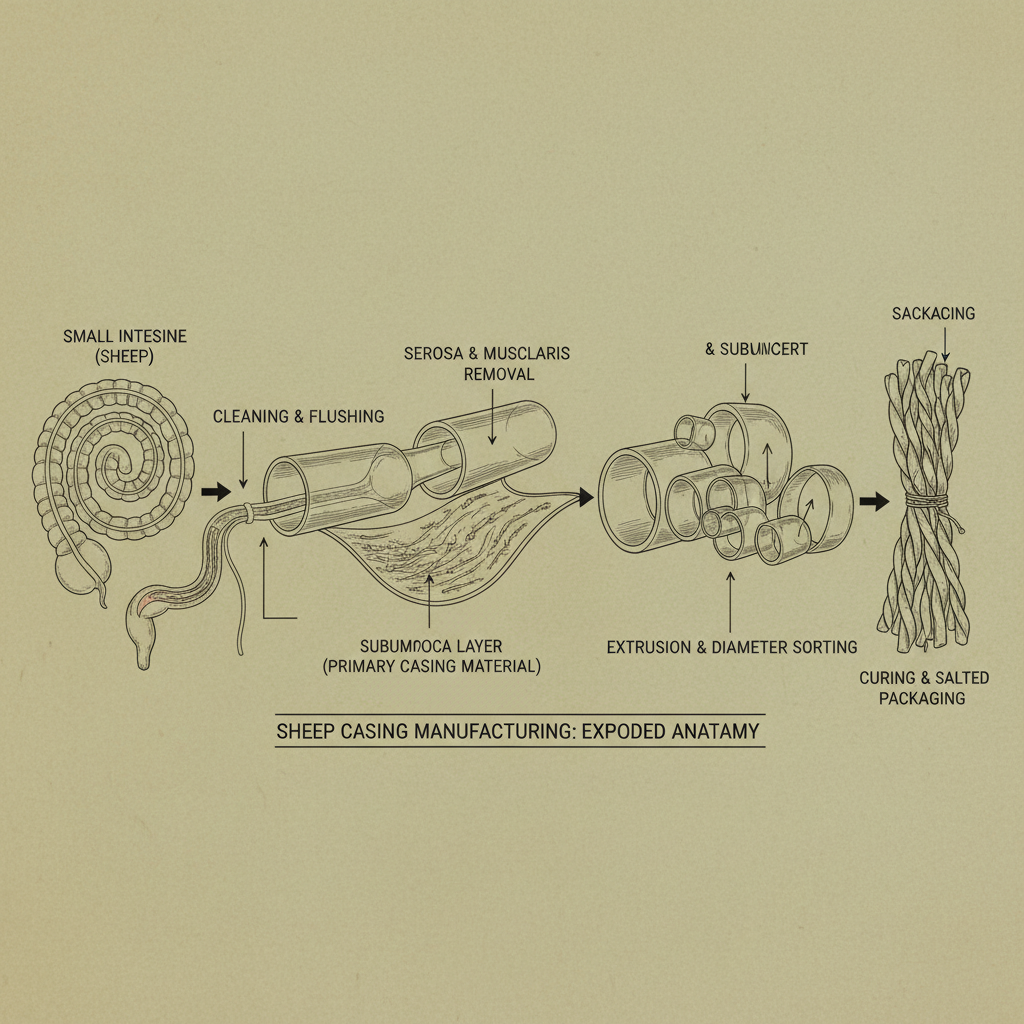
The material, obviously, is sheep intestine. Sounds gross, I know, but it's a remarkably strong and flexible material when processed correctly. It has this… almost silky feel when it’s properly hydrated. And you can smell that faint lanolin scent, which tells you it’s good quality. A bad casing smells… well, you don’t want to know.
Handling them is tricky. They’re delicate when dry, so you gotta be gentle. You soak them in cold, running water – not too hot, or they’ll shrink – and then carefully thread them onto the stuffing horn. It takes practice, that's for sure. I've seen guys ruin entire batches just because they rushed it.
Proper storage is key. They need to be refrigerated, and kept away from direct sunlight and heat. A slightly damp cloth over them helps prevent them from drying out. Seriously, treat ‘em like gold.
Real-World Testing of sheep casing manufacturer
Forget the lab tests. The real test is on the production line. Stuffing speed, knotting resistance, burst strength… those are the metrics that matter. I’ve seen casings that aced every lab test imaginable, but fell apart after just a few minutes of actual use.
We do a lot of “stress tests” ourselves. We’ll stuff casings with varying levels of fat content, different spice blends, and even different meat types to see how they hold up. We’ll also test them at different temperatures, because temperature fluctuations can affect their elasticity.
sheep casing manufacturer Performance by Key Attribute
How Users Actually Utilize sheep casing manufacturer
It's funny, you think they’d all be using the casings the same way, but they don’t. Some butchers prefer to soak them overnight, others just give ‘em a quick rinse. Some insist on using warm water, others swear by cold. It’s all about personal preference, and what works best for their specific setup.
And the types of sausages they make… it's endless. From classic bratwurst to spicy chorizo, to those weird blood sausages they make in Eastern Europe. I’ve seen it all. It makes my job interesting, anyway.
Advantages and Disadvantages of sheep casing manufacturer
The big advantage is that natural taste and texture. You just can’t replicate it with synthetic casings. Plus, they’re biodegradable, which is a big plus these days. But, yeah, there are downsides. They’re more expensive, they require more prep work, and they’re more susceptible to damage.
They’re also not ideal for very long shelf life. Synthetic casings are better for that. And, honestly, a lot of the smaller producers are switching to collagen casings because they’re more consistent and easier to handle. It’s a trade-off, really.
Anyway, I think the perceived “messiness” is overblown. A little extra effort upfront saves headaches down the line.
Customization Options for sheep casing manufacturer
You can get casings pre-salted, pre-soaked, even pre-cut to specific lengths. We worked with a customer in Spain last year who wanted casings with a specific diameter for their chorizo production. They were super picky about it. It took a lot of tweaking, but we got it right.
Another request we had was for casings treated with a natural antimicrobial agent to extend shelf life. It's becoming increasingly common, especially with the growing demand for organic and natural products.
Last month, that small boss in Shenzhen who makes smart home devices insisted on changing the interface to , and the result was that his whole batch of casings had mold grown on them. It was chaotic... He didn’t understand why a food-grade product suddenly needed a USB port.
Summary of sheep casing manufacturer Quality Control Metrics
| Diameter Consistency (mm) |
Tensile Strength (MPa) |
Salt Content (%) |
Defect Rate (%) |
| 1.8 – 2.2 |
15 – 20 |
2.5 – 3.5 |
0.5 |
| 2.0 – 2.4 |
18 – 22 |
2.0 – 3.0 |
0.3 |
| 1.6 – 2.0 |
12 – 16 |
3.0 – 4.0 |
1.0 |
| 2.2 – 2.6 |
20 – 25 |
1.5 – 2.5 |
0.2 |
| 1.9 – 2.3 |
16 – 21 |
2.8 – 3.8 |
0.6 |
| 2.1 – 2.5 |
17 – 23 |
2.2 – 3.2 |
0.4 |
FAQS
Honestly? Consistency. Getting a batch that’s uniform in diameter and strength is tough. You're dealing with a natural product, so there's always going to be some variation. We spend a lot of time sorting and grading to try and minimize those differences, but it's never perfect. It's the biggest complaint we hear from butchers, and it’s something we’re constantly working to improve. Proper soaking and handling are key, but even then, it's a gamble sometimes.
Critically important. Sheep raised on different diets, in different climates, are going to produce casings with different characteristics. New Zealand and Australia are known for high-quality sheep breeds, but even within those countries, there’s variation. We work closely with our suppliers to ensure they’re using best practices in animal husbandry and processing. It's not just about the casings themselves, it's about the entire supply chain.
Absolutely. Animal welfare is a growing concern for consumers, and rightly so. We only work with suppliers who adhere to strict ethical standards. We also promote the use of the entire animal, minimizing waste. It's a complex issue, but we believe it's important to be transparent about our sourcing and processing practices.
It depends on how they’re stored. Properly refrigerated, in a dry, dark place, they can last for several months. But once they’re soaked, you need to use them relatively quickly, otherwise they’ll become fragile and prone to tearing. We always recommend following the manufacturer’s instructions for storage and handling.
Of course. Collagen casings are a popular alternative, especially for mass-produced sausages. They're more consistent and easier to handle, but they don’t have the same snap and texture as natural casings. Cellulose casings are another option, but they’re often used for cooked sausages rather than raw. Each has its pros and cons.
I think we’ll see more focus on traceability and sustainability. Consumers want to know where their food comes from, and they want it to be produced in an environmentally responsible way. We're also exploring new processing techniques to improve casing consistency and shelf life. And, honestly, a lot of automation to make the whole process less labor intensive. It’s a challenging industry, but a necessary one.
Conclusion
Ultimately, sheep casing manufacturer is about balancing tradition with innovation, quality with consistency, and sustainability with profitability. It's a complex process that requires a deep understanding of materials, processing techniques, and customer needs. We’ve come a long way from just scraping intestines off sheep, but the core principles remain the same.
And look, at the end of the day, whether this thing works or not, the worker will know the moment he tightens the screw. That’s what matters. If the casing holds, if the sausage looks good, if the customer is happy… then we’ve done our job. Visit our website to learn more: https://www.rtcasing.com