Selecting the right casing is often the most overlooked variable in sausage production, yet it dictates the final "snap," juice retention, and overall aesthetic of the product. For artisanal producers and industrial processors alike, the choice of material defines whether a product feels premium or generic.
The global shift toward "clean label" products has reinvigorated the demand for natural collagen structures over synthetic alternatives. As consumers scrutinize ingredient lists, the ability to source traceable, additive-free casings from certified slaughterhouses has become a critical competitive advantage for meat processors.
Evaluating sausage casing suppliers requires a deep dive into supply chain transparency, processing standards, and the specific mechanical properties of the collagen. This guide examines the technical nuances of natural casings and how to optimize selection for specific sausage varieties.


The structural integrity of a natural casing depends entirely on the preservation of the collagen matrix during the initial cleaning and curing stages. When raw intestines are handled with minimal processing intervention, the natural elasticity is maintained, preventing "blowouts" during the stuffing process.
For premium products, the focus is on removing defects without compromising the wall thickness. This ensures that the casing provides a consistent barrier that allows for optimal smoke absorption while maintaining the juiciness of the meat emulsion.
Sheep casings are prized for their delicate texture and smaller diameters, typically ranging from 16mm to 28mm. They are the industry standard for fine-diameter links such as chipolatas, merguez, and breakfast sausages. The primary technical advantage is the "snap"—the tactile sensation of the casing breaking cleanly upon the first bite.
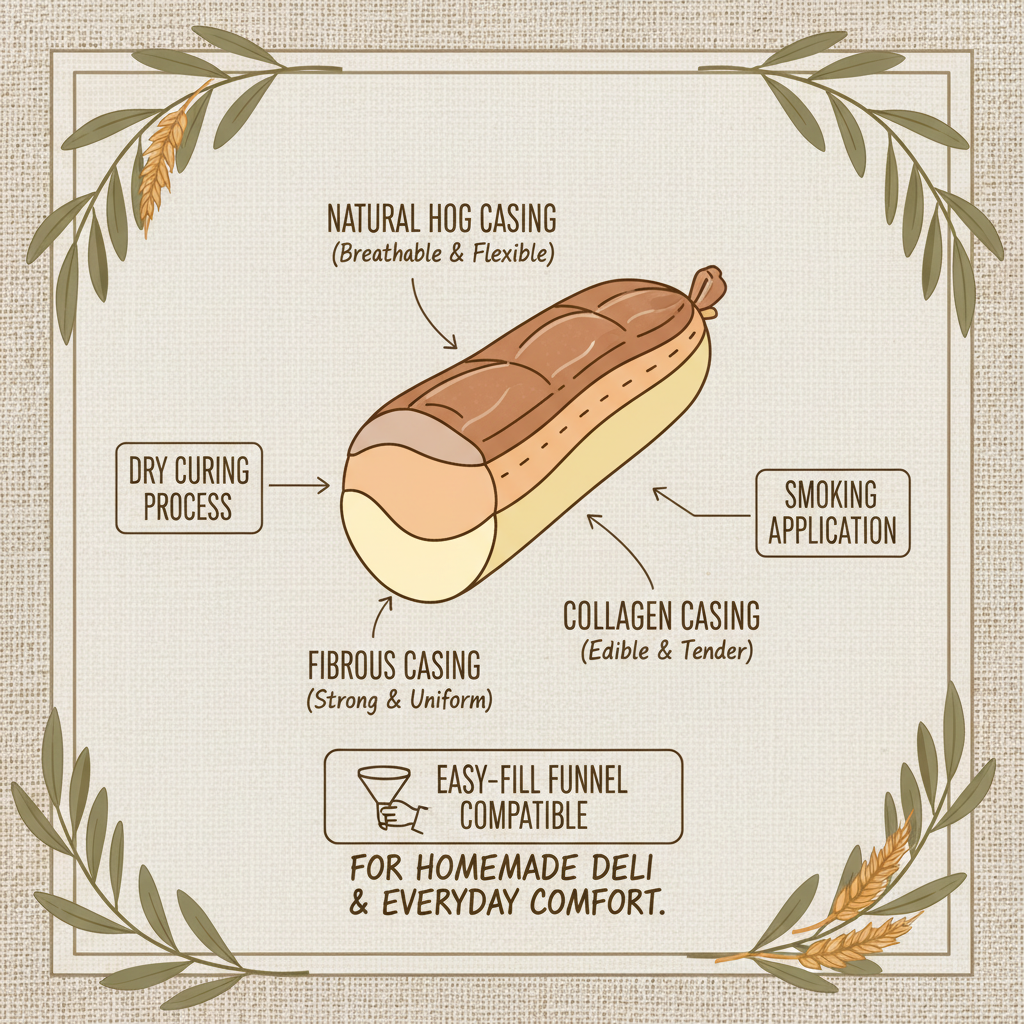
Hog casings, available in salted or dried tubed formats, offer greater versatility for larger sausages. The thicker wall of a hog casing provides the necessary strength for heavier emulsions and longer curing times. Dried tubed hog casings, in particular, offer a logistical advantage by reducing weight and maintaining stability during long-distance shipping.
The choice between these materials depends on the desired smoke permeability and the specific thermal processing the sausage will undergo. While sheep casings offer a more refined mouthfeel, hog casings provide the structural robustness required for traditional bratwursts and larger cured products.
Global food safety standards have transformed how natural casings are sourced. Compliance with USDA and EU standards is no longer optional but a baseline requirement for international trade. This involves strict oversight of the slaughterhouse environment to prevent contamination before the casing ever reaches the processing plant.
The key to uncompromised quality lies in controlling the supply chain from the slaughterhouse to the final product, ensuring that freshness and traceability are embedded in the process rather than added as an afterthought.
Companies like Runtai (Hebei) Casings Co., Ltd leverage their HACCP certification to ensure that every batch of salted hog or sheep casings meets sanitary quality procedures. By operating as a designated factory for overseas processing, they bridge the gap between raw agricultural output and food-grade industrial input.
Different sausage styles require different mechanical properties from their casings. A breakfast link requires high elasticity to accommodate rapid stuffing, while a smoked sausage requires high permeability to allow smoke phenols to penetrate the meat.
When evaluating casing performance, processors look at three primary indices: the "snap" factor, the smoke absorption rate, and the bursting strength. These metrics vary significantly across material types and processing methods.
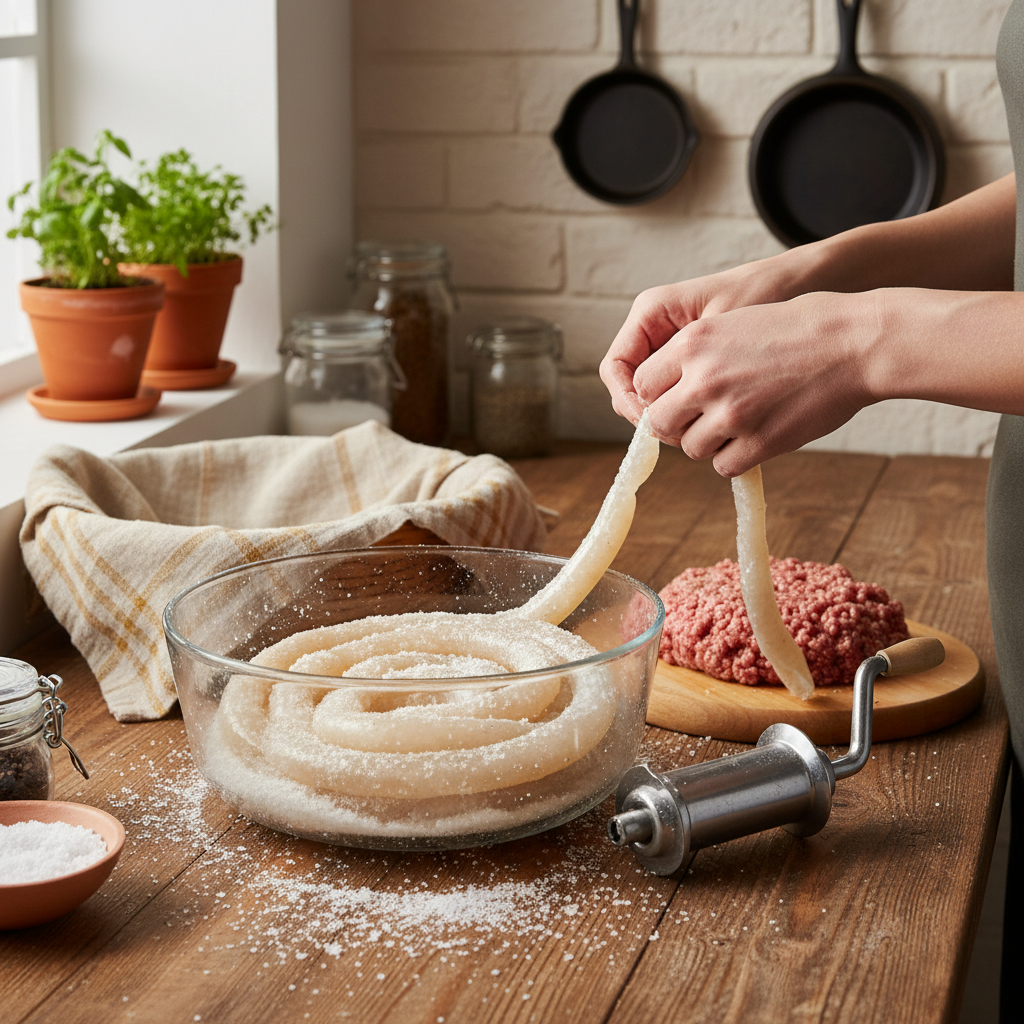
The method of preservation—whether salt-packed or pre-flushed brine—directly impacts the efficiency of the production line. Salt-packed casings require a specific desalting and rinsing process that, if done incorrectly, can damage the collagen fibers and lead to inconsistent diameters.
In contrast, tailored processing such as pre-flushed brine reduces preparation time and minimizes waste. For large-scale manufacturers, this operational efficiency is critical for maintaining throughput without sacrificing the integrity of the natural product.
The sausage industry is experiencing a resurgence of artisanal craftsmanship, where the "natural" aspect of the casing is a primary selling point. Consumers are moving away from artificial additives, pushing producers to find sources that can guarantee a chemical-free process.
This shift has placed immense pressure on the supply chain. Reliable availability of high-uniformity intestines requires strong, direct partnerships with certified slaughterhouses. When the supply chain is fragmented, consistency in casing strength and elasticity often suffers.
Looking forward, the integration of digital traceability—where a batch of casings can be traced back to the specific region of origin—will likely become the new standard for premium meat exports.
Selecting among various sausage casing suppliers should not be based on price alone. The total cost of ownership includes the rate of casing breakage, the amount of waste during stuffing, and the final yield of the product.
A professional evaluation framework considers the supplier's technical capacity to customize the product, such as offering specific diameter ranges or specialized brine treatments. This ensures that the material is perfectly matched to the stuffing equipment's specifications.
Finally, certifications such as HACCP provide the necessary assurance that the product is safe for global export, reducing the risk of regulatory delays at customs.
| Casing Type | Primary Application | Critical Factor | Suitability Index |
|---|---|---|---|
| Salted Sheep | Breakfast / Chipolata | "Snap" & Texture | High (Small Dia) |
| Salted Hog | Bratwurst / Salami | Burst Strength | High (Mid Dia) |
| Dried Tubed Hog | Export / Long-term Storage | Logistical Stability | Optimal for Bulk |
| Pre-flushed Brine | High-volume Production | Processing Speed | Optimal for Efficiency |
| Certified Organic | Artisanal / Clean Label | Traceability | High (Premium) |
| Custom Diameter | Specialty Sausages | Uniformity | Requirement-based |
The "snap" is the result of the casing's tensile strength and elasticity. High-quality sheep casings, sourced from certified slaughterhouses and processed with minimal intervention, maintain a tight collagen structure. When the sausage is bitten, this structure resists slightly before breaking cleanly, creating the desired tactile sensation. Poorly processed casings may be too soft or too brittle, leading to a "mushy" or "rubbery" texture.
Sheep casings generally have a thinner wall, which allows for faster and more efficient smoke absorption, making them ideal for quick-smoke products. Hog casings are thicker and provide a more robust barrier; while they still allow for smoke penetration, the process may take longer or require different temperature controls to achieve the same depth of flavor. The permeability is a key factor in determining the final color and taste of the sausage.
Dried tubed hog casings are primarily designed for logistical efficiency and long-term stability. By removing excess moisture and packaging them in tubes, they become lighter and less prone to spoilage during transit, which is critical for international shipping. While they require rehydration before use, they offer a more consistent supply for manufacturers who cannot source fresh salted casings locally and need to maintain a steady inventory.
Evaluation should focus on three areas: Certification, Consistency, and Technical Support. First, verify HACCP and USDA/EU compliance to ensure food safety. Second, test a sample batch for diameter uniformity and burst strength across different stuffing pressures. Third, assess the supplier's ability to provide tailored processing (e.g., salt-packed vs. brine) to match the plant's operational workflow. A reliable supplier acts as a technical partner rather than just a commodity vendor.
Premium natural casings, such as those produced by Runtai, are focused on preserving the traditional appeal of artisanal sausages by avoiding artificial additives. The primary agents used are salt or brine for preservation. The goal is to maintain the natural collagen structure of the intestine. This makes them the preferred choice for "clean label" products where consumers demand transparency and the absence of synthetic chemicals.
Blowouts are typically caused by defects in the casing wall, excessive stuffing pressure, or improper rehydration. If the casing has thin spots due to poor selection or damaged collagen from harsh chemical processing, it will fail under pressure. Additionally, if salted casings are not properly desalted, they may lose elasticity. Choosing suppliers who perform rigorous selection of defect-free intestines is the most effective way to reduce this waste.
The quality of a sausage is fundamentally tied to the integrity of its casing. From the "snap" of a fine sheep link to the robustness of a hog-cased bratwurst, the material choice influences every stage of production and the final consumer experience. By prioritizing supply chain transparency and technical specifications over simple pricing, processors can ensure a consistent, high-quality output.
As the industry moves toward greater traceability and cleaner labels, the role of specialized sausage casing suppliers becomes even more pivotal. Investing in certified, high-uniformity natural casings is not just a production choice—it is a commitment to the craftsmanship of premium meat processing.