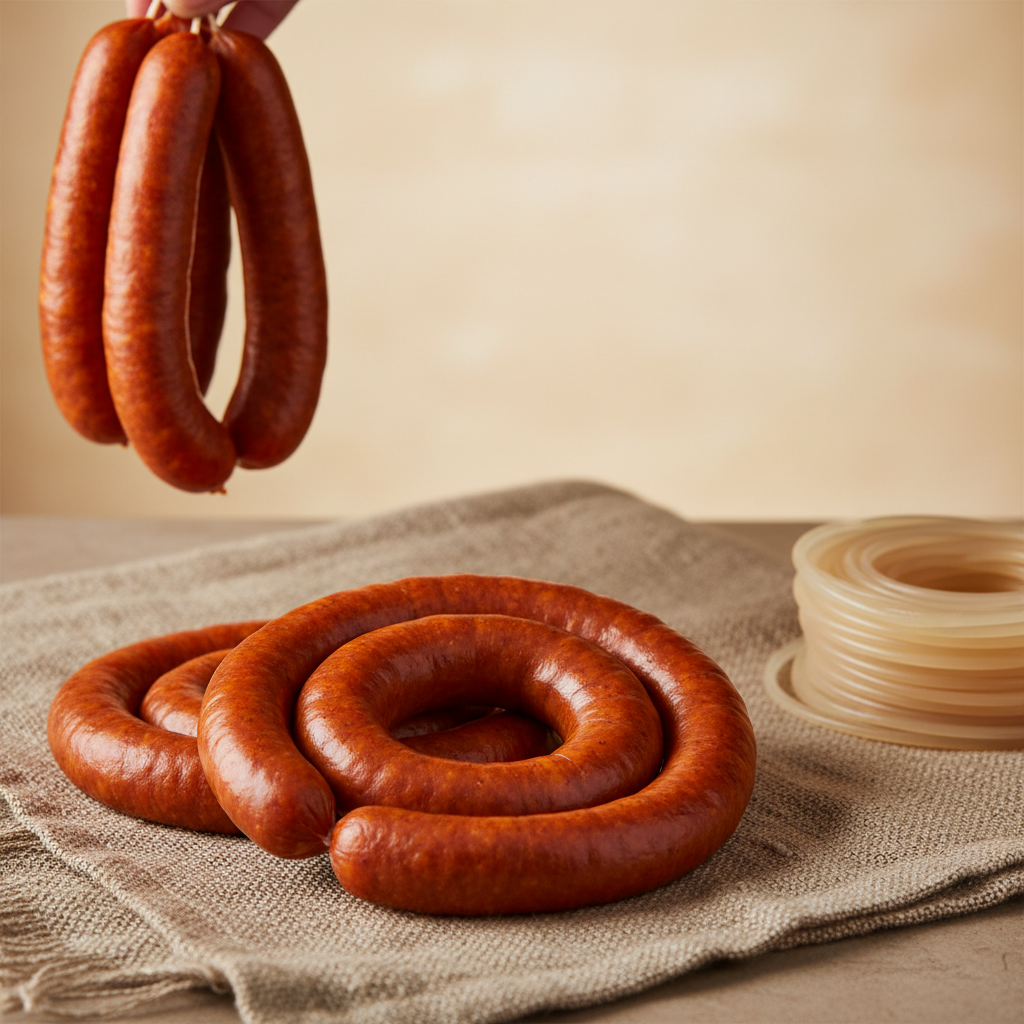
In the competitive landscape of meat processing, efficiency and consistency are the cornerstones of profitability. For manufacturers specializing in high-quality sausages, the choice of casing is not merely a technical detail but a critical factor in product yield and presentation. pre tubed sausage casings offer a streamlined solution that eliminates the labor-intensive process of manual tubing, allowing producers to focus on flavor profiles and quality control.
The global demand for processed meats continues to rise, with a particular emphasis on traditional textures and authentic "snap." However, the manual handling of natural casings often leads to inconsistent diameters and increased waste. By adopting pre-tubed technology, facilities can standardize their output, ensuring that every link meets strict commercial specifications while reducing the overall operational overhead in the preparation phase.
Understanding the nuances of pre-tubed hog and salted casings is essential for any operation looking to scale. Whether you are managing a boutique artisanal smokehouse or a large-scale industrial plant, the integration of pre tubed sausage casings ensures a seamless transition from the stuffing machine to the curing chamber, maintaining the structural integrity of the meat emulsion throughout the process.
Global Relevance of Pre Tubed Sausage Casings
The global processed meat market is under immense pressure to increase output while maintaining the "natural" appeal that consumers demand. According to industry standards and ISO quality benchmarks, the uniformity of the casing is one of the primary drivers of consumer perception. pre tubed sausage casings have emerged as a critical solution to the labor shortage in meat processing plants across Europe and North America, where skilled laborers for manual tubing are becoming increasingly scarce.
By shifting the tubing process to the manufacturer, the end-user reduces the risk of casing bursts and leakage during the stuffing phase. This global shift toward pre-processed components mirrors trends in other food sectors where "ready-to-use" ingredients reduce the risk of contamination and operational downtime, effectively aligning production cycles with the high-velocity demands of modern retail chains.
Defining Pre Tubed Sausage Casings in Modern Processing
In simple technical terms, pre tubed sausage casings are natural hog or sheep casings that have been mechanically tubed over a mandrel or a specialized rod before being salted or dried. This means the casing arrives at the processing plant already formed into a cylinder, eliminating the need for the producer to perform the "tubing" step—which involves sliding the casing over a pipe to remove twists and ensure a consistent diameter.
This innovation is deeply connected to the needs of modern high-speed automation. In an industry where seconds per link matter, the ability to load a pre-formed tube directly onto a stuffing horn significantly increases the "uptime" of the machinery. It transforms a craft-based manual task into a standardized industrial input, bridging the gap between traditional culinary quality and industrial scalability.
From a humanitarian and food security perspective, increasing the efficiency of meat preservation through reliable casing technology reduces food waste. When casings are consistently tubed, the failure rate during smoking and cooking drops, meaning more product reaches the consumer and fewer resources are wasted during the manufacturing process.
Core Components of High-Quality Casing Systems
The effectiveness of pre tubed sausage casings relies on several core factors, primarily the uniformity of the caliber. A consistent diameter ensures that the sausage links are equal in size, which is essential for automated packaging and weighing systems. This precision prevents the "bottleneck" effect where uneven links cause jams in the clipping or twisting machinery.
Tensile strength and elasticity are equally vital. High-grade pre-tubed casings must be able to expand to accommodate the meat emulsion without tearing. The salt-curing process used in salted casings must be balanced perfectly; too much salt can make the casing brittle, while too little can compromise the shelf life and lead to premature spoilage of the pre tubed sausage casings.
Finally, the purity and cleaning process of the natural membrane determine the final aesthetic. A superior product is free from impurities and odors, ensuring that the casing enhances rather than detracts from the flavor of the meat. This focus on purity is what separates industrial-grade materials from premium, artisan-focused pre-tubed options.
Practical Applications and Industrial Use Cases
In real-world industrial contexts, pre tubed sausage casings are utilized across a variety of meat products, from traditional Bratwurst and Frankfurters to specialized cured salamis. In the European Union, where strict regulations govern the diameter and weight of traditional sausages, these pre-tubed options allow producers to maintain compliance without needing a massive team of expert tubers.
For instance, in high-volume processing zones in the Midwest United States or the industrial hubs of China, these casings are integrated into vacuum-stuffing systems. By using pre-tubed materials, these plants can achieve a continuous flow of production, reducing the time between batches and allowing for a more agile response to market demand shifts.
Efficiency Comparison of Casing Methods
Long-term Economic and Quality Advantages
The primary economic advantage of pre tubed sausage casings is the drastic reduction in labor costs. Manual tubing is a bottleneck that requires a specific skill set; by eliminating this step, companies can reallocate their workforce to higher-value tasks such as quality assurance or product development. Over a fiscal year, the reduction in waste—caused by fewer casing breaks—leads to a significant increase in the overall yield per kilogram of raw material.
Beyond the balance sheet, there is a profound impact on brand trust. Consumers today are highly sensitive to visual inconsistencies. A product that features perfectly uniform links conveys a sense of professionalism and reliability. When a manufacturer utilizes premium pre tubed sausage casings, they are investing in the "first impression" of the product, which directly correlates to repeat purchases and long-term customer loyalty.
Innovations in Natural Casing Technology
The future of the industry is leaning heavily toward "smart processing." We are seeing the integration of more precise drying techniques for pre tubed sausage casings, which allows for a longer shelf life without the need for excessive chemical preservatives. This aligns with the global "Clean Label" trend, where consumers demand fewer additives in their food.
Automation is also evolving. New stuffing machines are being designed specifically to interface with pre-tubed formats, reducing the setup time between different calibers. The move toward digital transformation means that casing suppliers can now provide precise traceability data, allowing meat processors to track the origin and processing date of their casings for enhanced food safety compliance.
Sustainability is another key driver. Innovations in the cleaning and salting phases of pre tubed sausage casings production are focusing on reducing water consumption and managing salt brine waste. By optimizing these processes at the source, the entire supply chain becomes more eco-friendly, appealing to the environmentally conscious modern consumer.
Overcoming Common Challenges in Casing Application
Despite the benefits, some producers struggle with the initial transition to pre tubed sausage casings, often citing concerns about the "natural feel" compared to manually tubed options. The solution lies in selecting the correct caliber and salt level. Expert guidance on the ratio of casing elasticity to stuffing pressure can eliminate most of the tearing issues that beginners encounter.
Another common challenge is the handling of salted pre-tubed casings during the rinsing phase. If not rinsed correctly, residual salt can affect the flavor profile of the sausage. Implementing a standardized, temperature-controlled soaking process ensures that the casings are fully hydrated and ready for stuffing without altering the product's taste.
Finally, storage conditions can impact the performance of pre tubed sausage casings. Maintaining a consistent cool, dry environment for dried casings, or a strictly refrigerated environment for salted ones, prevents the collagen from degrading. Proper inventory management (FIFO) ensures that the casings used are always at their peak elasticity.
Technical Analysis of Pre Tubed Sausage Casings Performance
| Casing Variant |
Elasticity Score (1-10) |
Setup Speed |
Waste Reduction % |
| Dried Pre-Tubed Hog |
8 |
Very High |
15% |
| Salted Pre-Tubed Hog |
9 |
High |
12% |
| Premium Thin-Wall Pre-Tubed |
7 |
High |
10% |
| Standard Pre-Tubed Sheep |
6 |
Medium |
8% |
| Industrial-Grade Hog |
9 |
Very High |
18% |
| Artisan-Focus Pre-Tubed |
8 |
Medium |
11% |
FAQS
The primary difference is the preparation process. Traditional casings arrive as a flat or twisted bundle and must be manually "tubed" over a rod by the processor to ensure they are straight and a consistent diameter. Pre tubed sausage casings have already undergone this mechanical tubing process at the manufacturing stage. This removes a labor-intensive step, reduces human error, and ensures a much higher level of uniformity across all links produced.
No, pre tubed sausage casings are made from the same high-quality natural collagen membranes as traditional casings. The "snap" is a result of the natural properties of the hog or sheep membrane and the stuffing pressure used. Because pre-tubing ensures a more consistent diameter, it can actually improve the consistency of the "snap" across an entire batch, providing a more uniform eating experience for the consumer.
The choice depends on your logistics and storage capabilities. Dried pre tubed sausage casings offer a longer shelf life and are easier to transport without refrigeration, making them ideal for global shipping. Salted casings generally offer slightly better elasticity and a more "fresh" feel but require strict temperature control and refrigeration. Most industrial plants use a mix based on the specific requirements of the sausage variety being produced.
Bursting is usually caused by a mismatch between the stuffing pressure and the casing caliber. First, ensure you are using the correct size pre tubed sausage casings for your meat emulsion density. Second, ensure salted casings are properly hydrated in lukewarm water. Third, check your stuffing horn for any burrs or sharp edges that could nick the membrane, and calibrate your vacuum stuffer to avoid air pockets that create pressure spikes.
Yes, they are specifically designed for this purpose. Automation requires extreme consistency in diameter to function without jamming. Pre tubed sausage casings provide the precise uniformity needed for high-speed clippers and twisting machines to operate at peak efficiency. This compatibility is one of the primary reasons large-scale processors prefer pre-tubed options over manual ones.
For salted pre tubed sausage casings, maintain a consistent temperature between 2-4°C (36-39°F) and keep them sealed to prevent drying out. For dried casings, store them in a cool, dry area away from direct sunlight and humidity. Always follow the FIFO (First In, First Out) method to ensure you are using the freshest stock, as the collagen can lose elasticity over very long periods of storage.
Conclusion
The adoption of pre tubed sausage casings represents a critical evolution in meat processing, blending the authenticity of natural materials with the precision of modern engineering. By eliminating the manual tubing bottleneck, producers can significantly reduce labor costs, minimize product waste, and ensure a level of visual and structural consistency that is essential for competing in today's retail market. From improved operational efficiency to enhanced consumer trust, the value proposition of pre-tubed technology is clear for any scale of operation.
As the industry moves toward more sustainable and automated futures, the role of standardized components like pre-tubed casings will only grow. We recommend that processors conduct a cost-benefit analysis of their current labor spend on tubing versus the investment in pre-processed casings to unlock new levels of scalability. For those seeking the perfect balance of tradition and technology, upgrading your casing supply is the most effective way to optimize your production line. Visit our website: www.rtcasing.com