Oct . 13, 2025 17:45
Dried Hog Casing: a practical insider’s guide to quality, speed, and flavor
If you’ve ever wondered how to use dry sausage casing without the fuss, you’re not alone. In fact, dried hog casings have quietly become a go-to for mid-size processors and indie charcutiers because they’re compact, consistent, and fast to prep. Here’s the play-by-play from the plant floor and the test kitchen.
What exactly are dried hog casings?
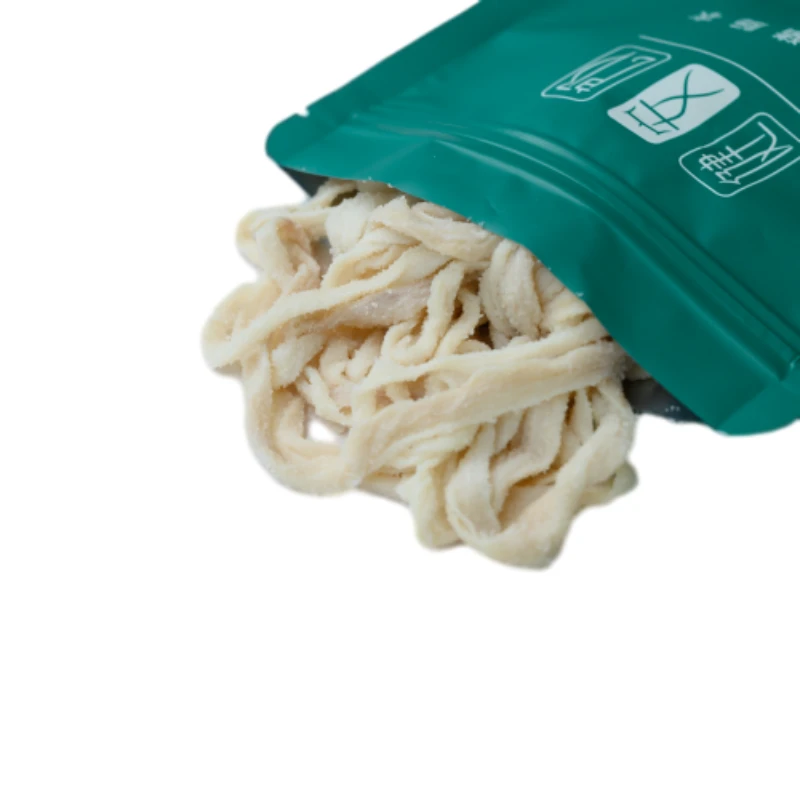
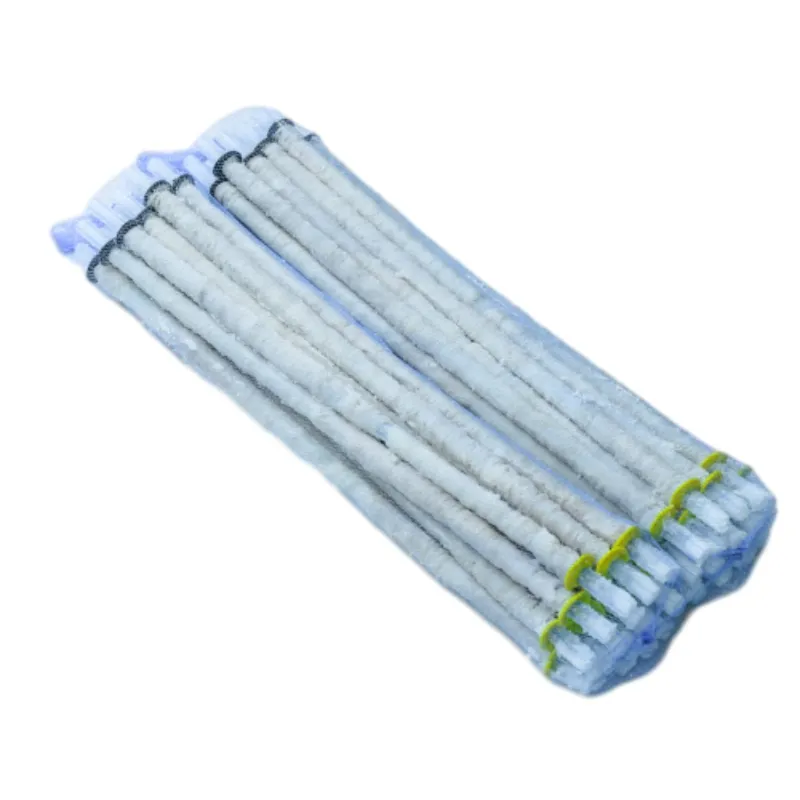
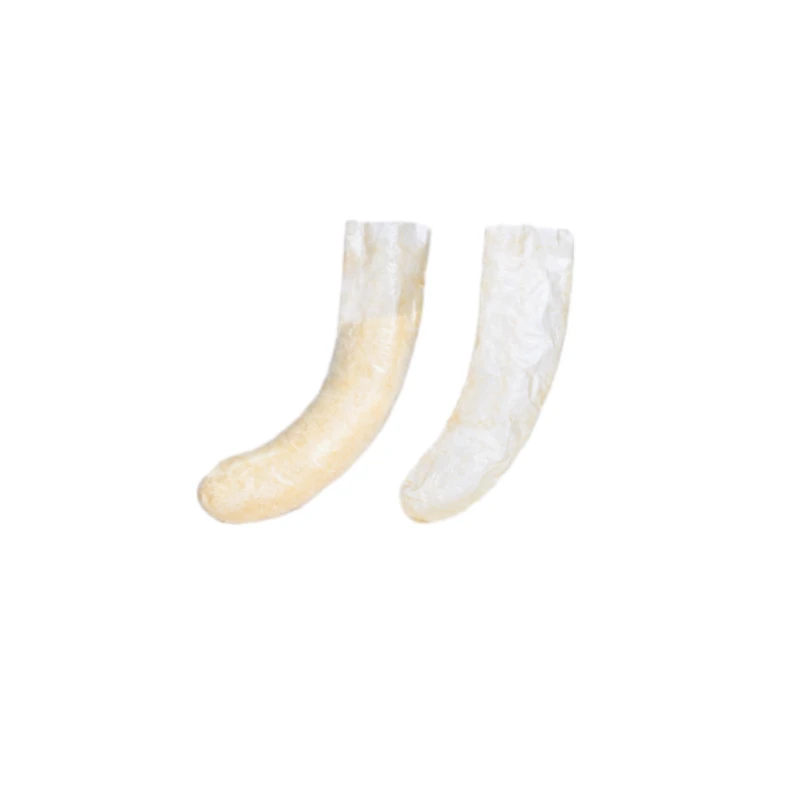
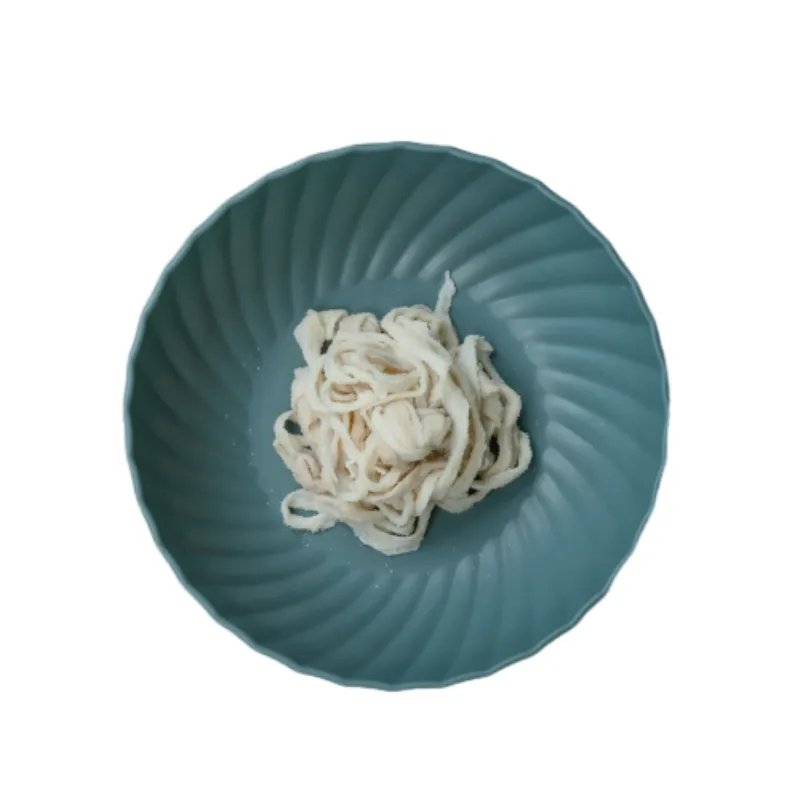
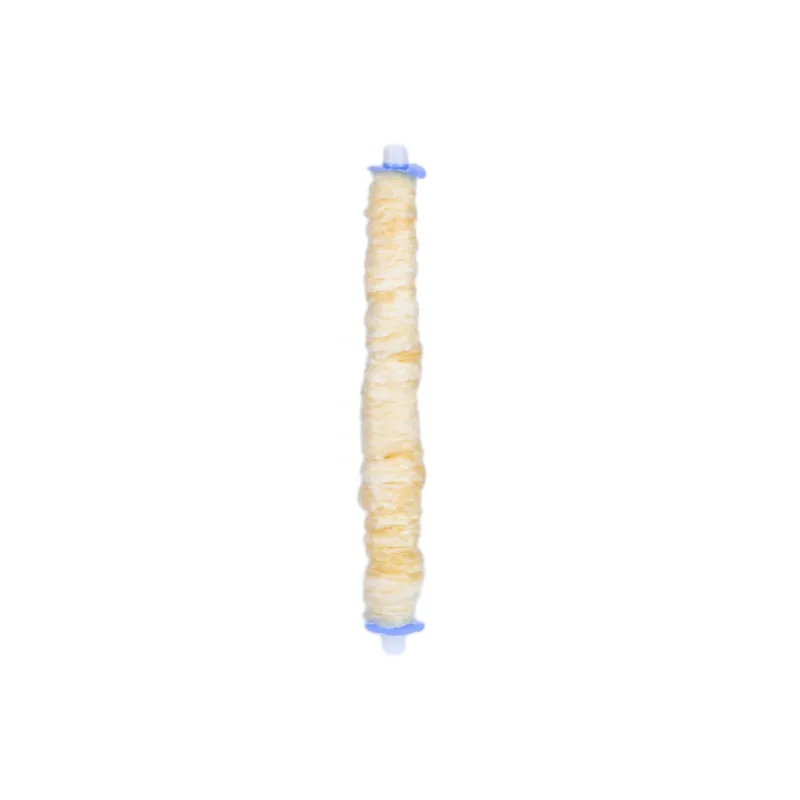
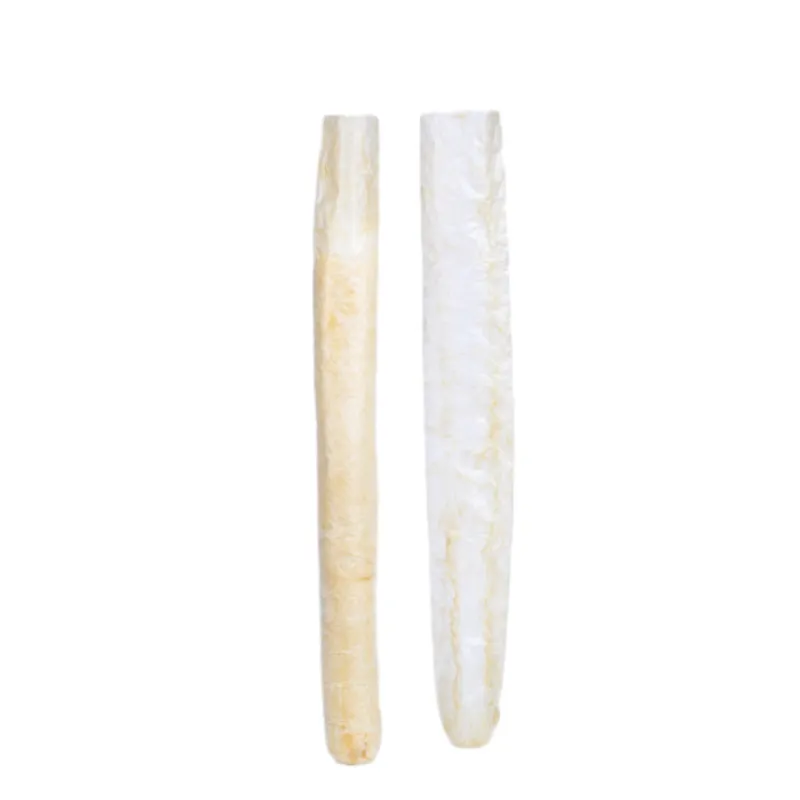
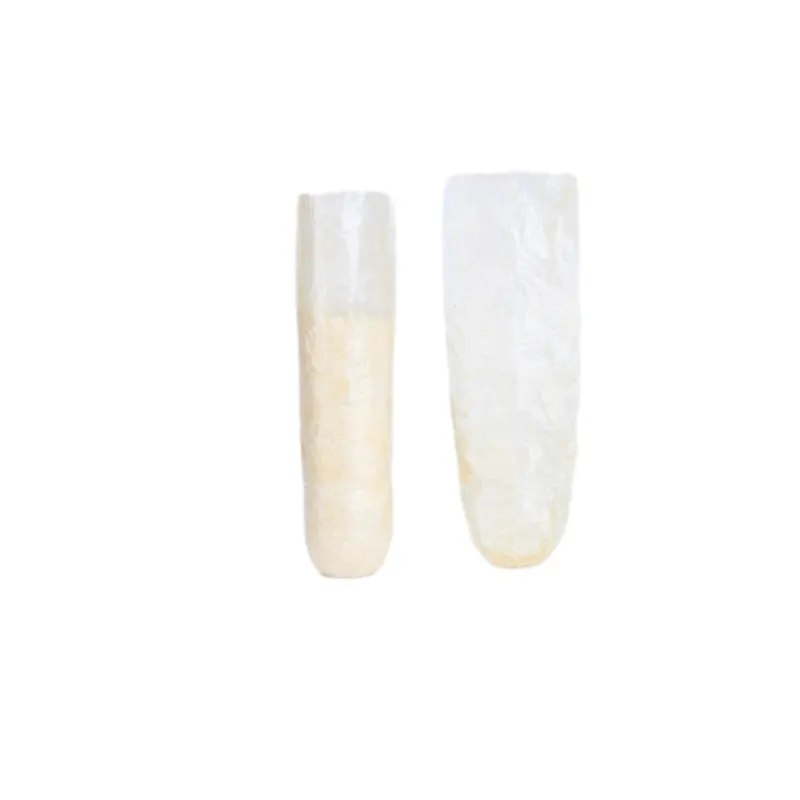
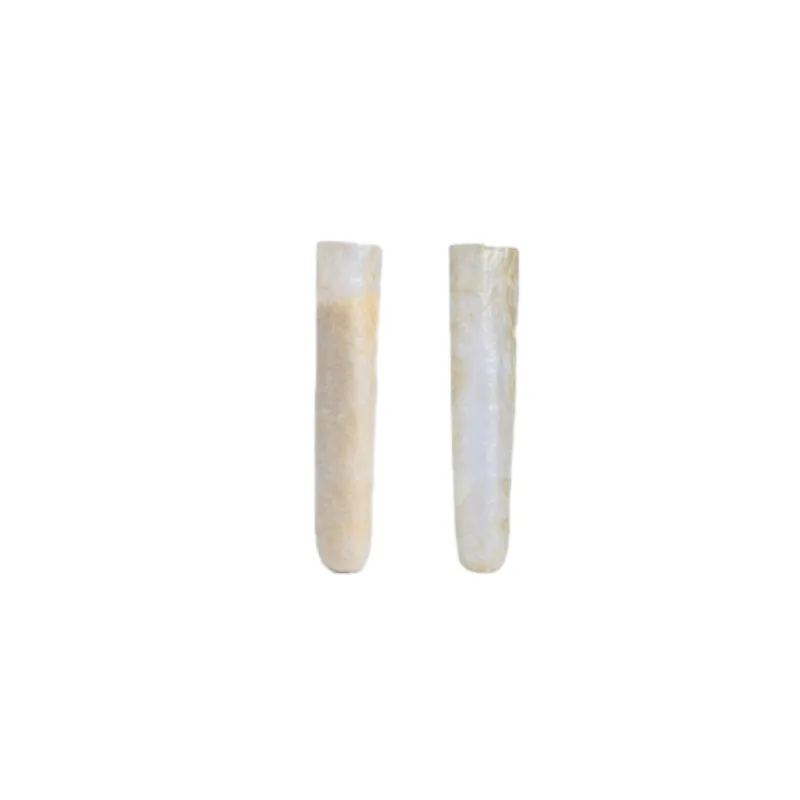
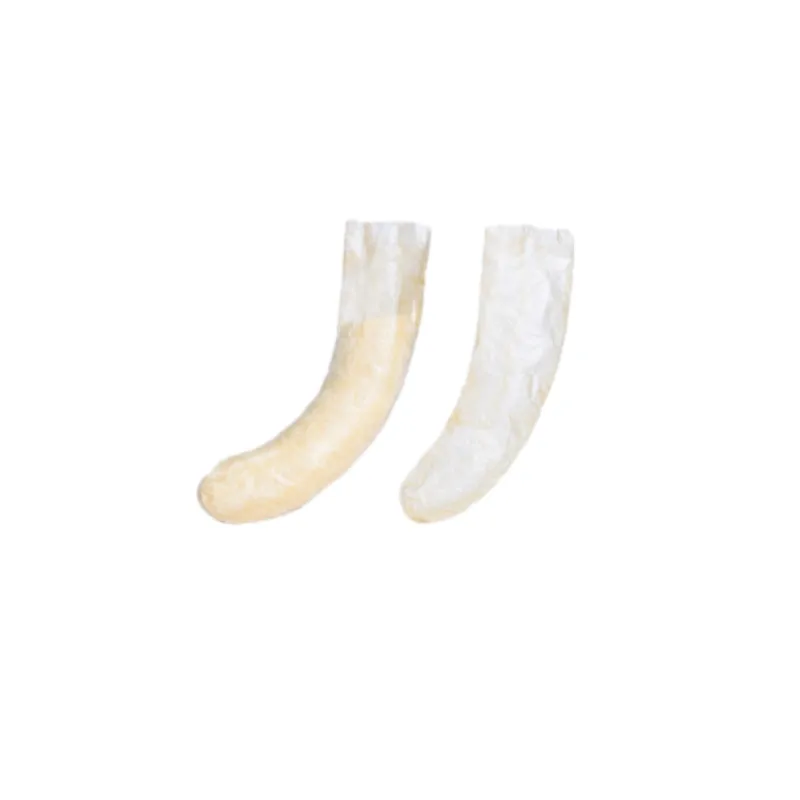
Product: Dried Hog Casing, origin WEST PING’AN STREET, SHUNPING COUNTY, HEBEI, CHINA. Naturally sourced hog intestines that are cleaned, graded, and gently dehydrated. Compared with wet/salted casing, these store smaller, rehydrate quickly, and hit spec more consistently—many customers say yield variation drops noticeably, which makes costing less of a guessing game.
Step-by-step: how to use dry sausage casing
- Rinse: Quick cold-water rinse to wake the fibers (30–60 sec).
- Soak: 10–20 minutes in 25–35°C potable water; add ≈1% non-iodized salt if you want extra snap. Keep it gentle—no boiling.
- Flush: Run lukewarm water through each strand to open it fully.
- Load: Sleeve onto the horn; avoid twisting before fill to reduce air pockets.
- Fill & link: Moderate tension; aim for even fill to avoid thin spots and blowouts.
- Cook/smoke: Typical cycles 45–78°C (real-world use may vary by recipe). Cool, then bloom.
- Storage pre-use: cool, dry place, sealed; post-soak use within the same shift.
Key specifications (typical)
| Caliber options | 28/30, 30/32, 32/35, 35/38 mm (graded) |
| Length per hank | ≈ 90 m (real-world ±5%) |
| Rehydration time | 10–20 min at 25–35°C |
| Bursting strength | ≥0.6 MPa typical after soak |
| Moisture (dry) | ≤12% |
| Microbiology | TVC ≤10⁴ CFU/g; Salmonella absent/25 g |
| Storage & shelf life | Cool, dry (5–25°C); up to 24–36 months sealed |
Manufacturing process and testing
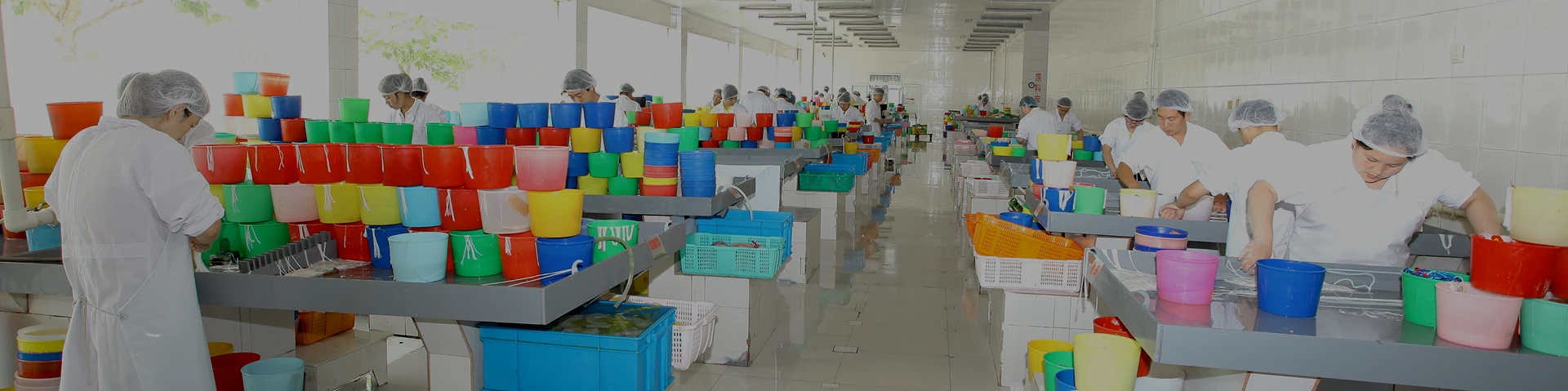
Materials: selected hog small intestines. Methods: desliming, defatting, enzymatic cleaning, saline calibration, size grading, dehydration, metal detection, packing. QC: caliber gauge checks, saline leak test, tensile/burst test, moisture by AOAC method, micro per GB 4789. Compliance: HACCP, ISO 22000; Halal/Kosher available on request.
Applications, trends, and service life
Industries: meat processors, smokehouses, foodservice commissaries, artisanal butchers. Trends: rapid rehydration to speed setup; tighter caliber for portion control; sustainability push for natural casings over synthetics. Service life in use: holds up across smoke/cook/chill cycles; keeps snap after reheating—surprisingly resilient for hotlines.
Customer feedback: “Cut our soak time in half and trimmed giveaway by ~2%.” Another buyer noted fewer blowouts on 30/32 mm during night shift—likely due to steadier hydration.
Vendor snapshot (comparative)
| Vendor | Caliber consistency | Lead time | Certs | Notes |
|---|---|---|---|---|
| RT Casing (China) | Tight (±1–2 mm) | ≈2–4 weeks | ISO 22000, HACCP, Halal | Good value; robust QC data shared |
| EU Supplier A | Tight | ≈3–6 weeks | FSSC 22000, Halal | Premium pricing |
| Local Distributor B | Moderate | Stock-dependent | HACCP | Fast delivery; mixed origins |
Customization and a quick case study
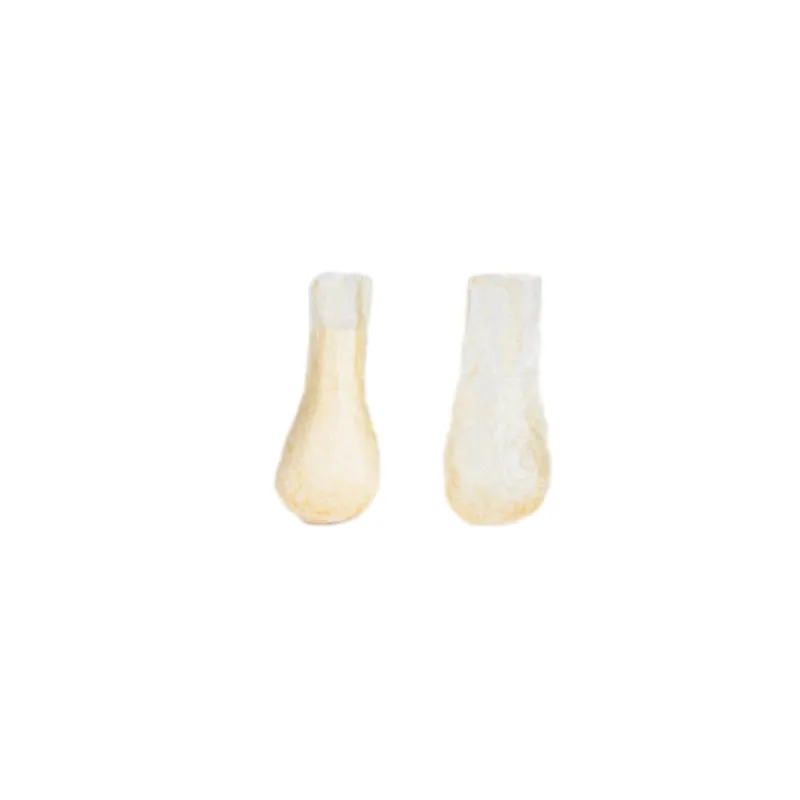
Customization: private-label packs, pre-tied strands, tight-tolerance 30/32 mm for hot dogs, longer hanks for high-throughput lines. Case study: A Midwest smokehouse switched to dried hog casing 32/35 mm; after standardizing soak at 30°C for 15 minutes, link burst rate fell from 1.8% to 0.6% and line changeover saved ~9 minutes per batch. To be honest, the biggest win was calmer nights for maintenance.
Standards, documentation, and proof
Standards referenced: ISO 22000/FSSC 22000 for food safety systems; HACCP plans; Codex/GB hygienic codes for meat; EU 853/2004 (where applicable). Test data package typically includes COA (caliber, moisture, micro), lot traceability, and heat-stability notes. If you’re training new staff on how to use dry sausage casing, laminate the soak/flush steps and pin them by the prep sink—simple, but it works.
Authoritative citations
- ISO 22000:2018 Food safety management systems. https://www.iso.org/standard/65464.html
- Codex Alimentarius: Code of Hygienic Practice for Meat (CAC/RCP 58-2005). https://www.fao.org/fao-who-codexalimentarius
- Regulation (EC) No 853/2004 on hygiene of food of animal origin. https://eur-lex.europa.eu
- AOAC Official Methods for moisture determination. https://www.aoac.org
- GB 4789 Microbiological examination of food safety. http://www.cnis.gov.cn