Mar . 07, 2026 02:35
Halal Natural Sausage Casing: A Comprehensive Guide
When sourcing materials for food production, especially in the meat processing industry, adherence to specific standards and dietary requirements is paramount. Halal natural sausage casing plays a crucial role in meeting those needs, offering a traditional and compliant solution for creating high-quality sausages. This article will explore the benefits of using halal natural sausage casing, its sourcing, applications, and why RTCasing is a trusted provider. Understanding the nuances of these casings is essential for businesses aiming to cater to a growing Halal consumer base.
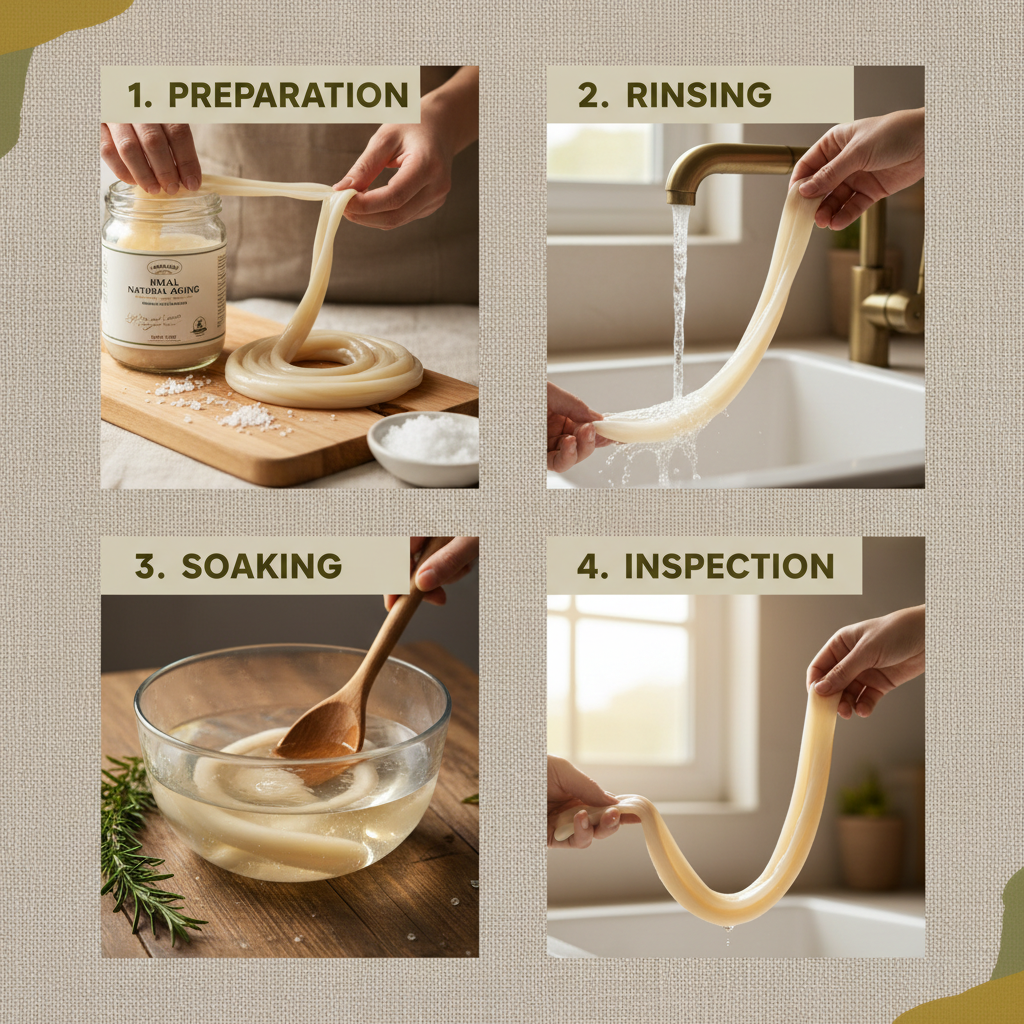
What are Halal Natural Sausage Casings?
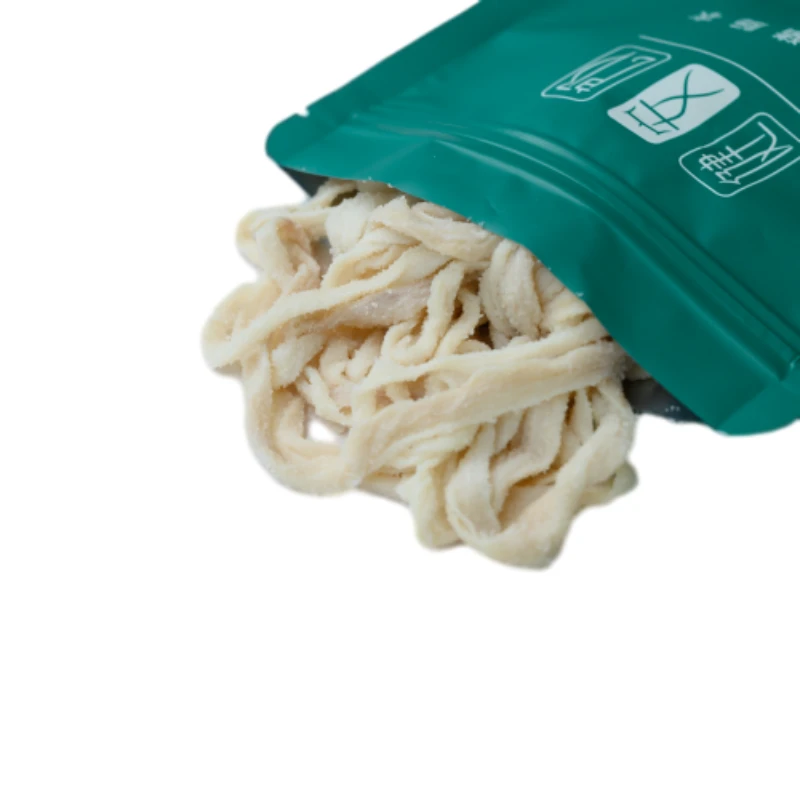
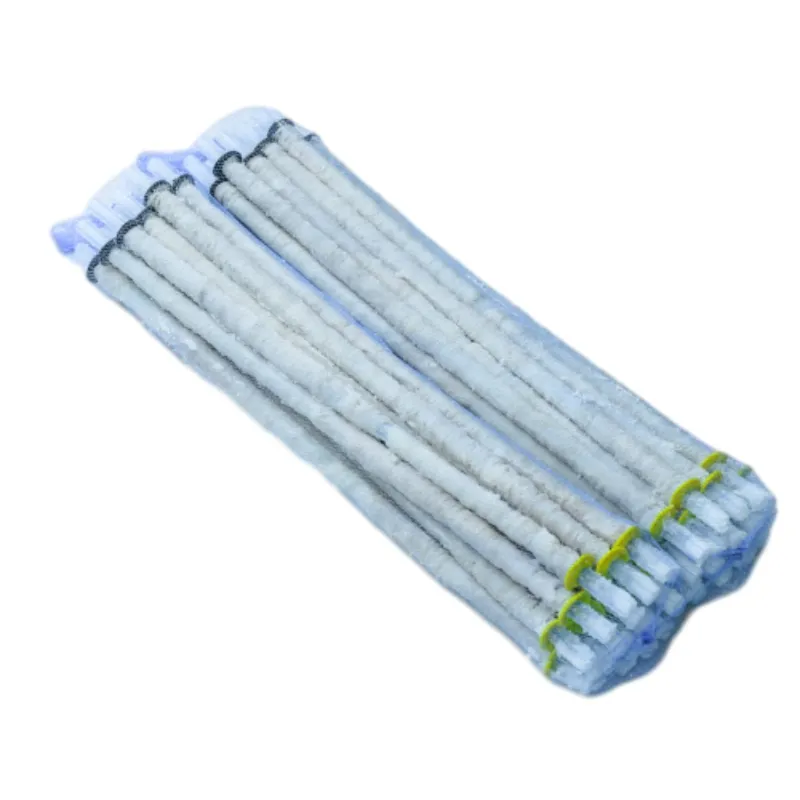
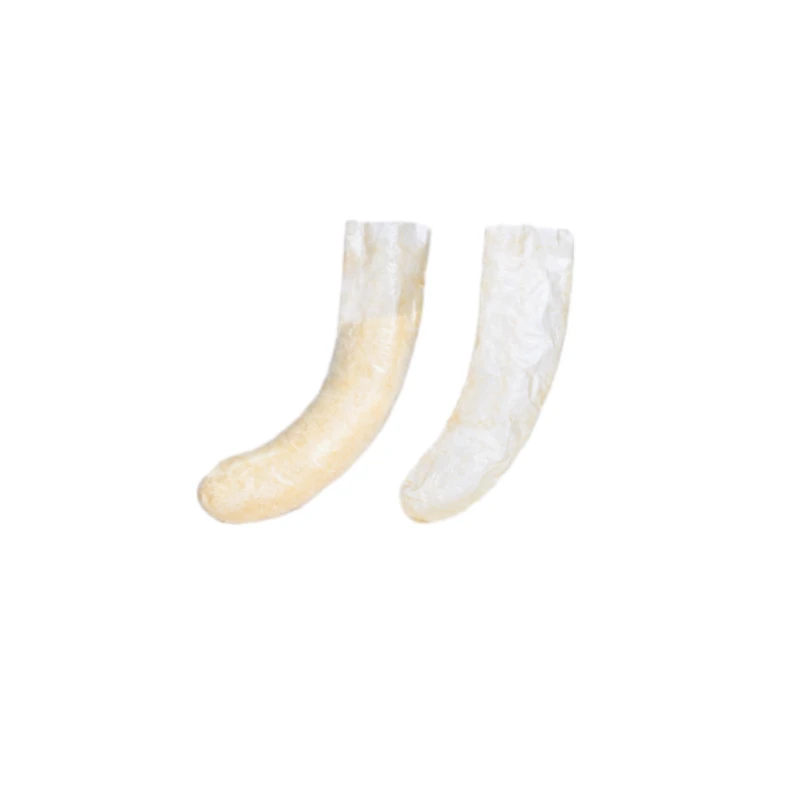
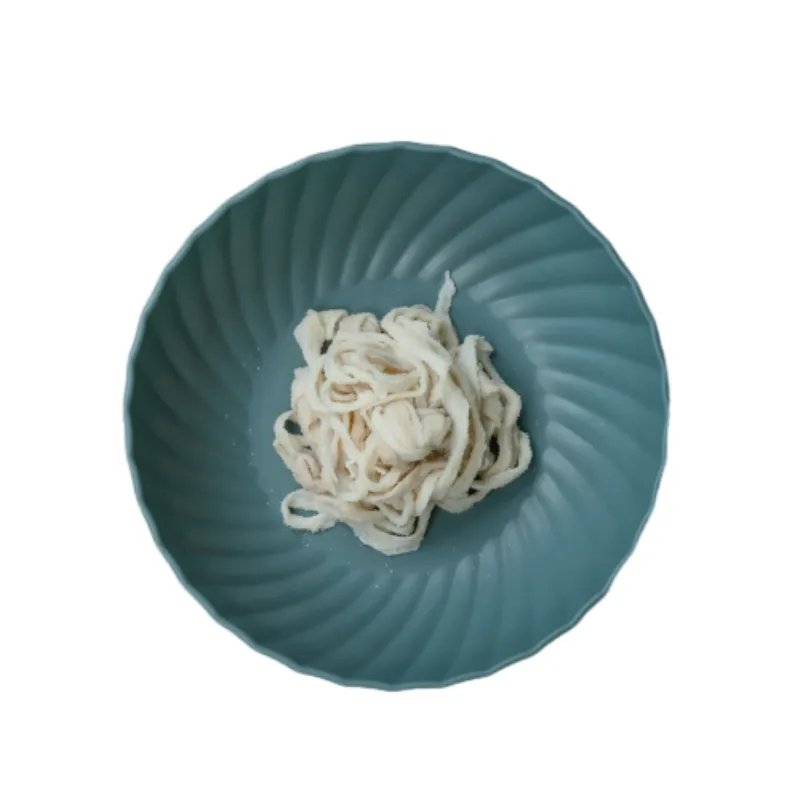
Halal natural sausage casings are derived from the intestinal membranes of animals – typically sheep or cattle – that have been slaughtered according to Islamic dietary laws (Halal). This means the animals must be healthy, handled humanely, and slaughtered by a Muslim individual following specific religious protocols. The processing of the casings also needs to be free from any non-Halal substances. These casings offer a natural texture and 'snap' to sausages, which is often preferred by consumers. They are permeable, allowing for smoke penetration and a traditional flavor profile.
Key Benefits: Natural texture, excellent smoke permeability, compliant with Halal dietary requirements, and a traditional 'snap' when bitten.
The Importance of Halal Certification
Halal certification is a vital aspect of sourcing natural sausage casings for markets with significant Muslim populations. This certification, issued by a recognized Halal certifying body, verifies that the entire supply chain – from animal sourcing to processing and packaging – adheres to Islamic dietary laws. Without valid Halal certification, products cannot be legally marketed as Halal in many countries. RTCasing prioritizes Halal certification, ensuring their casings meet the stringent requirements of various international standards.
Key Elements of Halal Certification:
• Verified Halal slaughtering process
• Traceability of the entire supply chain
• No contamination with non-Halal substances
• Regular audits by a recognized certifying body
Halal Natural Sausage Casing vs. Collagen & Synthetic Casings
While collagen and synthetic casings offer alternative options, they differ significantly from natural halal casings in terms of texture, permeability, and consumer perception. Natural casings provide a superior 'snap' and allow for authentic smoke flavor penetration. Collagen casings, though edible, often lack the same texture, and synthetic casings may not be permissible under Halal guidelines depending on their composition. Choosing the right casing depends on product requirements and target market preferences.
Applications of Halal Natural Sausage Casing
Halal natural sausage casings are used in a wide variety of sausage products, including traditional beef, lamb, and chicken sausages. They are particularly popular in regions with large Muslim populations, such as Southeast Asia, the Middle East, and North Africa. The casings’ natural properties contribute to the overall quality and appeal of these products, ensuring customer satisfaction and brand loyalty. They are also suitable for dry-cured sausages and fermented products, providing excellent texture and flavor retention.
Why Choose RTCasing for Your Halal Needs?
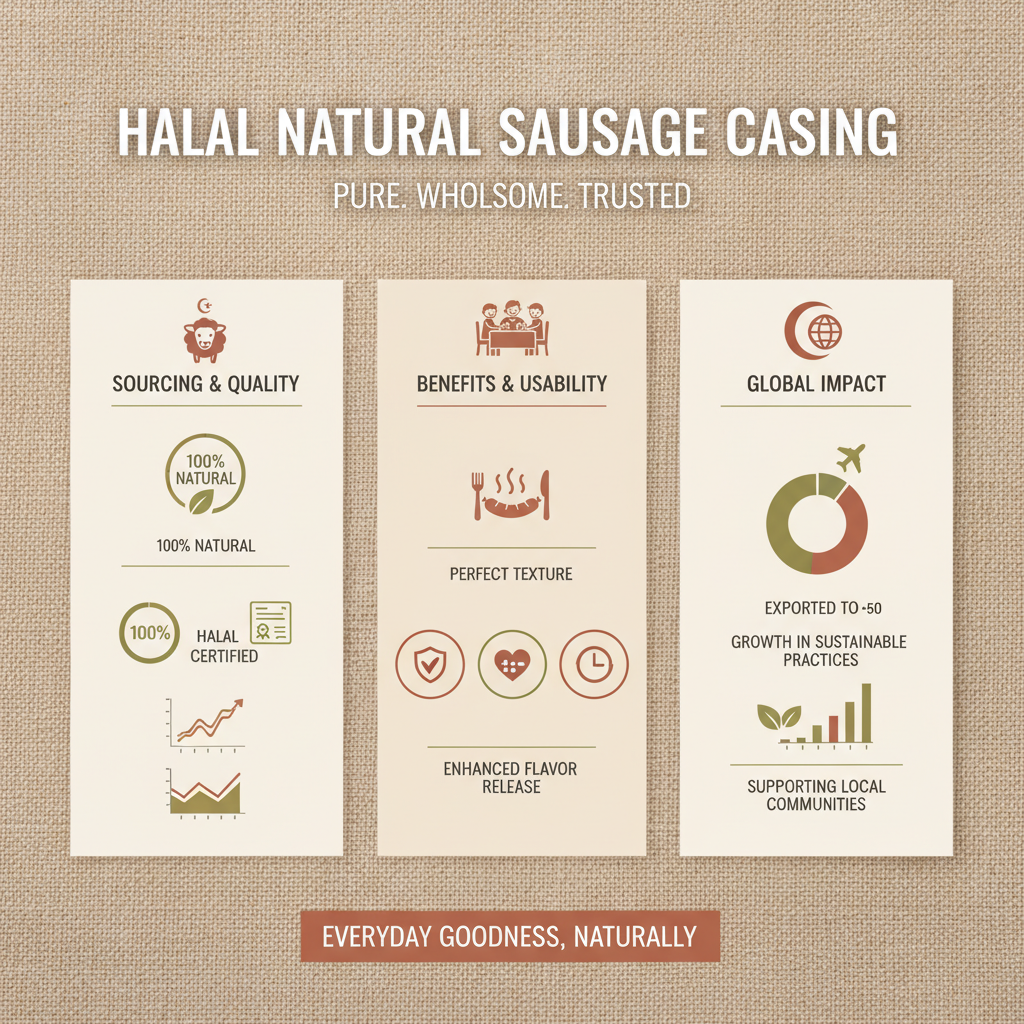
RTCasing is a leading supplier of high-quality halal natural sausage casings. We are committed to providing our customers with products that meet the highest standards of Halal compliance and quality. We offer a wide range of casing sizes and grades to suit diverse production needs. Our rigorous quality control processes and dedicated customer support ensure a reliable and seamless experience. We work closely with certified Halal authorities to maintain the integrity of our supply chain. Contact us today to learn more about our offerings.
Conclusion
Choosing the right halal natural sausage casing is crucial for businesses targeting the growing Halal market. RTCasing offers a reliable, certified, and high-quality solution to meet your specific needs. By partnering with a trusted supplier, you can ensure product integrity, consumer satisfaction, and long-term success.
Frequently Asked Questions (FAQs)
What makes a sausage casing 'Halal'?
A sausage casing is considered 'Halal' if it is derived from an animal slaughtered according to Islamic law. This includes specific requirements for the animal's health, humane treatment, and the method of slaughter performed by a Muslim individual. The entire processing chain must also adhere to Halal principles, ensuring no contamination with non-Halal substances. Crucially, the sourcing of the casing must be traceable back to a certified Halal supplier.
How are RTCasing's halal casings certified?
RTCasing works with internationally recognized Halal certifying bodies to ensure our casings meet stringent Halal standards. This involves regular audits of our sourcing, processing, and packaging facilities to verify compliance with Islamic dietary laws. We provide documentation and traceability information to support the certification process and ensure our customers have confidence in the Halal integrity of our products.
What sizes of halal natural casings do you offer?
We offer a wide range of sizes to accommodate different sausage diameters and production requirements. Our casings are available in various calibers, measured in meters per 100 grams. Common sizes include those suitable for breakfast sausages, frankfurters, and traditional European sausages. Please contact our sales team for a detailed catalog of available sizes.
How should halal natural casings be stored?
Halal natural casings should be stored in a cool, dry, and well-ventilated area, away from direct sunlight and heat sources. Ideally, they should be refrigerated or frozen to prolong their shelf life. Proper storage is essential to maintain their quality and prevent spoilage. Always follow the storage instructions provided on the packaging.