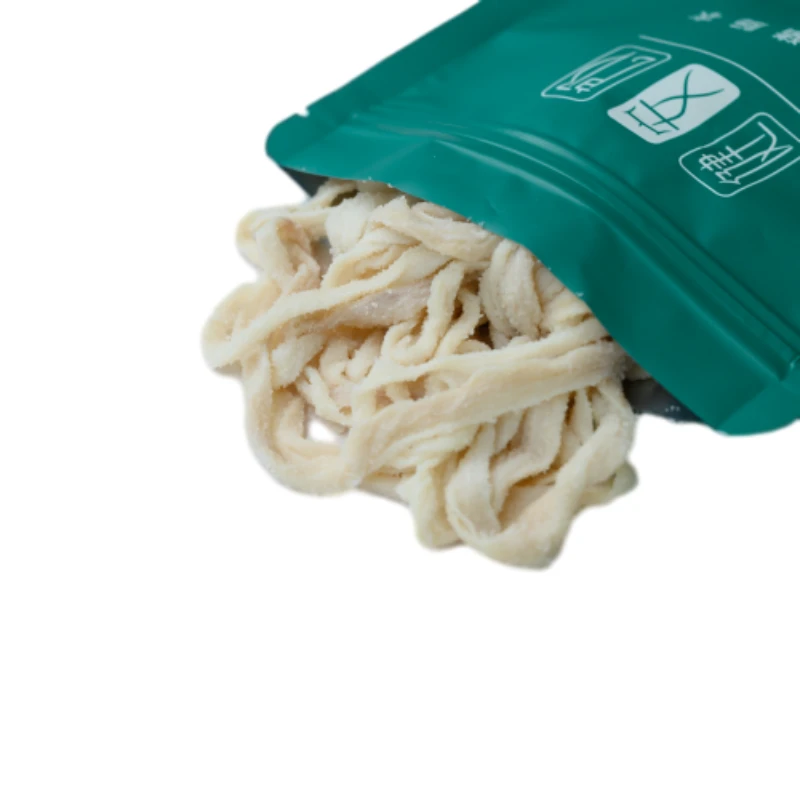
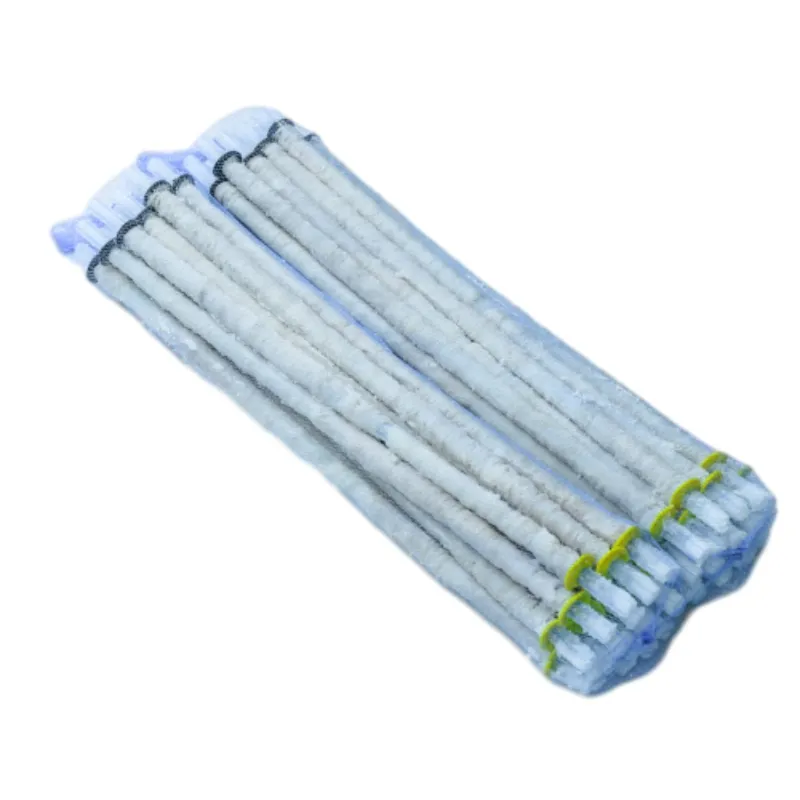
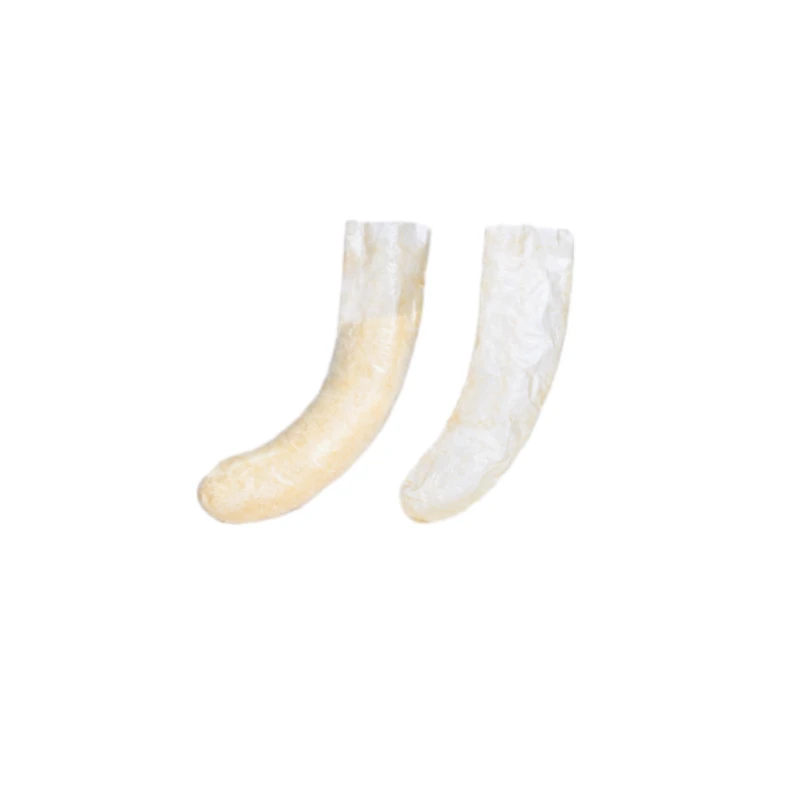
Premium natural hog casings Solutions for South Africa's Meat Industry

Optimizing sausage production in South Africa with high-elasticity, food-grade natural casings designed for industrial meat processing efficiency.

Premium natural hog casings Solutions for South Africa's Meat Industry

Providing the South African manufacturing sector with superior salted sausage casings and specialized equipment components to enhance throughput and product consistency.

The Landscape of Casing Supply in South Africa

Analyzing the intersection of climatic challenges and meat processing demands in the region.

South Africa's meat processing industry faces unique challenges due to its diverse climate, where high humidity in coastal regions and extreme heat in the interior impact the shelf life of salted hog casing. Local manufacturers must balance traditional artisan methods with the need for industrial-scale stability.

The economic reliance on the livestock sector in provinces like the Free State and Northern Cape creates a steady demand for high-quality salted sheep casing, yet the supply chain often struggles with consistency in caliber and tensile strength during peak seasonal production.

Currently, the transition toward automated stuffing machinery requires casings that can withstand high-pressure mechanical filling without bursting, pushing the market toward more refined, standardized dried hog casing options that offer easier hydration and better yield.

Evolution of Meat Processing Casings in South Africa

From traditional curing to high-precision industrial application.

Market Development History

From the 1980s to the early 2000s, the South African market relied heavily on local, artisanal curing processes where casings were salted in small batches, leading to significant variance in quality and thickness.

Between 2010 and 2020, the industrialization of the "boerewors" and specialty sausage sectors led to the adoption of global standardization, where precision-graded natural hog casings became the benchmark for commercial consistency.

In recent years, the focus has shifted toward chemical-free preservation and enhanced traceability, integrating advanced salt-curing technologies that ensure biological safety while maintaining the natural bite of the casing.

Future Development Trends

Automated Calibration Integration

Future trends indicate a move toward "Smart-Caliber" casings that are perfectly matched to high-speed filling machines to reduce waste and maximize filling speed.

Eco-Friendly Preservation

There is a growing demand for organic-certified salting processes that reduce sodium chloride runoff, aligning with South Africa's increasing environmental regulations.

Cold-Chain Optimization

Advancements in vacuum-sealed, temperature-controlled logistics will redefine how salted sausage casings are transported from manufacturing hubs to rural processing plants.

Industry Trends and Future Outlook

Strategic projections for the meat processing equipment and accessories sector.

Precision Grade Standardization
Increasing adoption of narrow-diameter tolerance casings to suit high-precision automated stuffing lines.
Advanced Thermal Stability
Development of salt-curing methods that prevent casing shrinkage in high-temperature South African climates.
Hygiene Compliance Evolution
Stricter adherence to global HACCP standards for imported natural casings to facilitate regional export.
Hybrid Processing Systems
Integrating natural casing usage with semi-automated stuffing equipment for mid-sized butcheries.

Industry Outlook

Google search trends in the African region show a marked increase in queries for "high-yield sausage casings" and "industrial natural casings," indicating a shift from home-style production to commercial meat processing.

Over the next 3-5 years, we expect the South African market to transition toward vertically integrated supply chains where casing quality is linked directly to machine performance metrics, reducing burst rates by up to 15%.

Local Application Scenarios in South Africa

Practical implementation of high-grade casings in diverse South African meat environments.

01. Large-Scale Boerewors Production

Utilizing wide-caliber natural hog casings in industrial facilities in Gauteng to ensure a consistent diameter for traditional South African sausages.

02. Gourmet Sheep Sausage Artisans

Applying premium salted sheep casing for high-end deli products in Cape Town, focusing on the "snap" and translucency required for luxury markets.

03. High-Volume Export Processing

Implementing dried hog casing in export-oriented plants to reduce shipping weight and simplify the rehydration process prior to filling.

04. Regional Butchery Automation

Integrating standardized salted sausage casings with semi-automatic fillers in KwaZulu-Natal to increase daily output without losing artisanal quality.

05. Cold-Climate Cured Meats

Using specialized salted hog casing for slow-cured salami products in the cooler highland regions, ensuring the casing remains permeable yet strong.

Brand Story

Global Development History of Shunping Hengrui Import and Export Co., Ltd.

Foundational Excellence

Established with a mission to bridge the gap between raw material sourcing and industrial meat processing precision.

Technological Integration

Developed advanced salting and drying protocols to solve the common pain point of casing rupture during mechanical filling.

Global Expansion

Expanded logistics networks to ensure that temperature-sensitive casings reach emerging markets like South Africa with zero degradation.

Quality Certification

Achieved international food safety certifications, ensuring every shipment meets the rigorous standards of global meat manufacturers.

Sustainable Future

Committing to sustainable sourcing and eco-friendly processing to support the long-term viability of the global meat industry.

Complete Casing Portfolio for South Africa

A comprehensive range of natural casings and accessories tailored for the African meat processing market.

Common Questions in South African Meat Processing

Expert answers to technical challenges regarding natural casing applications.

How to prevent bursting when using salted hog casing in high-speed fillers?

Ensure the casing is fully hydrated for the recommended time and check that the stuffing horn diameter matches the casing caliber to prevent friction-induced tears.

What is the best storage method for natural hog casings in hot climates?

Store in a cool, dry environment between 2°C and 8°C, ensuring the vacuum seal is intact to prevent salt crystallization and moisture loss.

Can salted sheep casing be used for industrial-scale Boerewors?

While possible, sheep casings are generally narrower. For traditional wide Boerewors, hog casings are preferred for their larger diameter and higher elasticity.

How does dried hog casing differ from salted versions in terms of yield?

Dried casings have lower water content, reducing shipping costs and often providing a more consistent rehydration rate, which can lead to fewer waste-points per batch.

Are your salted sausage casings compliant with South African import health standards?

Yes, all products are processed under strict veterinary supervision and accompanied by the necessary health certificates for seamless customs clearance.

How to identify the quality of a salted hog casing shipment upon arrival?

Check for uniform color, absence of slime, and a consistent salt coating. A quality casing will expand evenly without premature splitting during a test fill.

Ready to Optimize Your Production?

Contact our technical team for customized casing solutions tailored for the meat processing industry in South Africa.

Contact Us Now

If you are interested in our products, you can choose to leave your information here, and we will be in touch with you shortly.


If you are interested in our products, you can choose to leave your information here, and we will be in touch with you shortly.