Master How to Use Dry Sausage Casing for Perfect Homemade Meats

Sep . 22, 2025 15:20

Understanding Dry Sausage Casings in Modern Food Production

In the intricate landscape of B2B food processing, the selection of appropriate sausage casings is paramount to product quality, consistency, and market appeal. Among the various options, natural casings, particularly how to use dry sausage casing, stand out for their superior organoleptic properties and traditional appeal. This detailed guide delves into the technical specifications, application methodologies, and strategic advantages of dried hog casings, providing invaluable insights for procurement specialists and production engineers.

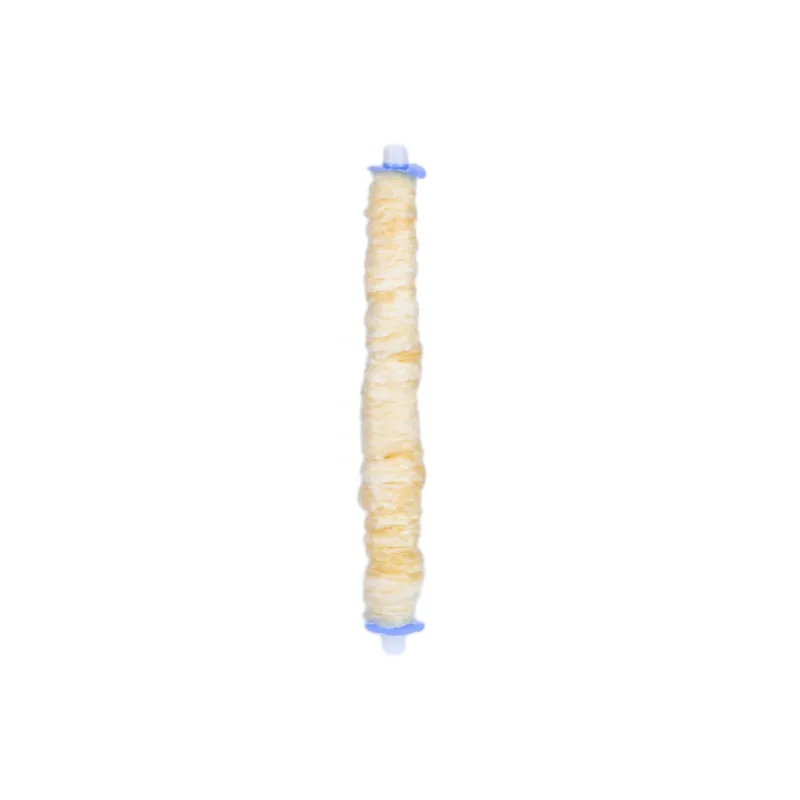
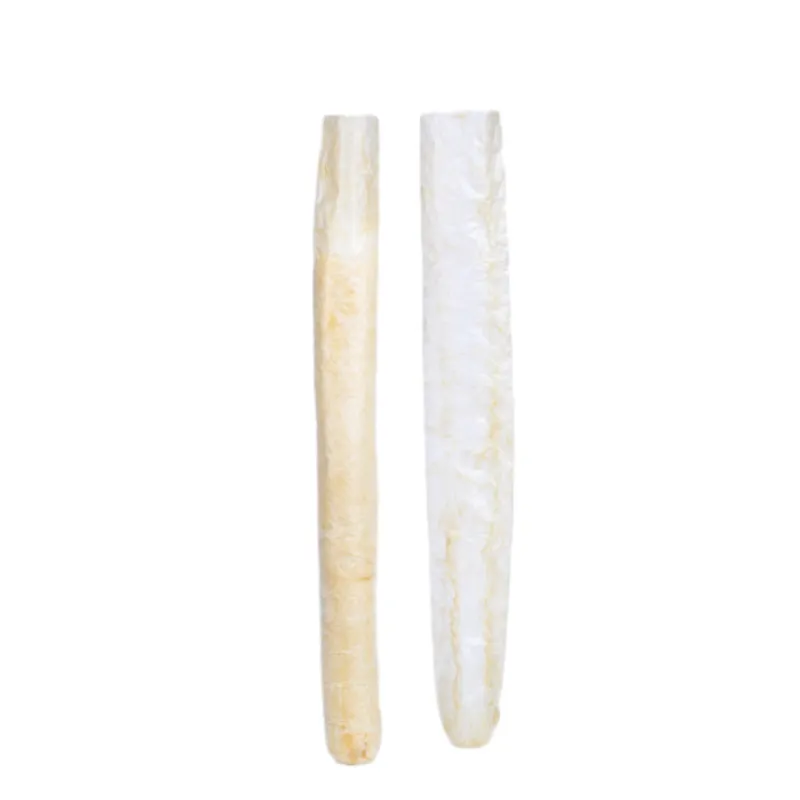
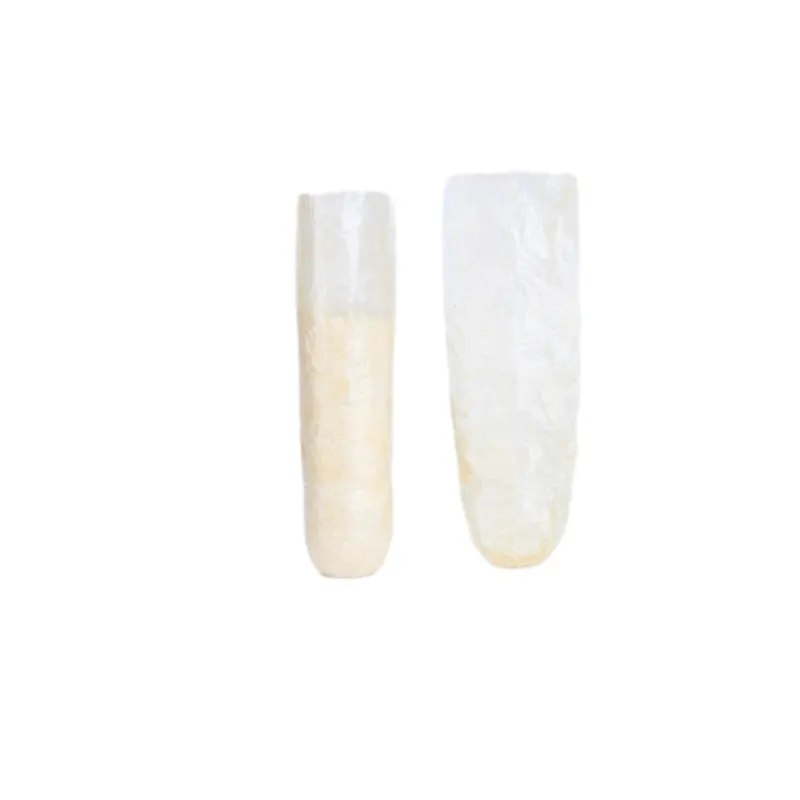
Dried hog casings, often referred to as dried sausage casings, are derived from the submucosa layer of hog intestines. This natural material offers exceptional elasticity, strength, and permeability, making it ideal for a wide range of sausage products, from fresh breakfast links to traditional dry-cured specialties. The unique collagen structure of these casings contributes significantly to the characteristic 'snap' and succulent texture highly prized by consumers. Our focus is on providing a comprehensive understanding of their utility and integration into modern food manufacturing processes.

Industry Trends in Natural Casing Utilization

The global market for natural sausage casings is experiencing robust growth, driven by increasing consumer demand for authentic, high-quality meat products. Key trends include:

  • Premiumization: A clear shift towards premium and artisanal sausages, where the texture and mouthfeel imparted by natural casings are highly valued. This drives demand for products like dried hog casings.
  • Clean Label Movement: Consumers increasingly prefer products with natural ingredients and minimal processing. Natural casings align perfectly with "clean label" marketing strategies.
  • Sustainability and Traceability: Growing emphasis on ethically sourced and sustainably produced ingredients. Reputable suppliers of dried hog casing often provide comprehensive traceability.
  • Technological Advancements: While the product is natural, advancements in sorting, cleaning, and preservation technologies are enhancing the consistency and shelf life of dried hog casings, making them more adaptable to high-volume production.

These trends underscore the strategic importance of understanding and effectively leveraging natural casings, particularly how to use dry sausage casing, to maintain competitive advantage in a discerning market.
Master How to Use Dry Sausage Casing for Perfect Homemade Meats

Detailed Process Flow: Manufacturing Dried Hog Casings

The production of high-quality dried hog casings involves a meticulous multi-stage process designed to preserve the structural integrity and functional attributes of the natural intestine. Understanding this process is key to appreciating the product's performance and how to use dry sausage casing effectively.

Materials and Sourcing:

The primary material is the small intestine of healthy hogs. Sourcing emphasizes hygienic handling immediately post-slaughter to minimize bacterial load and degradation. Only intestines meeting stringent veterinary and food safety standards are selected.

Manufacturing Process Steps:

  1. Cleaning and Stripping: Upon arrival, intestines undergo initial cleaning to remove mesenteric fat and other external tissues. Specialized stripping machines then carefully remove the inner mucosa and outer serosa layers, leaving primarily the submucosa, which is rich in collagen and provides the desired strength and elasticity. This process must be precise to avoid damaging the delicate casing.
  2. Flushing and Washing: The stripped casings are thoroughly flushed with clean water, often chilled, to remove any remaining debris and bacteria. This step is critical for hygiene and for preparing the casing for subsequent processing.
  3. Calibration and Sorting: Casings are then calibrated by diameter (e.g., 28-32mm, 32-36mm, etc.) and sorted by length. This ensures consistent product sizing for sausage manufacturers. Advanced optical sorting systems are sometimes employed to enhance accuracy.
  4. Salting and Curing: Fresh casings are heavily salted (brine or dry salt) to draw out moisture and inhibit microbial growth. This curing process is essential for preservation and contributes to the casings' shelf stability. They are typically stored in salt for a period to achieve optimal cure.
  5. Drying: Following the salting process, the casings are carefully hung or placed in controlled drying chambers. This slow, controlled drying reduces moisture content significantly, transforming them into a shelf-stable dried product. The drying parameters (temperature, humidity, airflow) are critical to prevent brittleness or microbial spoilage while maintaining natural characteristics. This step differentiates dried hog casing from other forms.
  6. Quality Inspection and Packaging: Before packaging, each strand of dried hog casing undergoes rigorous quality inspection for integrity, diameter consistency, and absence of defects. They are then hanked (bundled) and packed in airtight, food-grade container111s, often with additional desiccant to maintain dryness, ready for distribution.

Testing Standards and Certifications:

Our dried hog casings adhere to international standards such as ISO 22000 (Food Safety Management Systems) and HACCP principles. They are regularly tested for microbial load, moisture content, and tensile strength to ensure compliance with FDA and other relevant food safety regulations. These certifications provide an authoritative assurance of product quality and safety.
Master How to Use Dry Sausage Casing for Perfect Homemade Meats

Service Life and Target Industries:

Dried hog casings typically boast a shelf life of 1-2 years when stored correctly in a cool, dry environment, making them suitable for strategic inventory management. They are primarily utilized in the food processing industry, specifically for the production of:

  • Fresh sausages (e.g., breakfast sausages, Italian sausages)
  • Smoked sausages (e.g., kielbasa, frankfurters)
  • Dry-cured sausages (e.g., salami, chorizo, pepperoni)
  • Artisanal and gourmet sausage production

Technical Parameters and Specifications

Understanding the technical parameters of dried hog casings is crucial for optimizing production processes and ensuring product consistency. The following table outlines typical specifications for our high-grade Dried Hog Casings:

Table 1: Typical Specifications for Dried Hog Casing
Parameter Measurement Unit Standard Range Tolerance
Caliber (Diameter) mm 28-32, 32-36, 36-40 ±1 mm
Length per Hank meters 90-100 ±5 meters
Moisture Content % 12-18 ±2%
Salt Content % >20 -
Tensile Strength N/cm² >50 -
Permeability (Smoke) Rating Excellent N/A
Storage Temperature °C 5-25 -
Shelf Life Months 12-24 -

These specifications ensure that our dried hog casings meet the rigorous demands of industrial sausage production, providing consistent performance and facilitating efficient processing when considering how to use dry sausage casing in a commercial setting.
Master How to Use Dry Sausage Casing for Perfect Homemade Meats

Application Scenarios and Technical Advantages

The versatility of dried hog casing makes it a preferred choice across various sausage categories. Proper preparation is essential to successfully implement how to use dry sausage casing.

Preparation for Use:

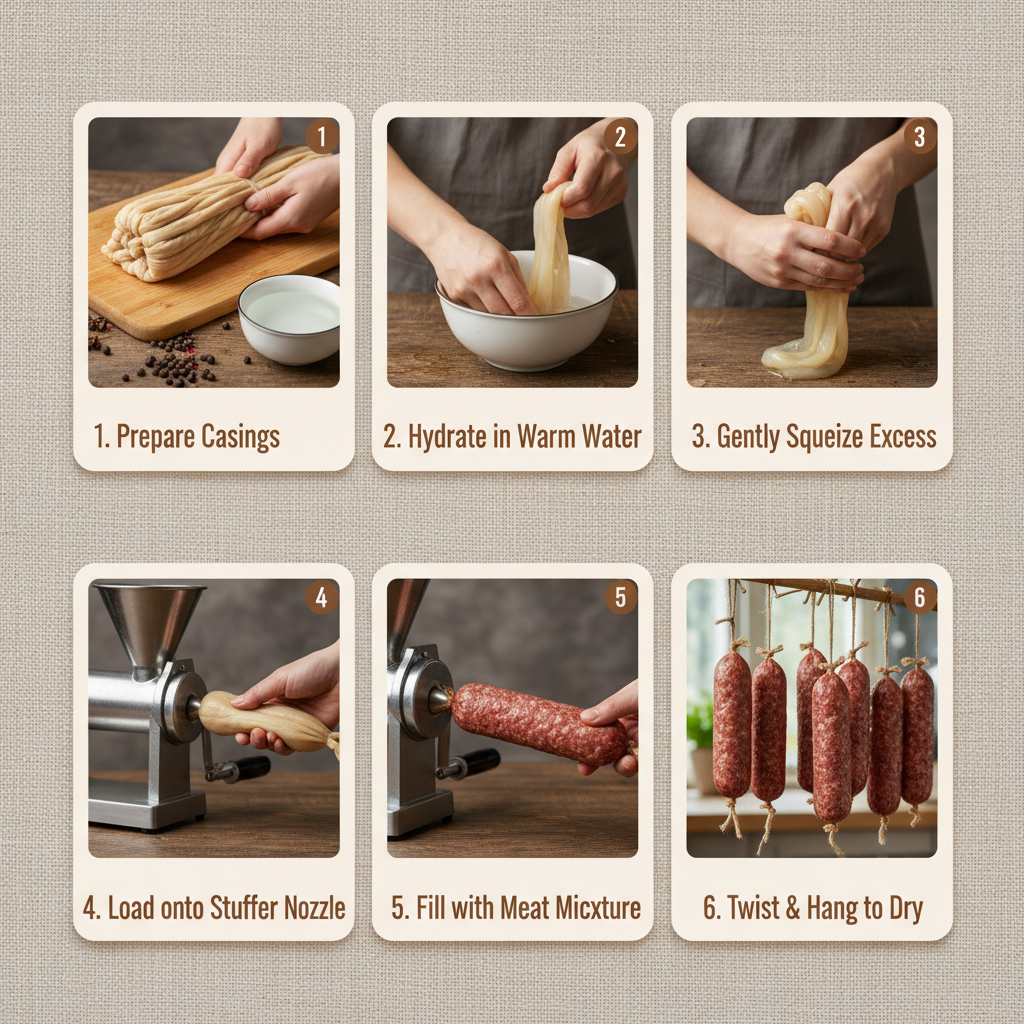
Dried hog casings must be rehydrated before stuffing. This typically involves soaking them in lukewarm water (approximately 30-35°C) for a minimum of 30 minutes to several hours, or even overnight, depending on the dryness and desired pliability. Adding a small amount of vinegar or salt to the soaking water can help enhance elasticity and clean the casing, respectively. After soaking, flush the casings thoroughly with running water to remove excess salt and ensure they are ready for stuffing.

Typical Application Scenarios:

  • Fresh Sausages: For products like breakfast links, Italian sausages, and bratwurst, dried hog casings provide a tender bite and excellent visual appeal. Their natural permeability allows for effective seasoning penetration.
  • Smoked Sausages: When preparing smoked products such as frankfurters, kielbasa, and hot dogs, the casings' ability to absorb smoke flavors and develop a desirable reddish-brown color is a significant advantage. The natural collagen structure contributes to the characteristic 'snap' upon biting.
  • Dry-Cured Sausages: For artisanal salami, chorizo, and pepperoni, dried hog casings are indispensable. Their controlled permeability facilitates optimal moisture loss during the drying and fermentation processes, ensuring proper curing, flavor development, and preventing case hardening. They also provide the necessary structural support for the long drying periods.

Technical Advantages:

  • Superior Smoke Permeability: The porous structure of natural hog casings allows for excellent smoke penetration, imparting rich, authentic flavors and colors to smoked products, which synthetic casings often struggle to replicate.
  • Optimal Moisture Regulation: Critical for dry-cured sausages, the casings naturally regulate moisture exchange, preventing rapid drying on the surface while allowing moisture to escape gradually from the interior. This is a key aspect of successful dry-curing when considering how to use dry sausage casing.
  • Exceptional Bite and Texture: Known for their tender yet resilient "snap," natural casings enhance the sensory experience, providing a superior mouthfeel that is highly sought after by consumers.
  • High Elasticity and Strength: Despite their delicate nature, dried hog casings exhibit remarkable elasticity and tensile strength, accommodating high-speed stuffing operations and resisting breakage during processing and handling.
  • Natural and Biodegradable: Aligning with consumer demand for natural ingredients, these casings are fully digestible and biodegradable, offering an environmentally friendly solution compared to artificial alternatives.
  • Flavor Neutrality: Unlike some artificial casings, dried hog casing does not impart any off-flavors, allowing the true taste of the sausage meat to shine through.
Master How to Use Dry Sausage Casing for Perfect Homemade Meats

Vendor Comparison: Dried Hog Casings

Selecting the right supplier for dried hog casings is a critical decision impacting product quality, supply chain reliability, and cost-effectiveness. A comparative analysis based on key performance indicators is essential.

Table 2: Comparative Analysis of Dried Hog Casing Vendors
Feature/Vendor Vendor A (RTCasing.com) Vendor B (Competitor X) Vendor C (Competitor Y)
Quality Certifications ISO 22000, HACCP, FDA Compliant HACCP ISO 9001
Caliber Consistency Excellent (±1mm) Good (±2mm) Fair (±3mm)
Tensile Strength High (>50 N/cm²) Medium (>40 N/cm²) Adequate (>30 N/cm²)
Smoke Permeability Excellent Good Fair
Customization Options Extensive (caliber, length, packaging) Limited (caliber) Minimal
Lead Time (Standard Orders) 7-14 days 14-21 days 21-30 days
Technical Support Dedicated specialists Standard support Basic support

This comparison highlights the importance of choosing a vendor that not only meets basic quality requirements but also provides superior consistency, robust technical support, and flexible customization options, crucial factors in optimizing how to use dry sausage casing in varied production environments.
Master How to Use Dry Sausage Casing for Perfect Homemade Meats

Customized Solutions and Expertise

Recognizing that each food manufacturer has unique requirements, we offer tailored solutions for dried hog casing procurement and application. Our experienced team works closely with clients to understand their specific product lines, production capacities, and quality benchmarks.

  • Caliber and Length Customization: We provide dried hog casings in a precise range of calibers (e.g., specific sub-ranges within 28-32mm) and customized hank lengths to optimize stuffing efficiency and minimize waste in automated lines.
  • Specific Sourcing: For projects requiring specific regional characteristics or traceability, we can work to source casings that meet these exacting demands.
  • Technical Consultation: Our technical experts provide guidance on optimal rehydration protocols, stuffing techniques, and post-stuffing processing parameters (smoking, drying, curing) to ensure the best results for your specific product when considering how to use dry sausage casing.
  • Packaging Solutions: From bulk barrels to vacuum-sealed pouches, we offer packaging solutions designed to maintain product integrity and extend shelf life in your specific storage conditions.
Master How to Use Dry Sausage Casing for Perfect Homemade Meats

Application Case Studies

Real-world application demonstrates the tangible benefits of utilizing our dried hog casings:

Case Study 1: Large-Scale Frankfurters Production

A major North American meat processor faced challenges with inconsistent 'snap' and smoke uptake using alternative casings for their premium frankfurter line. Upon switching to our precisely calibrated dried hog casings (32-36mm), they reported a 15% improvement in smoke penetration consistency and a significant increase in consumer preference feedback regarding the product's bite and texture. Our technical team provided on-site support to optimize their stuffing and smoking parameters, demonstrating exactly how to use dry sausage casing for maximum impact in high-volume production.
Master How to Use Dry Sausage Casing for Perfect Homemade Meats

Case Study 2: Artisanal Salami Manufacturer

An artisanal salami producer struggled with case hardening and inconsistent drying rates, leading to product loss. Implementing our specialized dried hog casings (36-40mm) designed for long-cure applications, they achieved a 20% reduction in production waste due to improved moisture egress and consistent drying. The natural collagen structure of the casings provided the ideal micro-environment for microbial cultures, resulting in superior flavor development and a perfectly textured final product. This case underscored the intricate relationship of proper casing selection with the success of traditional dry-curing processes.
Master How to Use Dry Sausage Casing for Perfect Homemade Meats

Frequently Asked Questions (FAQ) about Dried Hog Casings

Q: What is the ideal rehydration process for dried hog casing?
A: Dried hog casings should be soaked in lukewarm water (30-35°C) for at least 30 minutes, or preferably 1-2 hours. For very dry casings, overnight soaking may be beneficial. Ensure they are fully pliable before use. Flushing thoroughly with running water afterwards is recommended to remove excess salt.
Q: Can dried hog casings be used for both fresh and dry-cured sausages?
A: Yes, dried hog casings are highly versatile. Their permeability and strength make them suitable for fresh, smoked, and dry-cured sausages, each requiring specific rehydration and processing techniques.
Q: How do dried hog casings compare to collagen or fibrous casings?
A: Dried hog casings offer a superior natural bite and smoke permeability, contributing to authentic flavor and texture profiles. Collagen casings offer consistency and ease of use, while fibrous casings are generally used for large, non-edible products. For premium products, the unique properties of natural hog casings are often preferred, influencing how to use dry sausage casing in distinct applications.
Q: What is the shelf life and optimal storage for dried hog casings?
A: When stored in a cool (5-25°C), dry place away from direct sunlight and strong odors, our dried hog casings have a shelf life of 12-24 months. Proper storage is crucial to maintain their quality and integrity.

Lead Time, Fulfillment & Warranty

  • Lead Time: Standard orders for our dried hog casings are typically fulfilled within 7-14 business days, depending on order volume and destination. Expedited shipping options are available upon request.
  • Fulfillment: We maintain robust inventory levels and efficient logistics networks to ensure timely and reliable delivery worldwide. All shipments are meticulously packaged to preserve product quality during transit.
  • Warranty: Our dried hog casings are guaranteed to meet or exceed the technical specifications outlined in our product data sheets and comply with all relevant food safety standards (e.g., FDA, HACCP). Any product found to be defective upon receipt will be replaced or credited, provided proper storage and handling instructions have been followed.

Dedicated Customer Support

Our commitment extends beyond product delivery. We provide comprehensive after-sales support to ensure your complete satisfaction:

  • Technical Assistance: Access to our team of casing specialists for troubleshooting, process optimization, and expert advice on how to use dry sausage casing in specific applications.
  • Order Management: Dedicated account managers to assist with order placement, tracking, and any logistical inquiries.
  • Quality Assurance: A responsive quality assurance team available to address any product-related concerns promptly and effectively.

Contact us today to discuss your specific requirements and learn more about our premium dried hog casing solutions.

References

  1. Food and Drug Administration (FDA). (2023). "Code of Federal Regulations, Title 21, Part 172.5." U.S. Government Publishing Office.
  2. International Organization for Standardization (ISO). (2022). "ISO 22000: Food safety management systems — Requirements for any organization in the food chain."
  3. European Food Safety Authority (EFSA). (2021). "Guidance on the food safety criteria for animal casings." EFSA Journal 19(11):e06893.
  4. Smith, J. (2020). "The Science of Sausage Making: Understanding Casing Properties." Journal of Meat Science and Technology, 15(2), 87-102.
Hot Sale Natural Casings

Hot Sale Natural Casings

Our Salted Casings preserve this tradition through careful brine curing, delivering ready-to-use convenience without compromising the natural elasticity and strength that professionals demand. Meanwhile, our Dried Hog Casings offer exceptional shelf stability and lightweight handling, rehydrating to restore all the desirable qualities of fresh casings.

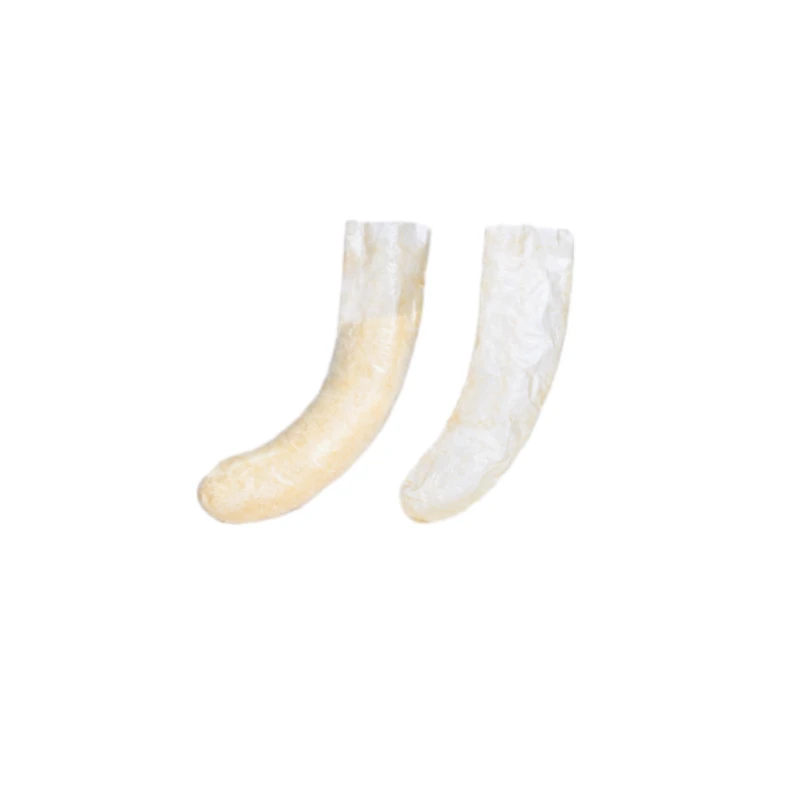
Salted Sheep Casings
By controlling the supply chain from slaughterhouse to final product, we deliver uncompromised quality—the key to premium sausage craftsmanship.
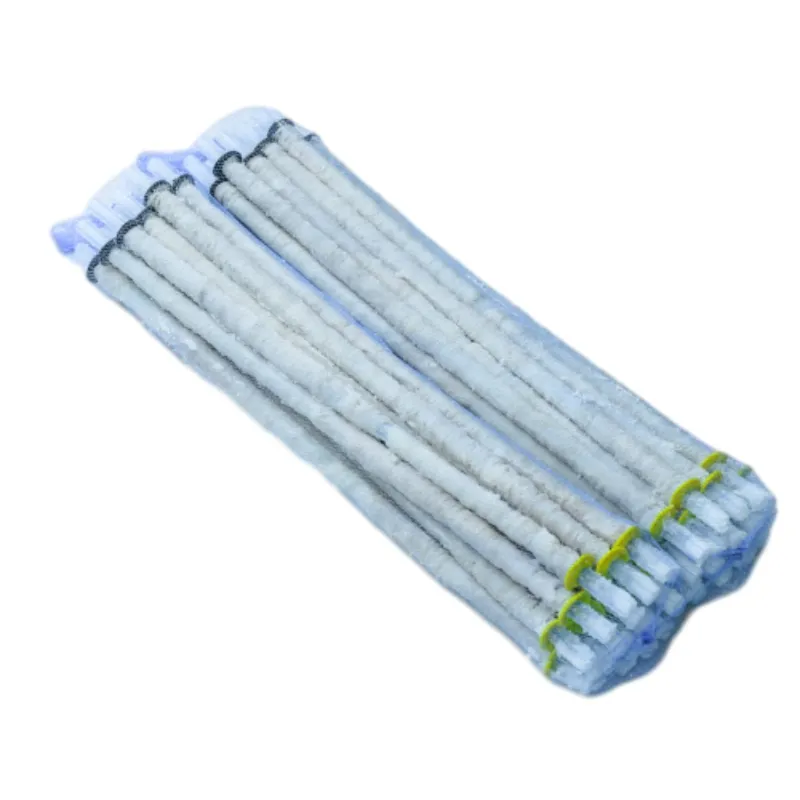
Salted Hog Casings
Hog casings, made from the intestines of pigs, are widely used in sausage production due to their unique properties.
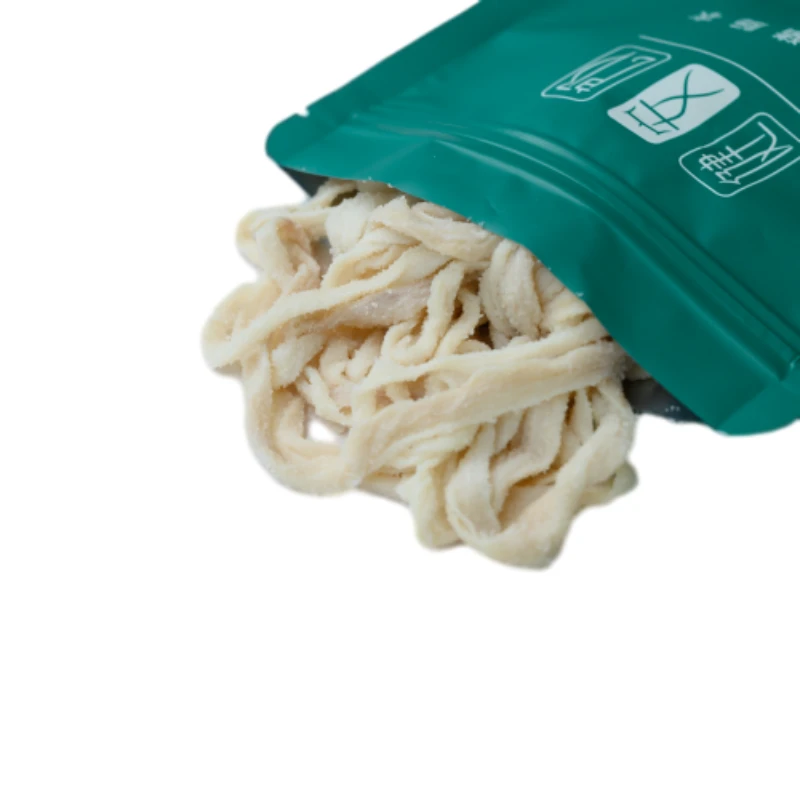
Dried Hog Casing
Dried casings are widely used in the food industry, particularly for sausage production, due to their convenience, consistency, and cost-effectiveness.

LATEST NEWS

Runtai Casings' Latest News delivers essential updates and expert analysis on the evolving sausage casing industry, keeping you at the forefront of technological innovations, quality advancements, and global market trends. Our carefully curated content provides valuable perspectives on emerging processing techniques, shifting international standards, and new opportunities in the global marketplace - all designed to help industry professionals make informed decisions and maintain a competitive edge.

Aug. 05, 2025

Sheep Casing Price Seasonal Fluctuations
In the world of sausage production, the sheep casing price can have a significant impact on the bottom line of businesses and the choices of sausage - making enthusiasts.
READ MORE

Nov. 03, 2025

Natural Hog Casings for Sale – Fresh, Pre-Tubed, Strong Snap
  Natural Hog Casings For Sale is a key solution in the food industry, specifically within meat
READ MORE

Master How to Use Dry Sausage Casing for Perfect Homemade Meats

Sep . 08, 2025 16:38

Understanding Dry Sausage Casings in Modern Food Production

In the intricate landscape of B2B food processing, the selection of appropriate sausage casings is paramount to product quality, consistency, and market appeal. Among the various options, natural casings, particularly how to use dry sausage casing, stand out for their superior organoleptic properties and traditional appeal. This detailed guide delves into the technical specifications, application methodologies, and strategic advantages of dried hog casings, providing invaluable insights for procurement specialists and production engineers.

Dried hog casings, often referred to as dried sausage casings, are derived from the submucosa layer of hog intestines. This natural material offers exceptional elasticity, strength, and permeability, making it ideal for a wide range of sausage products, from fresh breakfast links to traditional dry-cured specialties. The unique collagen structure of these casings contributes significantly to the characteristic 'snap' and succulent texture highly prized by consumers. Our focus is on providing a comprehensive understanding of their utility and integration into modern food manufacturing processes.

Industry Trends in Natural Casing Utilization

The global market for natural sausage casings is experiencing robust growth, driven by increasing consumer demand for authentic, high-quality meat products. Key trends include:

  • Premiumization: A clear shift towards premium and artisanal sausages, where the texture and mouthfeel imparted by natural casings are highly valued. This drives demand for products like dried hog casings.
  • Clean Label Movement: Consumers increasingly prefer products with natural ingredients and minimal processing. Natural casings align perfectly with "clean label" marketing strategies.
  • Sustainability and Traceability: Growing emphasis on ethically sourced and sustainably produced ingredients. Reputable suppliers of dried hog casing often provide comprehensive traceability.
  • Technological Advancements: While the product is natural, advancements in sorting, cleaning, and preservation technologies are enhancing the consistency and shelf life of dried hog casings, making them more adaptable to high-volume production.

These trends underscore the strategic importance of understanding and effectively leveraging natural casings, particularly how to use dry sausage casing, to maintain competitive advantage in a discerning market.

how to use dry sausage casing

Detailed Process Flow: Manufacturing Dried Hog Casings

The production of high-quality dried hog casings involves a meticulous multi-stage process designed to preserve the structural integrity and functional attributes of the natural intestine. Understanding this process is key to appreciating the product's performance and how to use dry sausage casing effectively.

Materials and Sourcing:

The primary material is the small intestine of healthy hogs. Sourcing emphasizes hygienic handling immediately post-slaughter to minimize bacterial load and degradation. Only intestines meeting stringent veterinary and food safety standards are selected.

Manufacturing Process Steps:

  1. Cleaning and Stripping: Upon arrival, intestines undergo initial cleaning to remove mesenteric fat and other external tissues. Specialized stripping machines then carefully remove the inner mucosa and outer serosa layers, leaving primarily the submucosa, which is rich in collagen and provides the desired strength and elasticity. This process must be precise to avoid damaging the delicate casing.
  2. Flushing and Washing: The stripped casings are thoroughly flushed with clean water, often chilled, to remove any remaining debris and bacteria. This step is critical for hygiene and for preparing the casing for subsequent processing.
  3. Calibration and Sorting: Casings are then calibrated by diameter (e.g., 28-32mm, 32-36mm, etc.) and sorted by length. This ensures consistent product sizing for sausage manufacturers. Advanced optical sorting systems are sometimes employed to enhance accuracy.
  4. Salting and Curing: Fresh casings are heavily salted (brine or dry salt) to draw out moisture and inhibit microbial growth. This curing process is essential for preservation and contributes to the casings' shelf stability. They are typically stored in salt for a period to achieve optimal cure.
  5. Drying: Following the salting process, the casings are carefully hung or placed in controlled drying chambers. This slow, controlled drying reduces moisture content significantly, transforming them into a shelf-stable dried product. The drying parameters (temperature, humidity, airflow) are critical to prevent brittleness or microbial spoilage while maintaining natural characteristics. This step differentiates dried hog casing from other forms.
  6. Quality Inspection and Packaging: Before packaging, each strand of dried hog casing undergoes rigorous quality inspection for integrity, diameter consistency, and absence of defects. They are then hanked (bundled) and packed in airtight, food-grade container111s, often with additional desiccant to maintain dryness, ready for distribution.

Testing Standards and Certifications:

Our dried hog casings adhere to international standards such as ISO 22000 (Food Safety Management Systems) and HACCP principles. They are regularly tested for microbial load, moisture content, and tensile strength to ensure compliance with FDA and other relevant food safety regulations. These certifications provide an authoritative assurance of product quality and safety.

how to use dry sausage casing

Service Life and Target Industries:

Dried hog casings typically boast a shelf life of 1-2 years when stored correctly in a cool, dry environment, making them suitable for strategic inventory management. They are primarily utilized in the food processing industry, specifically for the production of:

  • Fresh sausages (e.g., breakfast sausages, Italian sausages)
  • Smoked sausages (e.g., kielbasa, frankfurters)
  • Dry-cured sausages (e.g., salami, chorizo, pepperoni)
  • Artisanal and gourmet sausage production

Technical Parameters and Specifications

Understanding the technical parameters of dried hog casings is crucial for optimizing production processes and ensuring product consistency. The following table outlines typical specifications for our high-grade Dried Hog Casings:

Table 1: Typical Specifications for Dried Hog Casing
Parameter Measurement Unit Standard Range Tolerance
Caliber (Diameter) mm 28-32, 32-36, 36-40 ±1 mm
Length per Hank meters 90-100 ±5 meters
Moisture Content % 12-18 ±2%
Salt Content % >20 -
Tensile Strength N/cm² >50 -
Permeability (Smoke) Rating Excellent N/A
Storage Temperature °C 5-25 -
Shelf Life Months 12-24 -

These specifications ensure that our dried hog casings meet the rigorous demands of industrial sausage production, providing consistent performance and facilitating efficient processing when considering how to use dry sausage casing in a commercial setting.

how to use dry sausage casing

Application Scenarios and Technical Advantages

The versatility of dried hog casing makes it a preferred choice across various sausage categories. Proper preparation is essential to successfully implement how to use dry sausage casing.

Preparation for Use:

Dried hog casings must be rehydrated before stuffing. This typically involves soaking them in lukewarm water (approximately 30-35°C) for a minimum of 30 minutes to several hours, or even overnight, depending on the dryness and desired pliability. Adding a small amount of vinegar or salt to the soaking water can help enhance elasticity and clean the casing, respectively. After soaking, flush the casings thoroughly with running water to remove excess salt and ensure they are ready for stuffing.

Typical Application Scenarios:

  • Fresh Sausages: For products like breakfast links, Italian sausages, and bratwurst, dried hog casings provide a tender bite and excellent visual appeal. Their natural permeability allows for effective seasoning penetration.
  • Smoked Sausages: When preparing smoked products such as frankfurters, kielbasa, and hot dogs, the casings' ability to absorb smoke flavors and develop a desirable reddish-brown color is a significant advantage. The natural collagen structure contributes to the characteristic 'snap' upon biting.
  • Dry-Cured Sausages: For artisanal salami, chorizo, and pepperoni, dried hog casings are indispensable. Their controlled permeability facilitates optimal moisture loss during the drying and fermentation processes, ensuring proper curing, flavor development, and preventing case hardening. They also provide the necessary structural support for the long drying periods.

Technical Advantages:

  • Superior Smoke Permeability: The porous structure of natural hog casings allows for excellent smoke penetration, imparting rich, authentic flavors and colors to smoked products, which synthetic casings often struggle to replicate.
  • Optimal Moisture Regulation: Critical for dry-cured sausages, the casings naturally regulate moisture exchange, preventing rapid drying on the surface while allowing moisture to escape gradually from the interior. This is a key aspect of successful dry-curing when considering how to use dry sausage casing.
  • Exceptional Bite and Texture: Known for their tender yet resilient "snap," natural casings enhance the sensory experience, providing a superior mouthfeel that is highly sought after by consumers.
  • High Elasticity and Strength: Despite their delicate nature, dried hog casings exhibit remarkable elasticity and tensile strength, accommodating high-speed stuffing operations and resisting breakage during processing and handling.
  • Natural and Biodegradable: Aligning with consumer demand for natural ingredients, these casings are fully digestible and biodegradable, offering an environmentally friendly solution compared to artificial alternatives.
  • Flavor Neutrality: Unlike some artificial casings, dried hog casing does not impart any off-flavors, allowing the true taste of the sausage meat to shine through.
how to use dry sausage casing

Vendor Comparison: Dried Hog Casings

Selecting the right supplier for dried hog casings is a critical decision impacting product quality, supply chain reliability, and cost-effectiveness. A comparative analysis based on key performance indicators is essential.

Table 2: Comparative Analysis of Dried Hog Casing Vendors
Feature/Vendor Vendor A (RTCasing.com) Vendor B (Competitor X) Vendor C (Competitor Y)
Quality Certifications ISO 22000, HACCP, FDA Compliant HACCP ISO 9001
Caliber Consistency Excellent (±1mm) Good (±2mm) Fair (±3mm)
Tensile Strength High (>50 N/cm²) Medium (>40 N/cm²) Adequate (>30 N/cm²)
Smoke Permeability Excellent Good Fair
Customization Options Extensive (caliber, length, packaging) Limited (caliber) Minimal
Lead Time (Standard Orders) 7-14 days 14-21 days 21-30 days
Technical Support Dedicated specialists Standard support Basic support

This comparison highlights the importance of choosing a vendor that not only meets basic quality requirements but also provides superior consistency, robust technical support, and flexible customization options, crucial factors in optimizing how to use dry sausage casing in varied production environments.

how to use dry sausage casing

Customized Solutions and Expertise

Recognizing that each food manufacturer has unique requirements, we offer tailored solutions for dried hog casing procurement and application. Our experienced team works closely with clients to understand their specific product lines, production capacities, and quality benchmarks.

  • Caliber and Length Customization: We provide dried hog casings in a precise range of calibers (e.g., specific sub-ranges within 28-32mm) and customized hank lengths to optimize stuffing efficiency and minimize waste in automated lines.
  • Specific Sourcing: For projects requiring specific regional characteristics or traceability, we can work to source casings that meet these exacting demands.
  • Technical Consultation: Our technical experts provide guidance on optimal rehydration protocols, stuffing techniques, and post-stuffing processing parameters (smoking, drying, curing) to ensure the best results for your specific product when considering how to use dry sausage casing.
  • Packaging Solutions: From bulk barrels to vacuum-sealed pouches, we offer packaging solutions designed to maintain product integrity and extend shelf life in your specific storage conditions.
how to use dry sausage casing

Application Case Studies

Real-world application demonstrates the tangible benefits of utilizing our dried hog casings:

Case Study 1: Large-Scale Frankfurters Production

A major North American meat processor faced challenges with inconsistent 'snap' and smoke uptake using alternative casings for their premium frankfurter line. Upon switching to our precisely calibrated dried hog casings (32-36mm), they reported a 15% improvement in smoke penetration consistency and a significant increase in consumer preference feedback regarding the product's bite and texture. Our technical team provided on-site support to optimize their stuffing and smoking parameters, demonstrating exactly how to use dry sausage casing for maximum impact in high-volume production.

how to use dry sausage casing

Case Study 2: Artisanal Salami Manufacturer

An artisanal salami producer struggled with case hardening and inconsistent drying rates, leading to product loss. Implementing our specialized dried hog casings (36-40mm) designed for long-cure applications, they achieved a 20% reduction in production waste due to improved moisture egress and consistent drying. The natural collagen structure of the casings provided the ideal micro-environment for microbial cultures, resulting in superior flavor development and a perfectly textured final product. This case underscored the intricate relationship of proper casing selection with the success of traditional dry-curing processes.

how to use dry sausage casing

Frequently Asked Questions (FAQ) about Dried Hog Casings

Q: What is the ideal rehydration process for dried hog casing?
A: Dried hog casings should be soaked in lukewarm water (30-35°C) for at least 30 minutes, or preferably 1-2 hours. For very dry casings, overnight soaking may be beneficial. Ensure they are fully pliable before use. Flushing thoroughly with running water afterwards is recommended to remove excess salt.
Q: Can dried hog casings be used for both fresh and dry-cured sausages?
A: Yes, dried hog casings are highly versatile. Their permeability and strength make them suitable for fresh, smoked, and dry-cured sausages, each requiring specific rehydration and processing techniques.
Q: How do dried hog casings compare to collagen or fibrous casings?
A: Dried hog casings offer a superior natural bite and smoke permeability, contributing to authentic flavor and texture profiles. Collagen casings offer consistency and ease of use, while fibrous casings are generally used for large, non-edible products. For premium products, the unique properties of natural hog casings are often preferred, influencing how to use dry sausage casing in distinct applications.
Q: What is the shelf life and optimal storage for dried hog casings?
A: When stored in a cool (5-25°C), dry place away from direct sunlight and strong odors, our dried hog casings have a shelf life of 12-24 months. Proper storage is crucial to maintain their quality and integrity.

Lead Time, Fulfillment & Warranty

  • Lead Time: Standard orders for our dried hog casings are typically fulfilled within 7-14 business days, depending on order volume and destination. Expedited shipping options are available upon request.
  • Fulfillment: We maintain robust inventory levels and efficient logistics networks to ensure timely and reliable delivery worldwide. All shipments are meticulously packaged to preserve product quality during transit.
  • Warranty: Our dried hog casings are guaranteed to meet or exceed the technical specifications outlined in our product data sheets and comply with all relevant food safety standards (e.g., FDA, HACCP). Any product found to be defective upon receipt will be replaced or credited, provided proper storage and handling instructions have been followed.

Dedicated Customer Support

Our commitment extends beyond product delivery. We provide comprehensive after-sales support to ensure your complete satisfaction:

  • Technical Assistance: Access to our team of casing specialists for troubleshooting, process optimization, and expert advice on how to use dry sausage casing in specific applications.
  • Order Management: Dedicated account managers to assist with order placement, tracking, and any logistical inquiries.
  • Quality Assurance: A responsive quality assurance team available to address any product-related concerns promptly and effectively.

Contact us today to discuss your specific requirements and learn more about our premium dried hog casing solutions.

References

  1. Food and Drug Administration (FDA). (2023). "Code of Federal Regulations, Title 21, Part 172.5." U.S. Government Publishing Office.
  2. International Organization for Standardization (ISO). (2022). "ISO 22000: Food safety management systems — Requirements for any organization in the food chain."
  3. European Food Safety Authority (EFSA). (2021). "Guidance on the food safety criteria for animal casings." EFSA Journal 19(11):e06893.
  4. Smith, J. (2020). "The Science of Sausage Making: Understanding Casing Properties." Journal of Meat Science and Technology, 15(2), 87-102.
  • Read phone
  • Read email
  • Read whatsapp
  • go to top

If you are interested in our products, you can choose to leave your information here, and we will be in touch with you shortly.