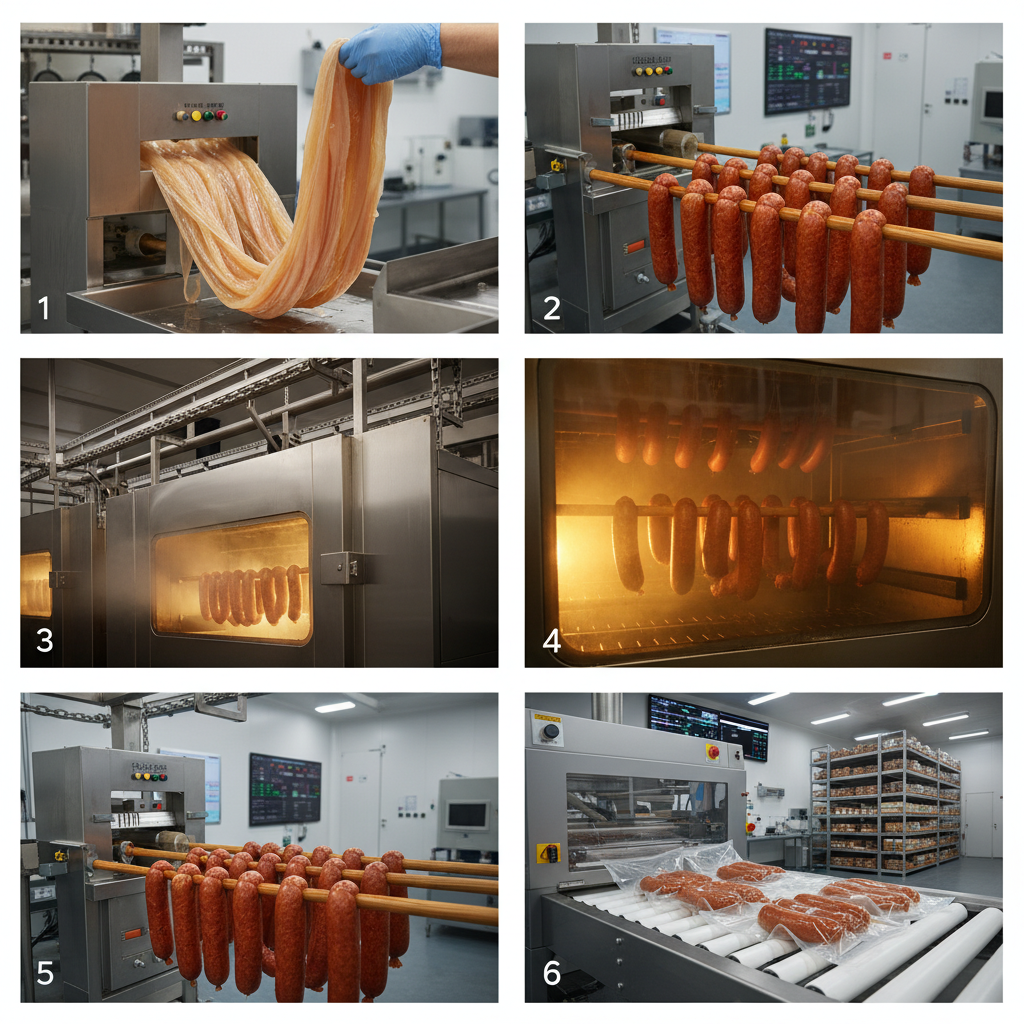
Selecting the right sausage casings for smoking is a critical decision for any meat processor, as the casing acts as the primary interface between the product and the smoking environment. Whether you are producing traditional European smoked sausages or artisan American styles, the casing determines how smoke penetrates the meat, how moisture is retained, and the final aesthetic appeal of the product. Understanding the nuances of casing permeability and heat resistance is the difference between a burst casing and a premium, gold-standard sausage.
Globally, the demand for high-quality smoked meats has surged, driving the need for specialized materials that can withstand the rigorous temperature fluctuations of industrial smokehouses. From the salted hog casings used in traditional bratwursts to the dried tubed options for long-term storage, the industry is shifting toward materials that ensure consistent diameter and superior "snap." This consistency is vital for maintaining efficiency in high-volume production lines where uniformity is key to quality control.
In this comprehensive guide, we will explore the technical and practical aspects of choosing sausage casings for smoking, focusing on how different types of natural and processed casings react to smoke and heat. By balancing the requirements of durability, flavor absorption, and cost, producers can optimize their output and deliver a product that meets the highest international food safety and sensory standards.
The Fundamentals of Smoke-Compatible Casings
At its core, sausage casings for smoking must possess a specific balance of permeability and strength. Permeability allows the aromatic compounds of the smoke to penetrate the casing and infuse the meat, while strength ensures that the internal pressure created by expanding proteins and fats during the heating process does not cause the casing to rupture.
Natural casings, particularly those derived from hog, are prized for their ability to "breathe." This natural porosity is what gives smoked sausages their characteristic color and depth of flavor. When the smoke interacts with the collagen fibers of the casing, it creates a protective barrier that not only enhances taste but also extends the shelf life of the finished meat product.
Global Industry Standards for Smoking Casings
The production of smoked sausages is governed by strict international standards, often aligning with ISO and HACCP guidelines to ensure food safety. Globally, the choice of sausage casings for smoking is influenced by regional dietary laws and consumer preferences. For instance, in the European market, there is a heavy reliance on high-grade natural hog casings that can withstand prolonged cold-smoking processes used in traditional salamis.
One of the primary challenges facing the industry is the variability of raw materials. Natural casings can vary in thickness and diameter, which can lead to inconsistent smoke penetration and uneven cooking. To combat this, industrial processors have adopted standardized grading systems, ensuring that the casings used in smoking are sorted by precise millimeter measurements to maintain a uniform look across thousands of units.
Furthermore, the rise of "clean label" trends has pushed manufacturers away from synthetic alternatives and back toward natural options. Modern consumers demand transparency, and using natural sausage casings for smoking allows brands to market their products as traditional and additive-free, aligning with the global shift toward sustainable and organic food production.
Comparing Dried Tubed Hog vs. Salted Casings
When selecting sausage casings for smoking, processors generally choose between salted and dried tubed hog casings. Salted casings are preserved in a brine solution, making them highly flexible and easy to hydrate quickly, which is ideal for fast-paced production environments requiring immediate stuffing and smoking.
Dried tubed hog casings offer a different advantage: extreme stability. Because they are thoroughly dried and packaged in tubes, they have a significantly longer shelf life and are less prone to spoilage during international shipping. For those using sausage casings for smoking in remote areas or across long supply chains, the dried format reduces waste and ensures a consistent raw material quality upon rehydration.
Ultimately, the choice depends on the specific smoking method. Salted casings are often preferred for short-term smoking cycles, whereas dried casings provide the reliability needed for large-scale industrial operations that require a steady, predictable supply of high-tension casings that won't shrink excessively under heat.
Technical Performance Metrics in Smoking
The efficiency of sausage casings for smoking is measured by several technical KPIs: smoke absorption rate, tensile strength, and thermal shrinkage. A casing that shrinks too much during the smoking process will result in "wrinkled" sausages, which are viewed as lower quality by consumers. Conversely, a casing with too little shrinkage may not provide the tight, professional fit required for premium sausages.
Moreover, the elasticity of the casing determines the maximum filling pressure it can withstand before failure. In automated stuffing systems, the casing must be resilient enough to handle high-speed filling without tearing, yet permeable enough to allow the smoke to penetrate the meat matrix evenly.
Performance Analysis of Different Sausage Casings for Smoking
Real-World Applications Across Global Markets
In the heart of the European charcuterie industry, sausage casings for smoking are used to create legendary products like Kielbasa and Chorizo. In these regions, the focus is on slow-smoke techniques where the casing must maintain its integrity over several days of curing. The use of high-quality hog casings ensures that the fat doesn't leak out, preserving the juicy texture of the meat.
In North American industrial zones, the priority often shifts toward scalability and speed. Large-scale processors use automated casing loaders that require sausage casings for smoking with incredibly consistent diameters. Here, the "Dried Tubed" format is highly valued because it allows for precise inventory management and reduces the labor required for preparation before the smoking process begins.
Long-Term Value and Economic Efficiency
Investing in premium sausage casings for smoking is not just about the final product's appearance; it is a strategic financial decision. Lower-quality casings lead to higher "burst rates" during the smoking process. A burst rate of even 2-3% in a high-volume plant can result in thousands of dollars of lost product and wasted energy every month.
Beyond the immediate loss of product, the reliability of the casing impacts the brand's trust. Consistent "snap" and a uniform mahogany color—achieved through the correct interaction of smoke and casing—create a sensory experience that builds customer loyalty. This emotional connection to quality allows producers to command a premium price point in the market.
From a sustainability perspective, natural casings are biodegradable and a byproduct of the livestock industry, making them an eco-friendly choice compared to plastic alternatives. By optimizing the use of sausage casings for smoking, companies can reduce their environmental footprint while increasing their operational margins.
Innovations and Future Trends in Casing Tech
The future of sausage casings for smoking is being shaped by digital transformation and material science. We are seeing the emergence of "smart" sorting technologies that use AI-driven optical sensors to grade casings by diameter and thickness with micron-level precision, virtually eliminating the risk of bursting in industrial smokehouses.
Sustainability is also driving the development of enhanced rehydration processes for dried casings. New enzymes are being explored to make dried tubed casings hydrate faster and more uniformly, combining the shelf-life of dried products with the ease of use associated with salted casings.
Furthermore, the industry is moving toward "custom-permeability" casings. By adjusting the processing of the collagen fibers, manufacturers can now create sausage casings for smoking that are tailored for specific types of smoke—whether it's a heavy hickory smoke or a light applewood finish—ensuring an optimized flavor profile for every product.
Comparative Analysis of Casing Types for Smoking Applications
| Casing Type |
Smoke Absorption |
Thermal Stability |
Operational Ease |
| Salted Hog |
Excellent |
High |
Immediate Use |
| Dried Tubed Hog |
Very Good |
Very High |
Requires Soaking |
| Collagen (Smokable) |
Moderate |
Moderate |
Very Easy |
| Cellulose (Peelable) |
Low (Indirect) |
Extreme |
Industrial Only |
| Sheep Natural |
Excellent |
Medium |
Delicate Handling |
| Beef Natural |
Good |
High |
Moderate |
FAQS
For heavy or prolonged smoking, natural hog casings—especially Dried Tubed Hog—are highly recommended. They offer the best balance of structural integrity and smoke permeability, ensuring that the meat is flavored deeply without the casing splitting under the prolonged heat and moisture of the smokehouse.
The smoking temperature is generally determined by the meat recipe, not the casing. However, dried tubed casings must be properly rehydrated before stuffing. If they are not fully hydrated, they may shrink more aggressively during smoking, which could lead to a tighter casing but a higher risk of bursting.
Bursting is usually caused by overfilling or rapid temperature spikes. To prevent this, ensure you are using sausage casings for smoking that match your filling diameter and implement a gradual temperature ramp-up in your smokehouse to allow the meat proteins to set before the casing reaches its maximum expansion.
Yes, provided they are specifically labeled as "smokable." Regular collagen casings may melt or shrink excessively. Smokable collagen is engineered to withstand heat, though it typically offers less natural "snap" and slightly lower smoke penetration compared to natural hog casings.
Wrinkling usually occurs due to excessive moisture loss or over-shrinkage of the casing. This often happens when the casing quality is inconsistent or when the smokehouse humidity is too low. Using high-grade, uniform natural casings helps maintain a smooth, professional finish.
Store dried casings in a cool, dry place away from direct sunlight and strong odors. Because they are low-moisture, they are stable, but keeping them in their original vacuum-sealed tubes ensures that the collagen fibers remain intact, preserving the elasticity needed for the smoking process.
Conclusion
Choosing the ideal sausage casings for smoking is a multifaceted process that balances the science of permeability with the art of meat curing. From the operational efficiency of dried tubed hog casings to the immediate flexibility of salted options, the right choice directly impacts the product's yield, aesthetic appeal, and flavor profile. By adhering to global standards and leveraging the technical strengths of natural collagen, processors can ensure a consistent, high-quality output that satisfies the most discerning consumers.
As the industry evolves toward more automated and sustainable practices, the importance of sourcing reliable, high-performance casings only grows. We recommend that producers regularly audit their burst rates and smoke penetration levels to optimize their casing selection. For those looking to elevate their smoked meat production with industry-leading materials, visit our website: www.rtcasing.com.