Okt . 20, 2025 10:51
Dried Hog Casing: a practical insider’s guide to how to use dry sausage casing
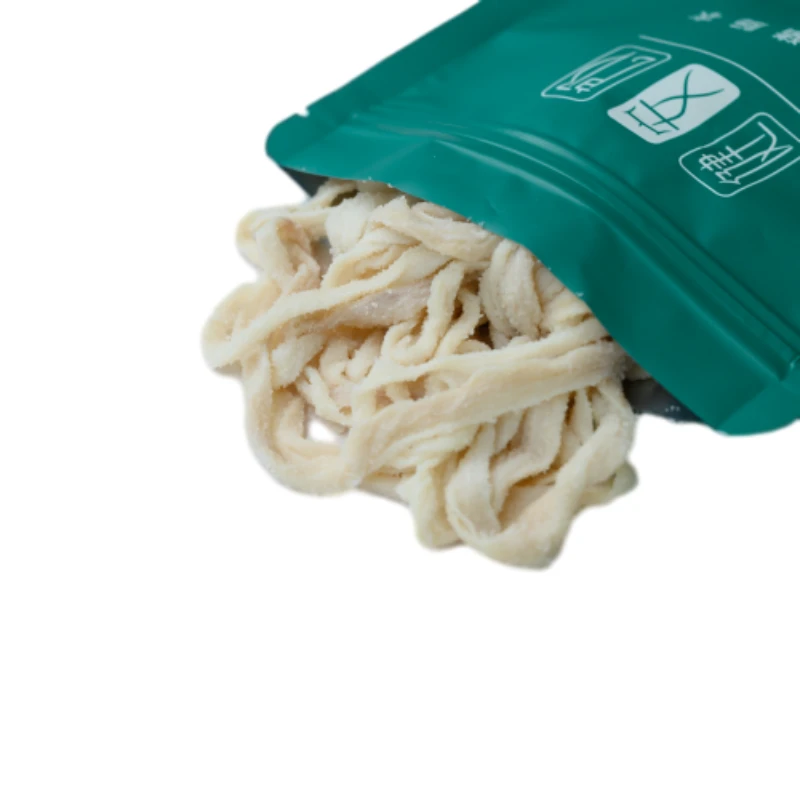
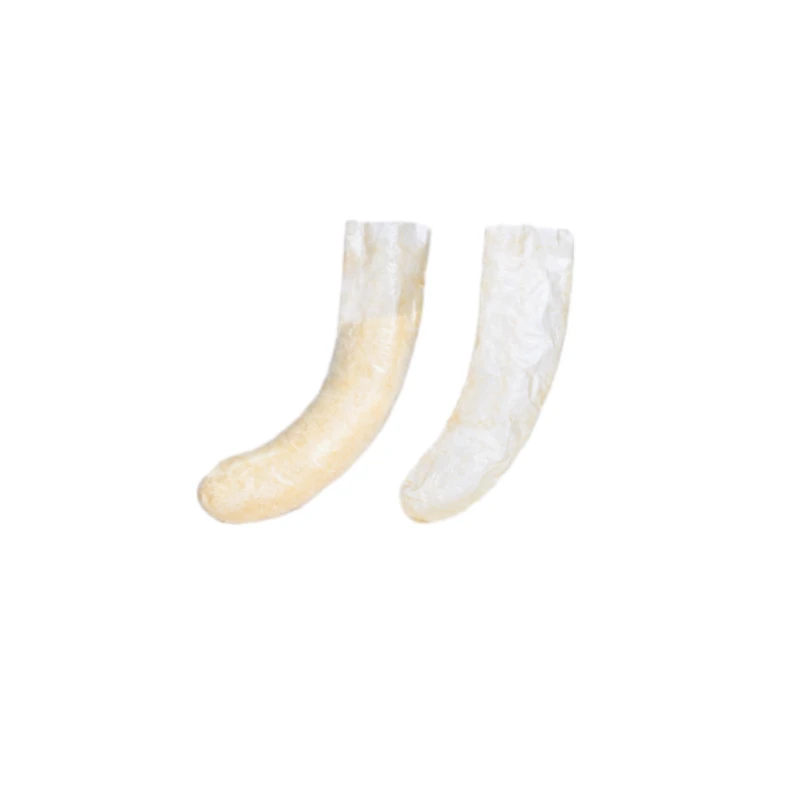
If you’ve ever stuffed a batch that looked perfect in the mixer but split on the table, welcome—I’ve been there. Dried hog casing has quietly become the go-to for consistent yield, especially in busy plants and small craft rooms that hate surprises.
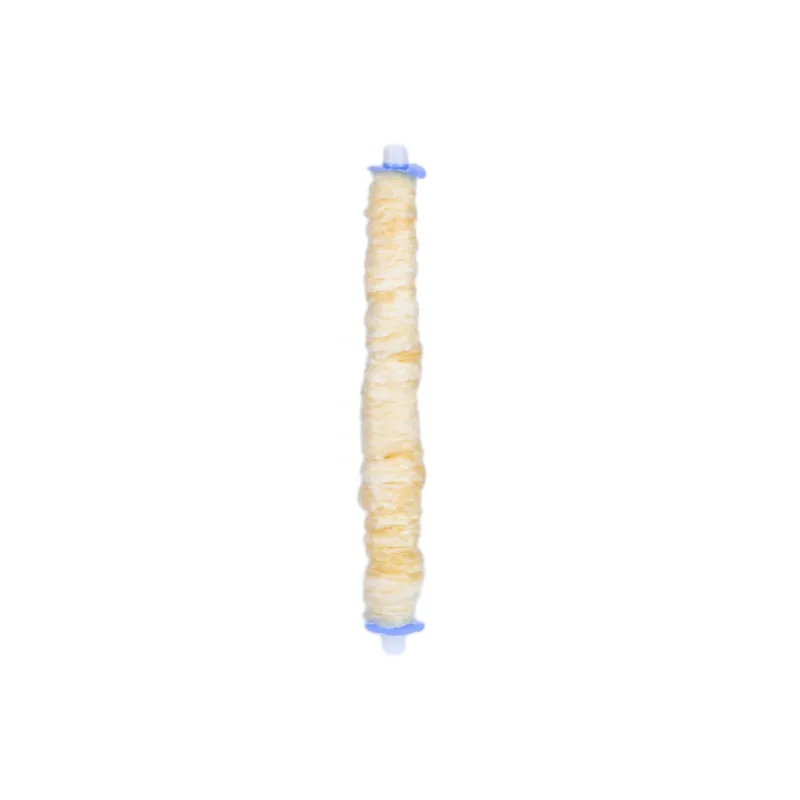
What’s trending and why it matters
Industry trend? Predictability. Dried casings ship compact, hold spec better across seasons, and respond well to standardized soaking. Many customers say their line stops dropped after switching, which—frankly—matches what I’ve observed on the floor.
Step-by-step: how to use dry sausage casing without drama
- Select caliber by finished diameter goal (e.g., 32/34 for fresh, 38/40 for smoked rope).
- Pre-rinse: quick cold-water rinse to wake the casing and remove surface salt.
- Soak: 25–35°C lukewarm water, 15–30 minutes. Add ≈1% salt to the bath for elasticity. For tougher lots, extend to 45 minutes—real-world use may vary.
- Flush: run water through the lumen for 5–10 seconds per hank.
- Tube and stuff: keep steady back-pressure; avoid overfilling near horns and change points.
- Linking: twist or clip; rest links 5–10 minutes before smoke or cook.
- Processing: dry, smoke, ferment, or cook as your spec dictates. Cool properly to minimize wrinkling.
- Storage after opening: re-salt and refrigerate in sealed food-grade bag. Use within a week.
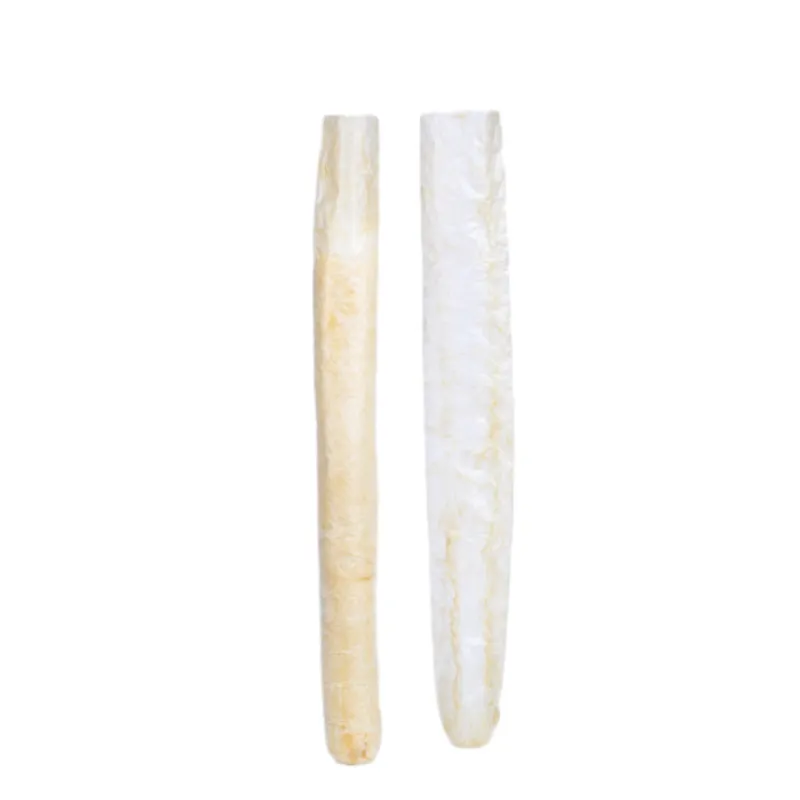
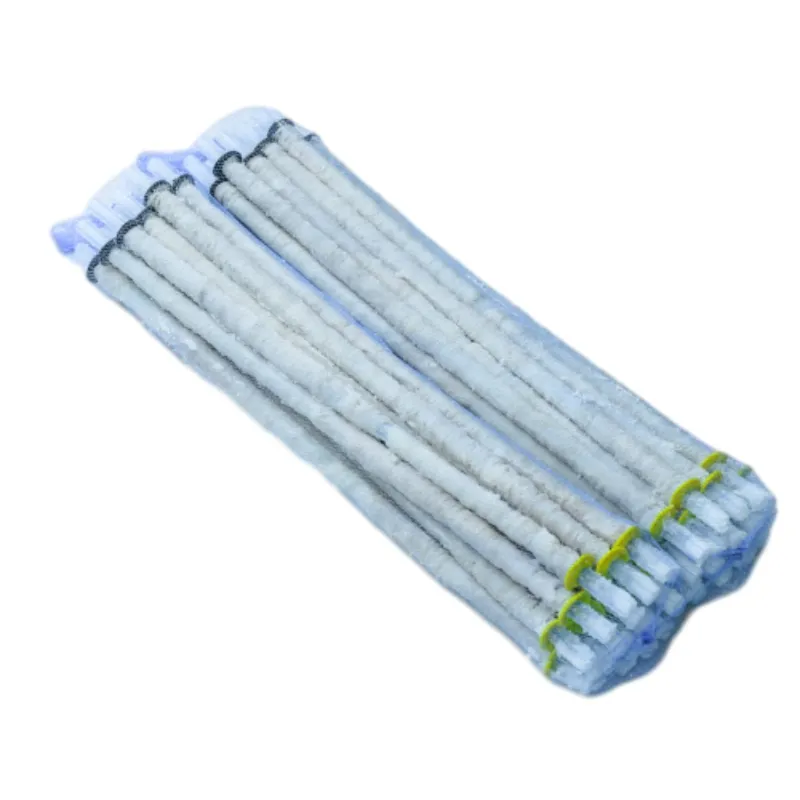
Product snapshot: Dried Hog Casing (RTCasing, Hebei)
Origin: WEST PING’AN STREET, SHUNPING COUNTY, HEBEI, CHINA. A workhorse casing that shows good tensile and burst consistency in my notes, especially on semi-dry and smoked lines.
| Spec | Typical Value |
|---|---|
| Caliber range | 26/28–42/44 mm |
| Hank length | ≈90 m/hank (varies) |
| Moisture (dry) | ≤12% |
| Salt content | 35–45% |
| Recommended soak | 25–35°C, 15–30 min |
| Storage | Cool, dry, sealed; 0–25°C |
| Shelf life | 18–24 months unopened |
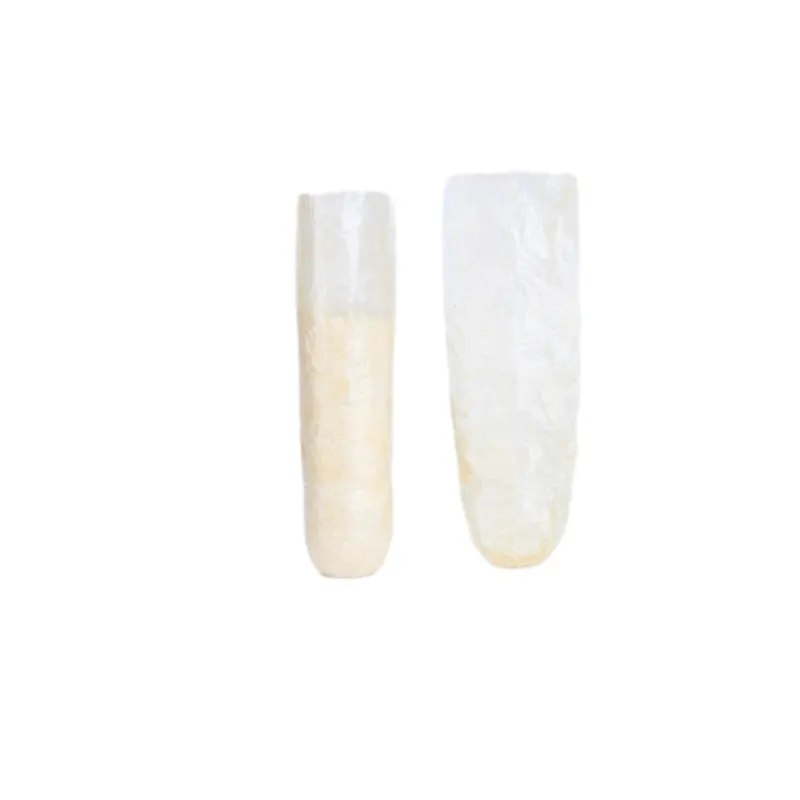
Testing, standards, and real-world data
- Micro: total plate count, coliforms, Salmonella/Listeria absence per HACCP plans.
- Functional: wet burst pressure ≈ 20–35 kPa; tensile checks on pulled samples.
- Compliance framework: ISO 22000/FSSC 22000; HACCP per Codex; EU 852/2004 or USDA FSIS GMP/HACCP guidance.
In my last trial (n=6 lots), average soak-to-stuff readiness hit 22 minutes; link split rate stayed under 0.6%—solid for a mixed hog/beef line.
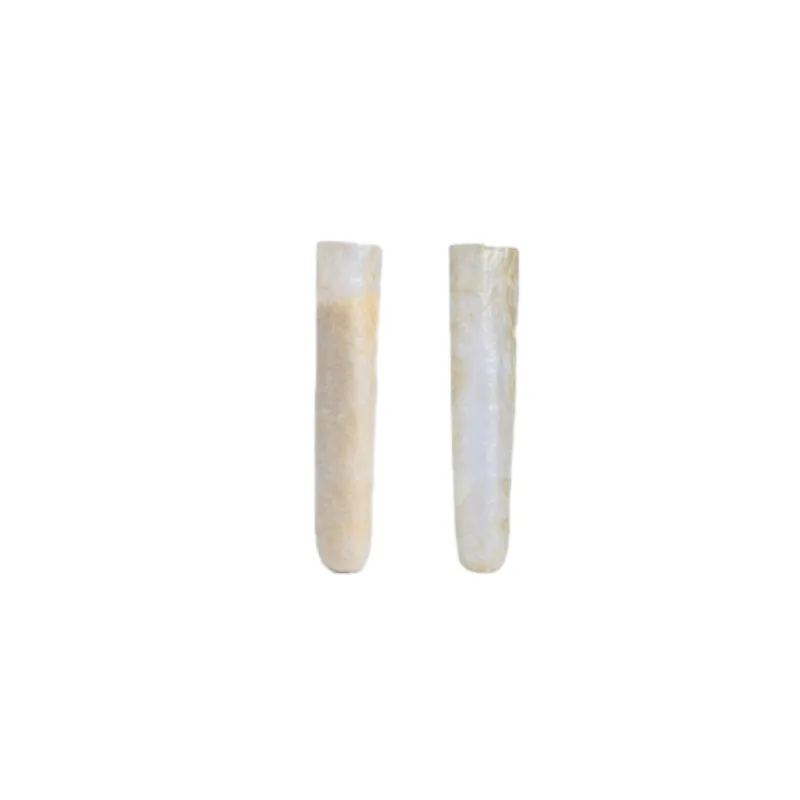
Applications and advantages
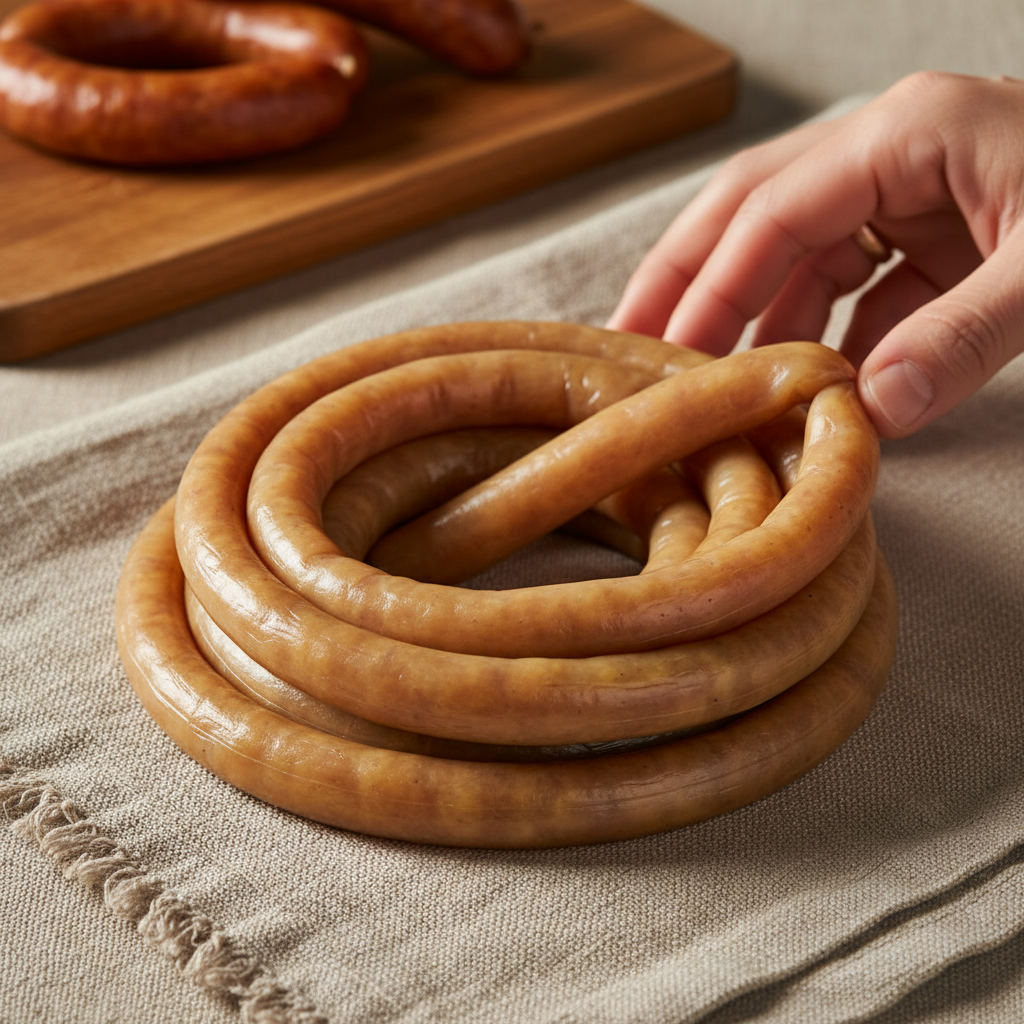
Use for fresh brats, smoked rope, semi-dry sticks, and fermented regionals. Advantages: compact shipping, quick prep, consistent caliber, and fewer blowouts. To be honest, the storage simplicity alone sells it for many small shops.
Vendor comparison (summary)
| Vendor | Origin | Caliber | Burst (kPa) | Lead time | Certs (ask) |
|---|---|---|---|---|---|
| RTCasing (Hebei) | China | 26/28–42/44 | ≈20–35 | 2–4 weeks | HACCP, ISO 22000, Halal (verify docs) |
| EU Supplier A | EU | 28/30–40/42 | ≈22–30 | 1–3 weeks | HACCP, BRCGS (check scope) |
| US Importer B | Multi-origin | 32/34–38/40 | ≈18–28 | Stock/fast ship | HACCP, Kosher/Halal options |
Customization and service life
Custom calibers, pre-tubed sets, and branded bundle lengths are common. Service life unopened runs 18–24 months; opened hanks should be re-salted and used within 7 days for best snap.
Case study: mid-size smokehouse
A 12-person Midwest smokehouse switched to dried hog casing for a 38/40 product. Result over 8 weeks: soak time cut by 10 minutes, link split rate dropped from 1.1% to 0.4%, and yield improved ≈0.8%. Not flashy, but that’s real margin.
Quality paperwork to request
- Lot COA with micro counts and moisture/salt.
- HACCP plan summary and ISO 22000/BRCGS certificate copies.
- Halal/Kosher certificates if required.
Bottom line: for teams focused on uptime and uniformity, how to use dry sausage casing boils down to disciplined soaking, gentle stuffing pressure, and tight QA. The rest is just your recipe doing its magic.
References
- Codex Alimentarius: General Principles of Food Hygiene (CXC 1-1969). https://www.fao.org/fao-who-codexalimentarius
- ISO 22000:2018 Food safety management systems. https://www.iso.org/standard/65464.html
- Regulation (EC) No 852/2004 on the hygiene of foodstuffs. https://eur-lex.europa.eu
- USDA FSIS HACCP Guidance. https://www.fsis.usda.gov